Fittonia Drooping, Curling or Crispy? 5 Nerve Plant Mistakes to Avoid (and How to Fix Them)
Is your fittonia drooping, lying flat over the edge of her pot, looking like she gave up overnight? Well, you're not alone.
Quick answer: A drooping fittonia is almost always thirsty. The nerve plant collapses when her soil dries out and stands up again within hours of a good drink. If she droops in wet soil, it is too much water. Curling or crispy leaves point to dry air or direct sun, and a leggy fittonia needs more light and a trim.
I grow fittonias in pots and in terrariums, with white, green and pink leaves, and I can tell you from experience: she is a real drama queen. Leave her dry a little too long and she faints completely. The good news? She also forgives you faster than almost any other houseplant. So in this post I'll share the five mistakes behind a drooping, curling or crispy nerve plant, and how I fix each one.
Fittonia (Fittonia albivenis), the nerve plant, comes from the rainforest floor of South America, mostly Peru. She grows low under bigger plants, in shade, warmth and humid air. Almost every problem she has comes from forgetting that.
Fittonia Problems at a Glance
| What you see | Most likely cause |
|---|---|
| Whole plant drooping, soil dry | Thirst. Water now and she recovers in hours |
| Drooping or yellow leaves, soil wet | Too much water, possible root rot |
| Leaves curling | Dry air, direct sun, or the soil drying out |
| Crispy brown edges | Low humidity, direct sun, or wilting again and again |
| Leaves falling off | Cold drafts, a sudden move, or soil left dry too often |
| Long bare stems (leggy) | Not enough light and no pinching |
| Faded, washed-out leaves | Too much direct sun |
Mistake #1: Letting the Soil Dry Out (Why Your Fittonia Is Drooping)
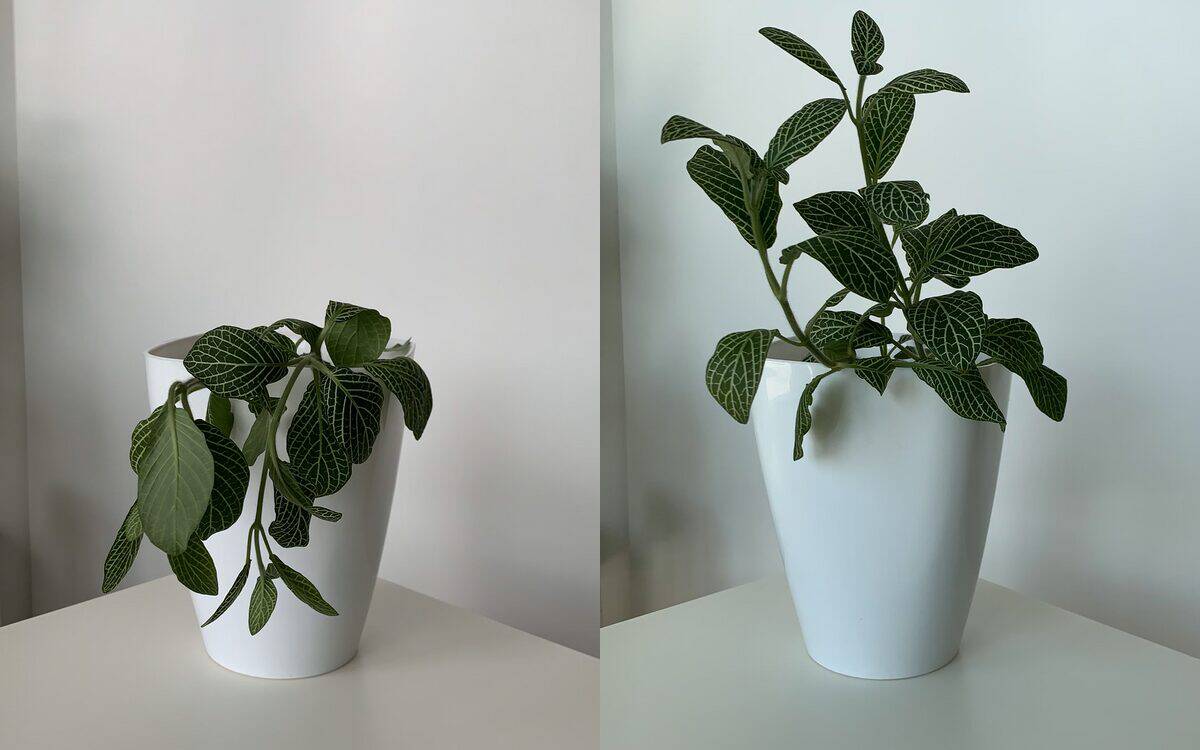
This is the number one reason a fittonia droops, and it's the one I see most with my own plants. Her leaves are thin and she can't store much water, so the moment the soil dries out, the whole plant collapses. It looks like she is dying, but she isn't.
How to revive a drooping fittonia: water her thoroughly until water runs out of the drainage holes, then let the extra drain away. If the soil is so dry that it has pulled away from the sides of the pot, sit the pot in a bowl of water for 20 to 30 minutes so the soil can soak it up from the bottom. Within a few hours she will stand up again. You can watch my own fittonia do exactly that here:

Don't panic, but don't make it a habit either. Every time she faints, she can lose a few lower leaves or get crispy edges. Keep the soil lightly moist and water when the top half inch (about 1 cm) feels dry. In a warm room in summer that can be every few days, in winter much less often.
Mistake #2: Overwatering and Soggy Soil
Here's the confusing part: a fittonia also droops when she gets too much water. If her leaves hang down and the soil is still wet, don't water her again. Soggy soil suffocates the roots, the leaves turn yellow, the stems go soft at the base, and root rot can follow.
Always use a pot with drainage holes and a light, airy mix, and empty the saucer after watering. Check the soil with your finger before you reach for the watering can. If the stems are already mushy at the soil line, follow my steps in How to Fix Root Rot, and save the healthy tips as cuttings (more on that below).
Soil that never dries a little also invites fungus gnats, so tiny flies around the pot are another sign you're watering too often. You'll find more common troubles in my Houseplant Pests and Problems guide.

Mistake #3: Dry Air, Heaters and Cold Drafts (Curling and Crispy Leaves)
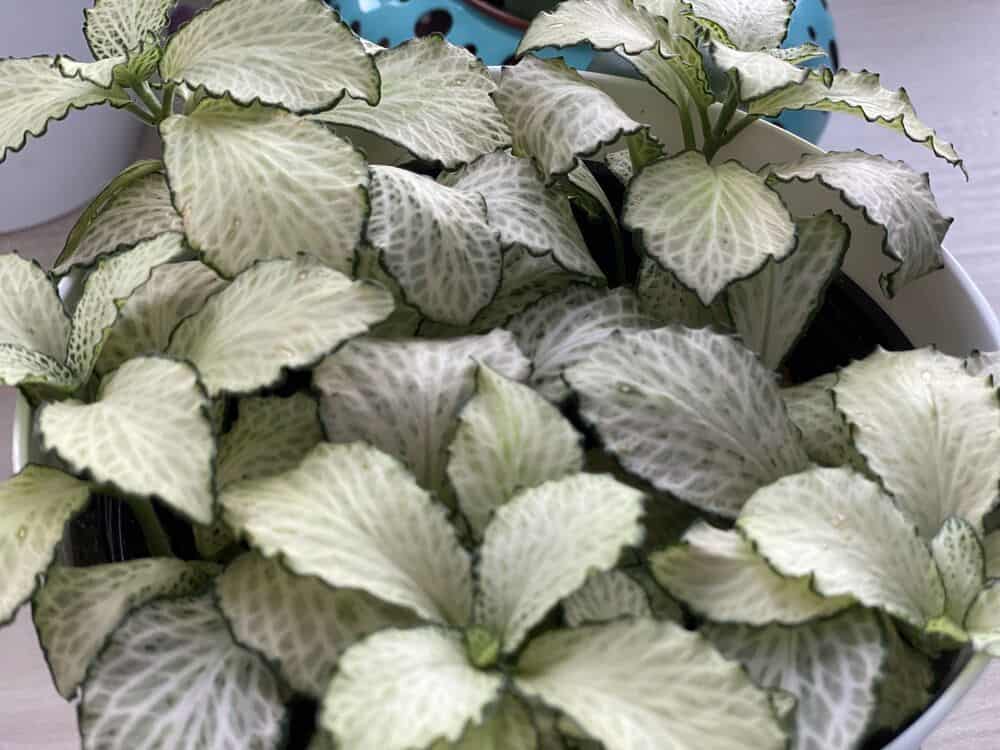
When fittonia leaves curl inward or the edges turn brown and crispy, the air is usually too dry. Remember where she comes from: the humid rainforest floor. Most of our homes, especially in winter with the heating on, are far drier than that.
This is exactly why I grow some of my fittonias in terrariums. Under glass she has her own little humid world, and she is a classic terrarium plant for a reason. If you'd like to try it, my terrarium guide shows you how, and here are the best plants for a closed terrarium.
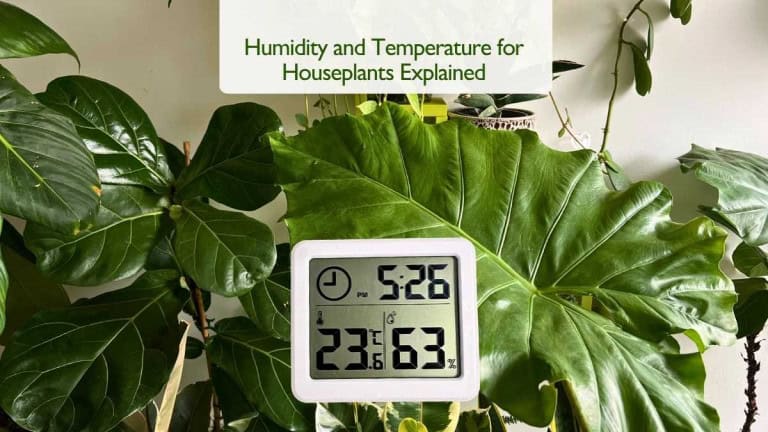
In a pot, group her with other plants, put her on a tray of wet pebbles, or use a humidifier. Aim for around 50% humidity or more. Misting only helps for a few minutes, and I explain why in Misting Houseplants. You'll find more on the ideal numbers in Humidity and Temperature for Houseplants.
Temperature matters too. She is happiest between 60 and 80°F (16 to 27°C). Keep her away from radiators, heaters and cold windows in winter, because cold drafts make her drop leaves. And in a closed terrarium, too much moisture can be a problem as well: if the glass is fogged up all the time, open the lid for a few hours to let some air in.
Mistake #4: The Wrong Light
Fittonia doesn't want direct sun. Strong sun through a window scorches her thin leaves, they turn crispy, and the beautiful white, pink or red veins fade. But a dark corner isn't right either. In too little light she grows slowly, stretches toward the window and loses her compact shape.
Bright, indirect light is ideal, a few feet from a bright window or behind a sheer curtain. NC State Extension notes that she also does well under fluorescent lights, which makes her a great choice for a desk or a terrarium with a small grow light. If your spot is darker, see my list of the best indoor plants for low light.
Mistake #5: Never Pinching Her (Leggy Fittonia)
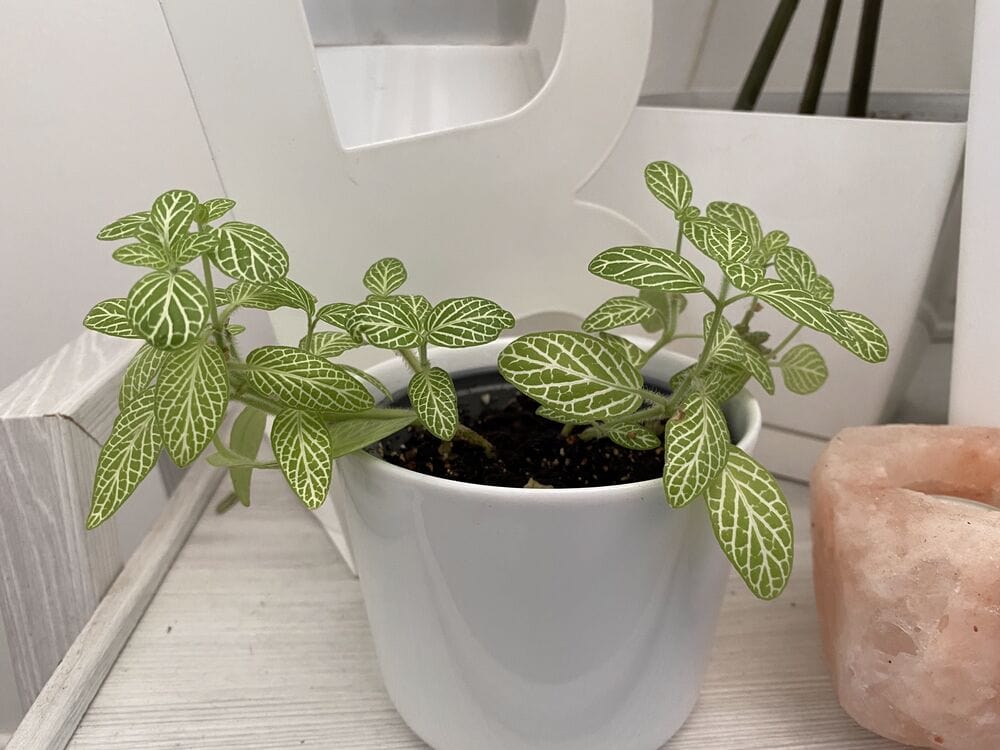
My fittonia got leggy too: long stems with leaves mostly at the tips, all reaching for the light. So I cut her back. Leggy growth comes from not enough light and from never trimming her, and older plants do it naturally over time.
Pinch or snip off the growing tips just above a pair of leaves. New shoots grow from that point, so she branches out and fills in. If she makes small flower spikes, pinch those off too. The flowers are tiny and white, and taking them off keeps her energy in the leaves.
Don't throw the cuttings away. Fittonia roots easily from stem cuttings in water or in moist soil, usually within a few weeks. Plant the rooted cuttings back into the same pot to make her fuller, or start a new plant. My Houseplant Propagation Guide walks you through it step by step.
Is Fittonia Safe for Cats and Dogs?
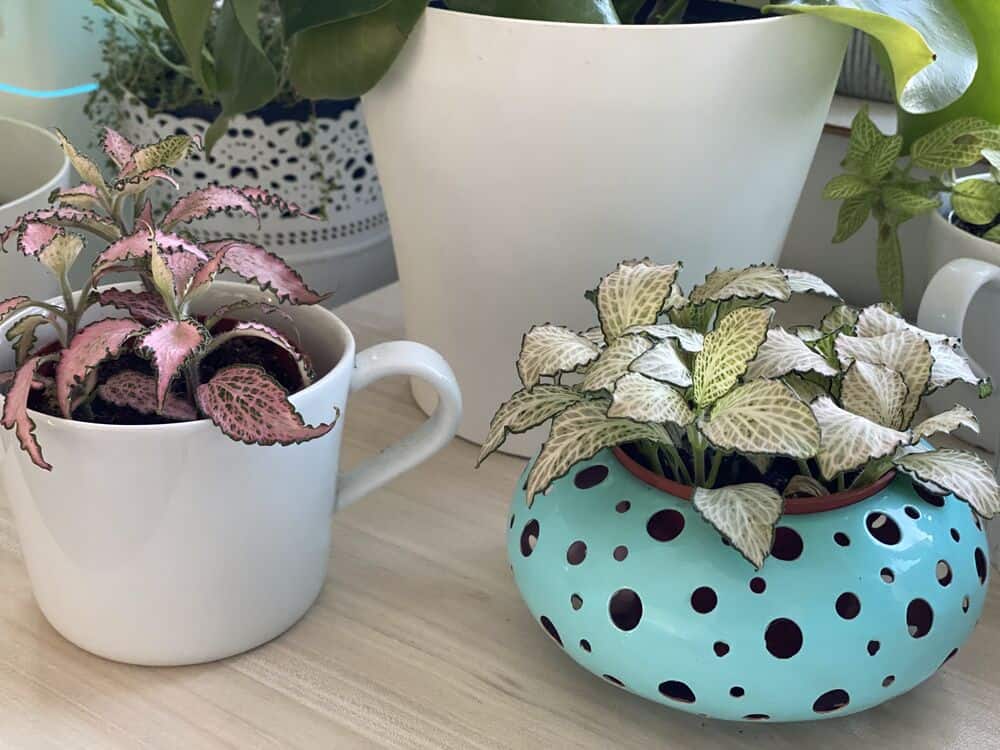
Yes. The ASPCA lists the nerve plant as non-toxic to cats, dogs and horses. I have two cats who chew on almost every plant they can reach, and they leave my fittonias alone. Still, any plant can upset a pet's stomach if they eat a lot of it, so keep an eye on chewers. For more safe choices, see my list of pet-friendly houseplants.
Fittonia Varieties
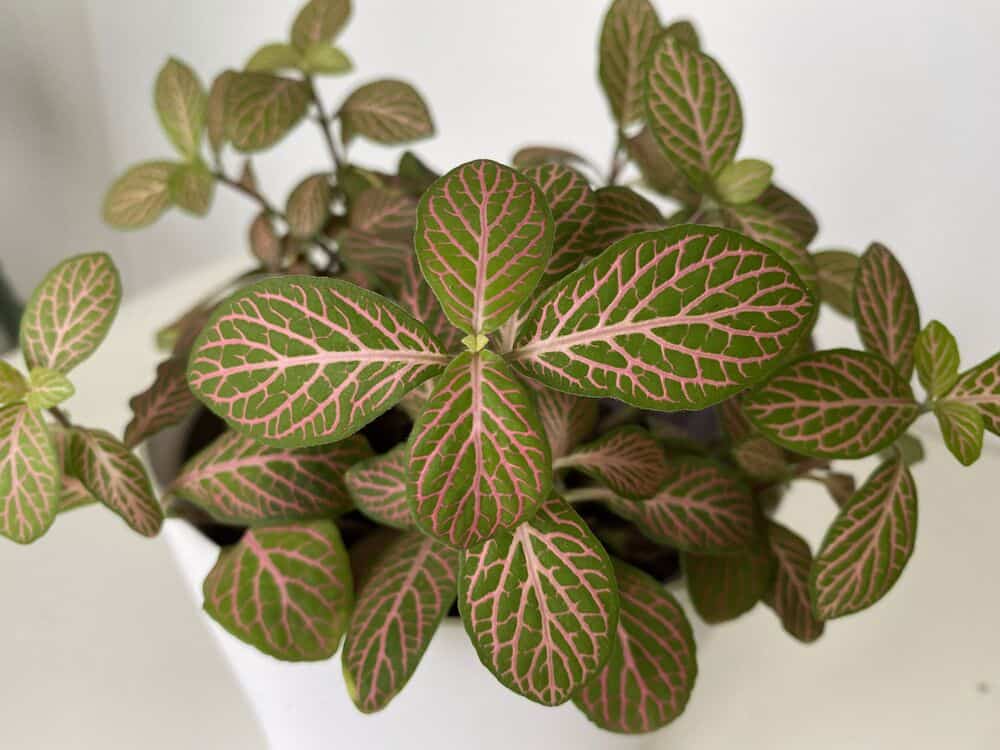
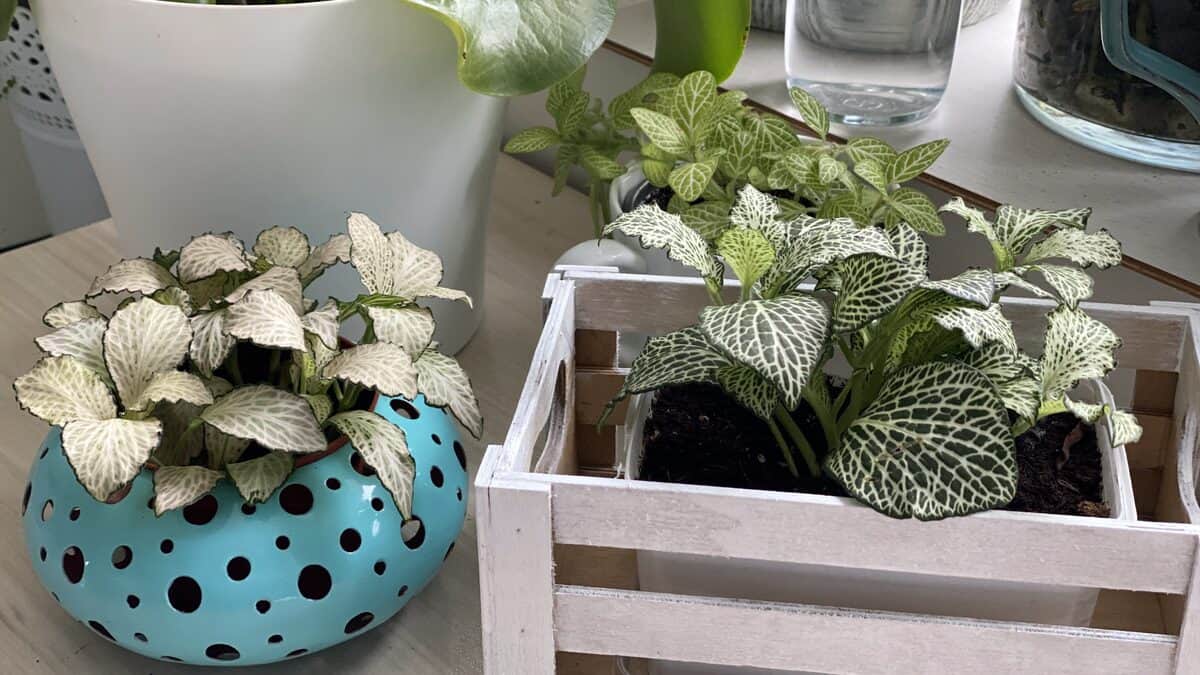
Fittonias come in lots of colours: white veins on dark green leaves, leaves that are almost all white, pink or red veins, and pink leaves edged with green. They all need the same care, so everything in this post applies to every one of them. You'll usually see them sold as Fittonia albivenis, and the red-veined types sometimes still carry the older name Fittonia verschaffeltii.
If remembering to water is the hard part, that's one of the reasons I created Leaftend, my plant care app. You still need to check the soil with your finger, but it makes staying consistent much easier, and with a fittonia, consistency is everything. If you love a good plant rescue, you'll also enjoy my prayer plant post, another humidity lover with a lot of personality.
I share more real plant fixes on my YouTube channel, so come and say hello at @PlantHouseGarden.
Frequently Asked Questions
Why is my fittonia drooping?
Most often she is thirsty. Fittonia collapses as soon as her soil dries out and stands up again within a few hours of watering. If she droops while the soil is wet, she is getting too much water and the roots may be rotting.
How do I revive a dying fittonia?
If the soil is dry, water her thoroughly or let the pot soak in a bowl of water for 20 to 30 minutes. If the soil is wet and the stems are mushy, cut off the healthy tips and root them in water, because those are your best chance.
Why are my fittonia leaves curling?
Curling leaves usually mean dry air, too much direct sun, or soil that has dried out. Move her out of direct sun, raise the humidity with a pebble tray, grouping or a humidifier, and keep the soil lightly moist.
Why are my nerve plant leaves crispy?
Crispy brown edges come from low humidity, direct sun, or letting her wilt again and again. Trim the worst leaves, keep her in bright indirect light and keep the air around her more humid.
How often should I water a fittonia?
Water when the top half inch (about 1 cm) of soil feels dry, and never let the pot dry out completely. In a warm room in summer that can be every few days, and much less often in winter.
Why is my fittonia leggy?
Leggy stems mean she needs more light and a trim. Pinch the growing tips just above a pair of leaves so she branches out, and root the cuttings to fill the pot.
Is fittonia toxic to cats?
No. The ASPCA lists the nerve plant as non-toxic to cats, dogs and horses, so it is one of the safer houseplants for homes with pets.
Does fittonia need a terrarium?
No, she grows well in a normal pot if you keep the soil moist and the air humid. A terrarium simply makes that much easier, which is why fittonia is such a popular terrarium plant.
Related Topics
- How to Fix Root Rot
- How to Make a Terrarium
- Humidity and Temperature for Houseplants
- Pet-Friendly Houseplants
- Houseplant Propagation Guide
- Houseplant Care for Beginners
Written by Bojana
Plant lover, grower, and music maker behind Plant House & Garden, with 35+ years of hands-on houseplant experience. Read more about Bojana →