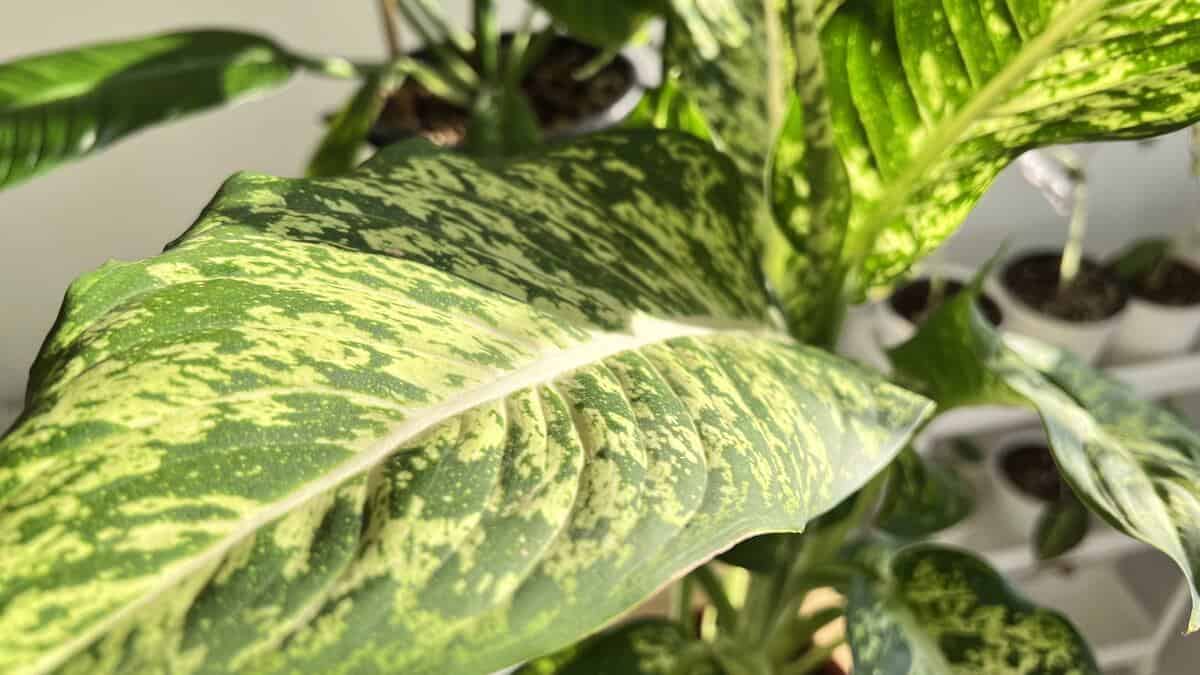
Dieffenbachia Leaves Turning Yellow? 5 Mistakes to Avoid (and How to Fix Them)
Are your dieffenbachia leaves turning yellow, drooping or getting brown edges? Well, you're not alone.
Quick answer: Dieffenbachia leaves turning yellow usually point to watering. Irregular watering, soil that stays soggy, or soil left dry for too long all yellow the leaves. Full sun, cold drafts and too much fertilizer play a part too. Water when the surface feels dry, keep her in bright indirect light, and keep her warm.
My dieffenbachia lives a few feet away from a west window, and I can tell you from experience: she is very sensitive. If I'm not regular with her watering, her leaves start turning yellow. So in this post I'll share the five mistakes behind yellow leaves on a dieffenbachia, and how to keep those big, beautiful leaves green.
Here's a quick look at one of my dieffenbachias getting a makeover.

I share more real plant fixes and calming music for plants on my YouTube channel. Subscribe if you'd like to grow along with me.
Dieffenbachia Leaves Turning Yellow? What Each Sign Means
| What you see | Most likely cause |
|---|---|
| Lower leaves yellowing and dropping | Soil staying too wet. One old bottom leaf now and then is normal. |
| Yellow leaves after forgetting to water | Irregular watering. She dried out too much between drinks. |
| Pale, yellow or bleached patches on top leaves | Too much direct sun. |
| Drooping leaves in damp soil | Overwatering or root problems. |
| Brown edges or tips | Short dry spells, dry heated air, or too much fertilizer. |
| Tall, bare cane with leaves only at the top | Not enough light, or simply age. Cut back and propagate. |
| Leaves dropping after a move | Cold draft or a sudden temperature change. |
Mistake #1: Watering Her Irregularly
This is the one I see on my own plant. A dieffenbachia likes her soil moderately moist, not soaking wet and not bone dry. When I water her on and off, letting her dry out completely and then flooding her, she reacts quickly with yellow leaves.
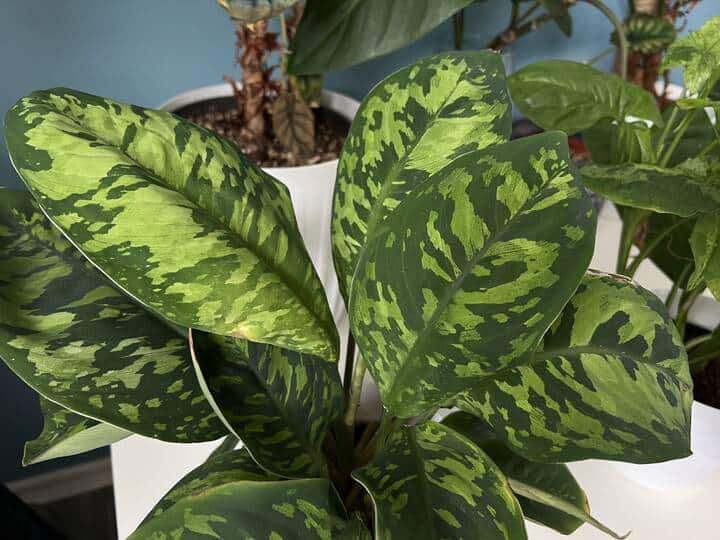
The fix is simple, but it takes a little routine. Check the soil every few days. When the surface feels dry to the touch, water thoroughly and let the extra drain away. In warm, bright months that may be once a week; in winter it will be less often.
Staying consistent is exactly why I made Leaftend, my free plant care app. It reminds me when it's time to check my plants. You still feel the soil first, but it stops those long gaps that turn her leaves yellow.
Mistake #2: Keeping the Soil Soggy
The opposite mistake is just as common. When the soil stays waterlogged, her roots can't breathe and start to rot. The signs are yellow lower leaves that drop one after another, drooping even though the soil is wet, and a soft, dark base on the cane.
Always use a pot with drainage holes, empty the saucer after watering, and never water again while the surface is still damp. If the base of the cane feels mushy, check the roots straight away. My guide on how to fix root rot walks you through it step by step.
Mistake #3: Too Much Sun or Too Little Light
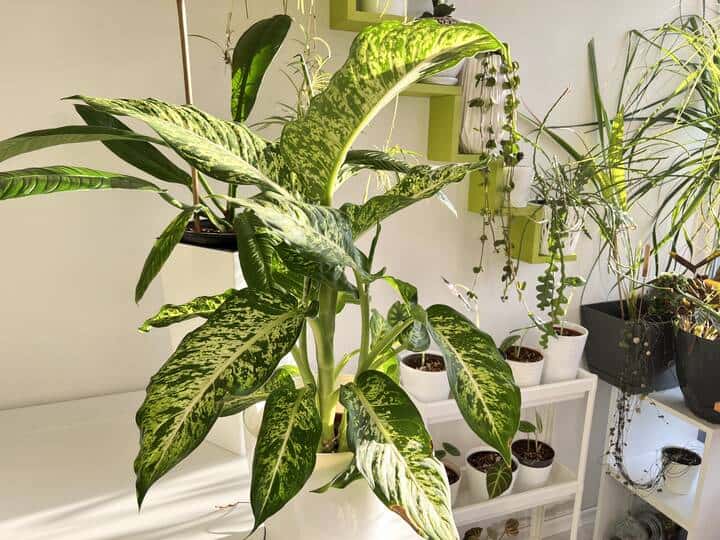
A dieffenbachia grows best in bright, indirect light. Direct sun, especially hot afternoon sun through glass, can bleach and yellow her big leaves. That's why mine sits a few feet away from my west window rather than right against the glass.
Too little light causes a different problem. She survives in shade, but grows slowly, stretches toward the light, and drops her lower leaves until you're left with a tall bare cane. Turn the pot every week or two so she grows evenly. My guide to light requirements for houseplants explains how to read your window.
Mistake #4: Cold Drafts and Dry Heat
She's a tropical plant. She grows best between about 65 and 75°F (18 to 24°C) and shouldn't go below 50°F (10°C). A cold window, an open door in winter, or moving her to a new spot can make her drop leaves suddenly.
Hot, dry air is the other side of it. Next to a radiator, her large leaves lose water fast and the edges turn brown. Keep her away from heaters and group her with other plants to keep the air around her a little more humid. For more on the cold season, see my winter houseplant care mistakes.
Mistake #5: Feeding Too Much
More fertilizer won't make yellow leaves green again. Too much can build up in the soil and burn the leaf tips and edges brown. Feed her only while she's actively growing in spring and summer, about every 4 to 6 weeks with a balanced fertilizer, and less if she's in a dimmer spot. In autumn and winter, let her rest.
Leggy Dieffenbachia? Cut Back and Propagate
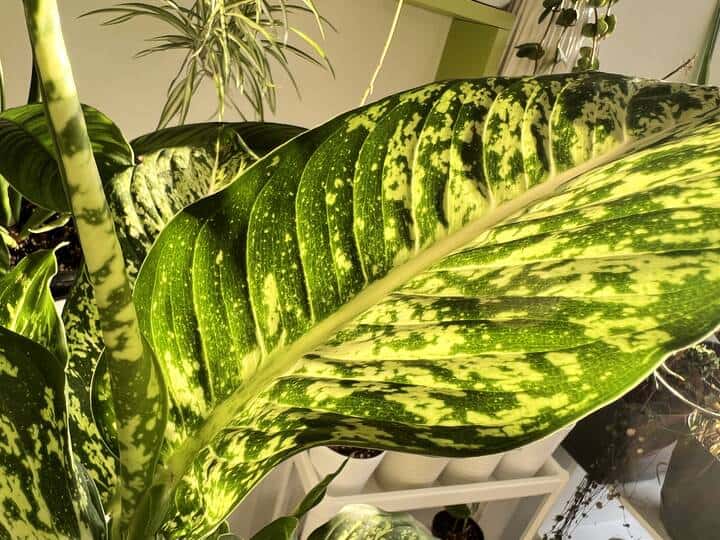
Over time, almost every dieffenbachia gets tall and bare at the bottom. The good news is you can cut her back and start new plants from the cane. Cut the top part with its leaves and root it, then cut the bare cane into pieces about 2 inches long, each with at least one bud. Let the pieces dry for a day, then lay them on a moist, light mix. The old stump often sprouts new leaves too.
Always wear gloves when you cut her. The sap irritates skin and is very painful in the eyes, so wash your hands afterwards. For more methods, see my houseplant propagation guide.
Is Dieffenbachia Toxic to Cats and Dogs?
Yes. The ASPCA lists dieffenbachia as toxic to cats and dogs. Chewing it causes intense burning in the mouth, drooling, vomiting and difficulty swallowing. That's where the name dumb cane comes from. My two cats leave mine alone, but every pet is different, so keep her out of reach if yours like to chew. My list of pet-friendly houseplants has safer choices.
Which problem do you have with your dieffenbachia: yellow leaves, drooping or a tall bare cane? Let me know in the comments. And for any other plant problem, my guide to houseplant pests and problems is a good place to start.
Frequently Asked Questions
Why are my dieffenbachia leaves turning yellow?
Watering is the most common cause. Irregular watering, soil that stays soggy, or soil left bone dry for too long all turn the leaves yellow. Full sun, cold drafts and too much fertilizer can also cause it. One old lower leaf yellowing now and then is normal.
Should I cut yellow leaves off my dieffenbachia?
Yes. A fully yellow leaf will not turn green again, so you can cut it off at the base with clean scissors. Wear gloves, because the sap irritates skin. Then fix the cause so new leaves stay green.
How often should I water a dieffenbachia?
Water when the surface of the soil feels dry to the touch, then water thoroughly and let the excess drain. In warm months that may be about once a week; in winter it will be less often. Being consistent matters more than a fixed schedule.
Why is my dieffenbachia drooping?
Feel the soil. Drooping in wet soil usually means overwatering or root rot, while drooping in very dry soil means she is thirsty. Cold drafts and sudden moves can also make the leaves droop.
How much light does a dieffenbachia need?
Bright, indirect light is best. Hot direct sun can bleach and yellow the leaves, while too little light makes the plant stretch and lose its lower leaves.
How do I fix a leggy dieffenbachia?
Cut the top off and root it, then cut the bare cane into pieces about 2 inches long with at least one bud each, let them dry for a day, and lay them on a moist, light mix. The remaining stump often sprouts new leaves too.
Is dieffenbachia toxic to cats and dogs?
Yes. The ASPCA lists dieffenbachia as toxic to cats and dogs. Chewing it causes intense burning in the mouth, drooling, vomiting and difficulty swallowing, so keep it out of reach of pets.
Related Topics
- How to Fix Root Rot
- Pet-Friendly Houseplants
- Houseplant Propagation Guide
- Winter Houseplant Care Mistakes
- Houseplant Care for Beginners

Written by Bojana
Plant lover, grower, and music maker behind Plant House & Garden, with 35+ years of hands-on houseplant experience. Read more about Bojana →