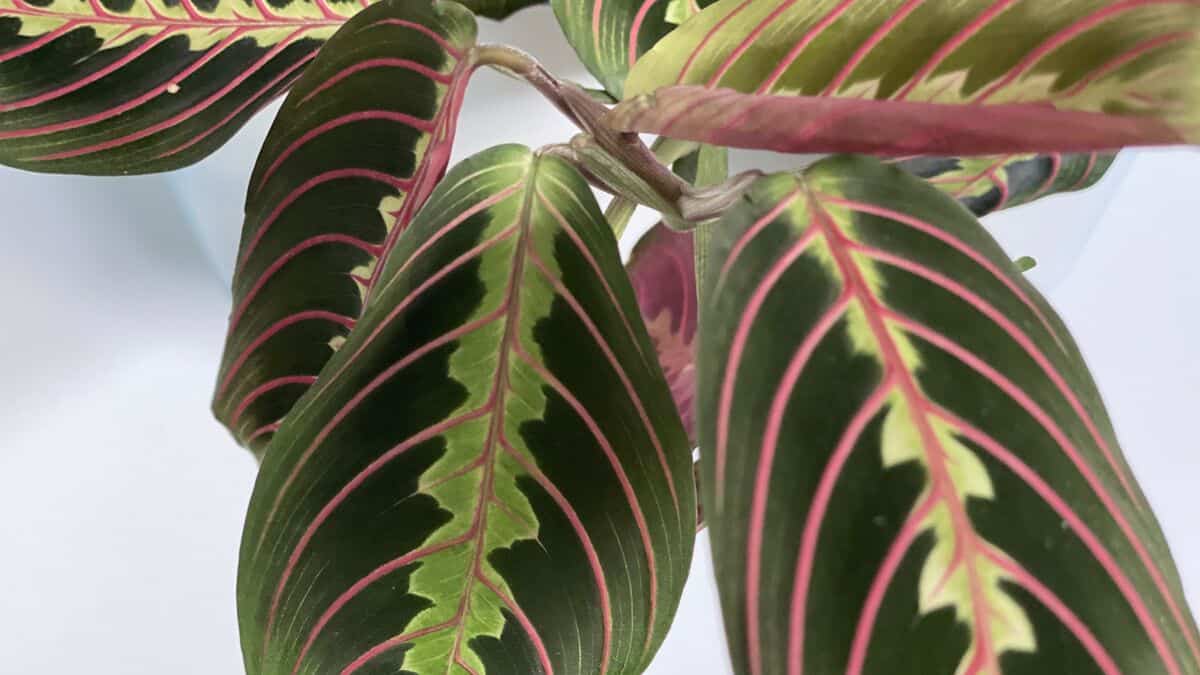
Prayer Plant Leaves Curling, Yellow or Brown? 5 Mistakes to Avoid (and How to Fix Them)
Are your prayer plant leaves curling, turning yellow, or getting brown tips? Well, you're not alone.
Quick answer: Most prayer plant problems come down to water, light and dry air. Yellow leaves usually mean the soil stays too wet. Prayer plant leaves curling and crispy brown tips point to dry soil or dry heat, and pale, scorched patches mean too much direct sun. Keep the soil lightly moist, give bright indirect light, and keep her away from radiators.
My Maranta lost a whole stem. It dried up completely, and I had to remove it. One simple care mistake caused all that damage, and I'll tell you exactly which one in Mistake #3.
And this is where it gets confusing. A Maranta that needs water can look a lot like one that's getting too much. Choosing the wrong fix can make things worse. So below are the five mistakes I see most often, the signs to look for, and what to do instead. If you prefer to watch, my full video is right here.

I share more real plant fixes and calming music for plants on my YouTube channel. Subscribe if you'd like to grow along with me.
Prayer Plant Leaves Curling, Yellow or Brown? What Each Sign Means
| What you see | Most likely cause and what to check |
|---|---|
| Yellow leaves | Soil staying too wet or poor drainage. One old lower leaf turning yellow can be normal; several at once is a warning sign. |
| Leaves curled inward during the day | The soil dried out too much, or dry heat is blowing on her. Feel the soil before you water. |
| Crispy brown tips and edges | Drying out, dry air, hard tap water, or too much fertilizer. |
| Pale, washed out leaves or dry brown patches | Strong direct sun hitting the leaves. |
| Small new leaves and faded patterns | Not enough light. |
| Soft stems and drooping in wet soil | Roots struggling or rotting in soggy potting mix. |
| Leaves folding up at night | Completely normal. This is how she got the name prayer plant. |
These clues can overlap, so always check the soil and the growing conditions too, not just the leaves.
Mistake #1: Keeping the Soil Too Wet
Maranta likes her soil lightly moist. But if it stays wet for too long, her roots can struggle. Roots need air as well as water. When the potting mix is always soaked, they don't get enough air and can start to rot.
This can happen when you water too often, use heavy soil, or keep the plant in a pot without drainage holes. Water left sitting in a saucer or decorative pot can also keep the soil too wet.
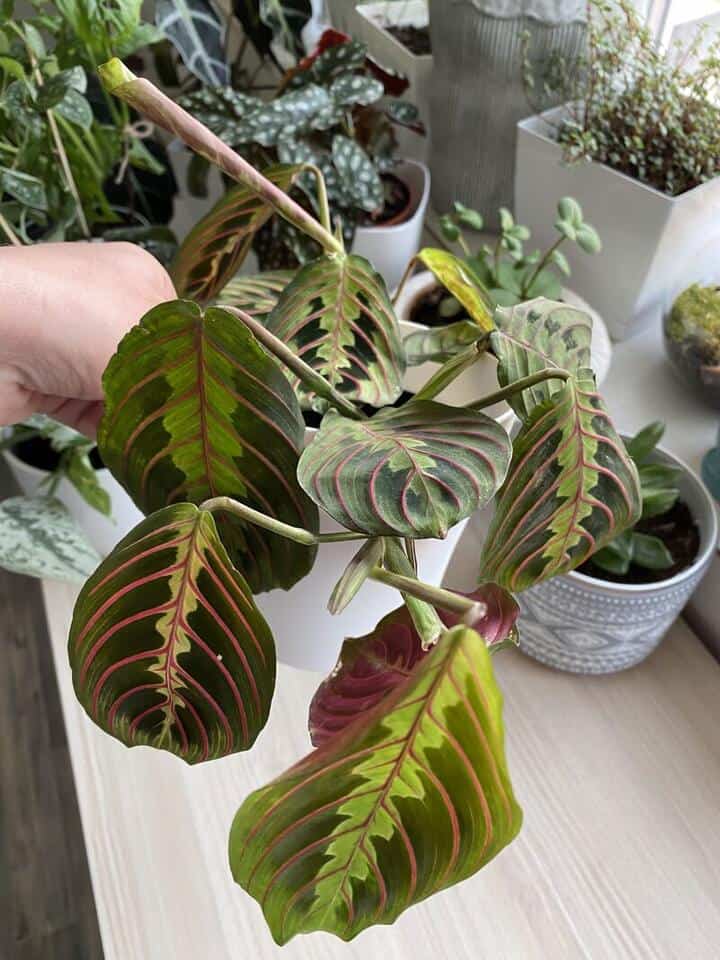
The signs can include yellow leaves, soft stems, and drooping even though the soil is still wet. One older leaf turning yellow can be normal. But if several leaves are yellowing, check the soil and drainage.
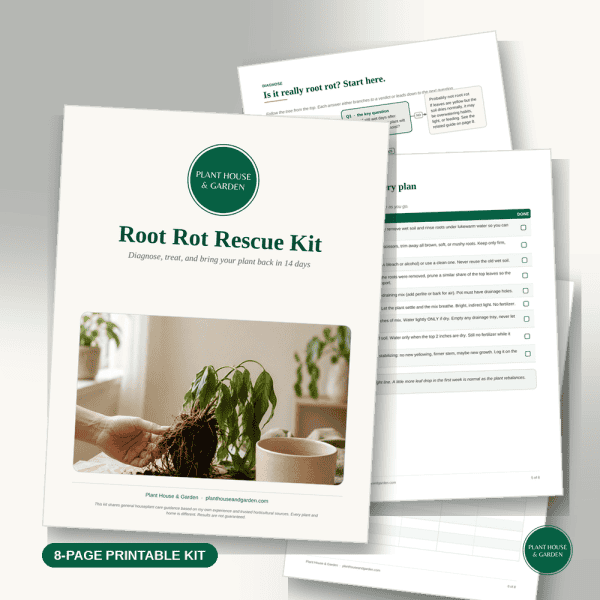
If the soil stays wet and the stems feel soft, gently check the roots. Remove any soft, rotten roots and repot in fresh, airy mix. I walk through the whole process step by step in my guide on how to fix root rot.
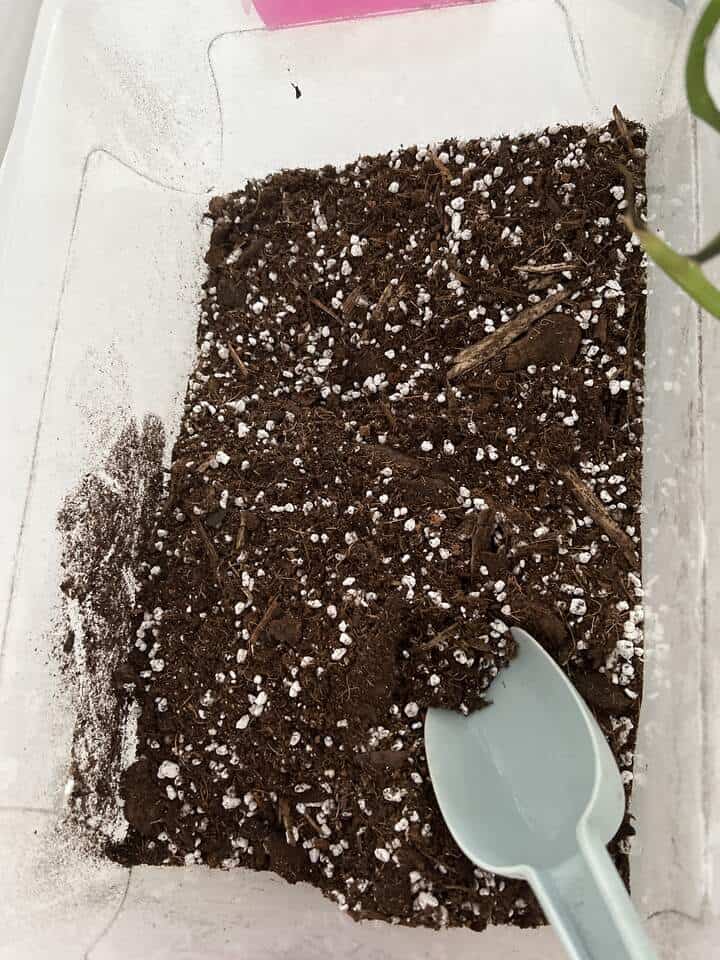
For regular care, feel the potting mix before watering. If it still feels wet, give it more time. Make sure the pot has drainage holes and use a loose mix that holds some moisture while letting extra water drain through. After watering, let the pot drain well, then empty any water left in the saucer or decorative pot.
The goal is lightly moist soil, with enough air around the roots. Keeping her constantly wet won't keep her healthy.
Mistake #2: Giving Her the Wrong Light
Maranta grows best in bright, indirect light. She needs enough light to grow well, with protection from strong direct sun.
A dark corner may look like a nice place for her, but too little light can slow her growth. New leaves may be smaller, and her beautiful leaf patterns can become less clear.
Strong direct sunlight can cause a different problem. The leaves may look pale or washed out, and dry, brown patches can appear where the sun hits them.
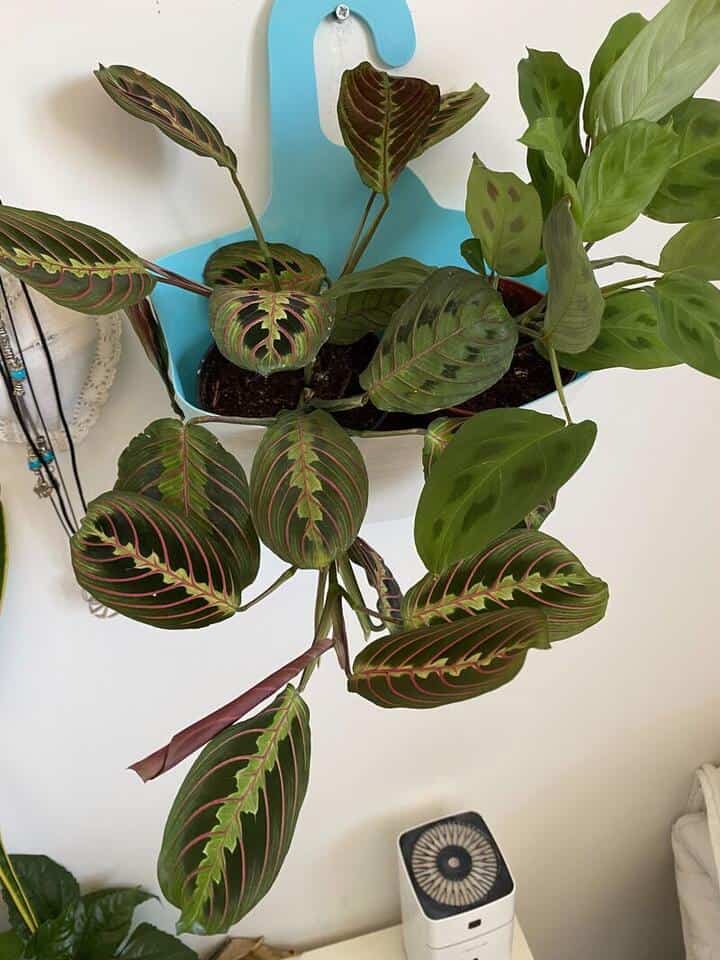
Look at both the leaves and the place where your plant is growing. If she gets strong afternoon sun, try a sheer curtain or move her a little farther from the window. And remember, a spot that works well in winter may get too much direct sun in summer. Check where the sunlight falls as the seasons change.
If she sits in a dark corner, bring her closer to natural light, while keeping her out of harsh sun. Make small changes and watch the new growth to see whether the new spot suits her better. If you're not sure how bright your window really is, my guide to light requirements for houseplants explains how to read it.
A bright place with soft, filtered light helps her grow and keeps those beautiful patterns looking their best.
Mistake #3: Letting the Soil Dry Out Too Much
Maranta doesn't like drying out completely between waterings. If her soil stays dry for too long, she struggles to get the water she needs.
Her leaves can start curling inward and look rolled up instead of open and flat. This is the most common reason for prayer plant leaves curling. They may become limp and droopy, and the tips and edges can turn brown and crispy. Raising and folding her leaves at night is normal. Here, we're talking about mature leaves that stay tightly curled during the day.
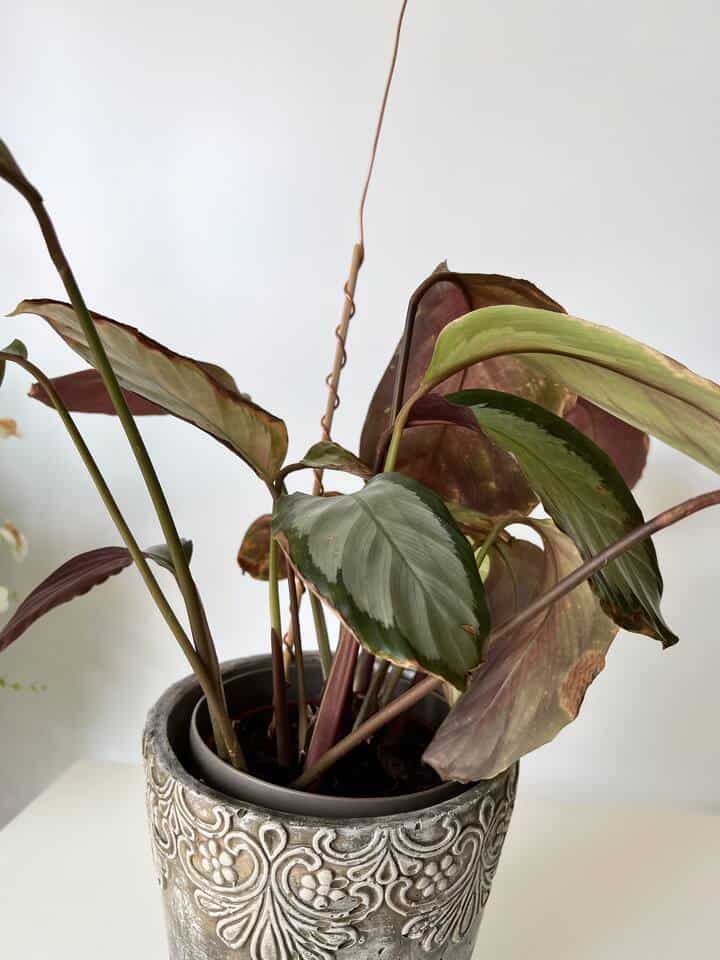
If she stays dry for too long, she can lose whole leaves or even a stem. And this is the mistake behind my missing stem. I wasn't consistent with watering, and I let the soil dry out too much between waterings.
So, check the soil regularly instead of waiting for her leaves to droop. Feel the top inch of the potting mix. When that layer starts to feel dry, while the soil below is still slightly moist, it's usually time to water. Water thoroughly and let the excess drain away.
Don't follow a fixed watering schedule. Check more often in warm, bright conditions, when the soil may dry faster. And remember, curled or drooping leaves don't always mean she's thirsty. If the soil is still wet, adding more water could make things worse.
This is one of the reasons I created Leaftend, my plant care app. It helps me keep track of care for all my plants. You still need to check the soil before watering, but it makes staying consistent easier. It's free for your first three plants.
Mistake #4: Keeping Her Near Dry Heat
Maranta enjoys warmth and humid air. But indoor heating can make the air around her too dry, especially in winter. A nearby radiator, heater, or heating vent can make her lose moisture faster.
Her leaf tips and edges may turn brown and crispy. The leaves can also curl, even when the soil hasn't dried out. If the soil is still moist, look at what's around the plant. Is warm air blowing directly onto her? Is she sitting close to a radiator?
Move her away from direct heat and keep her somewhere with a steady temperature, away from cold drafts too. A small humidity meter can help you check how dry the air really is. If the room is very dry, a humidifier can help.
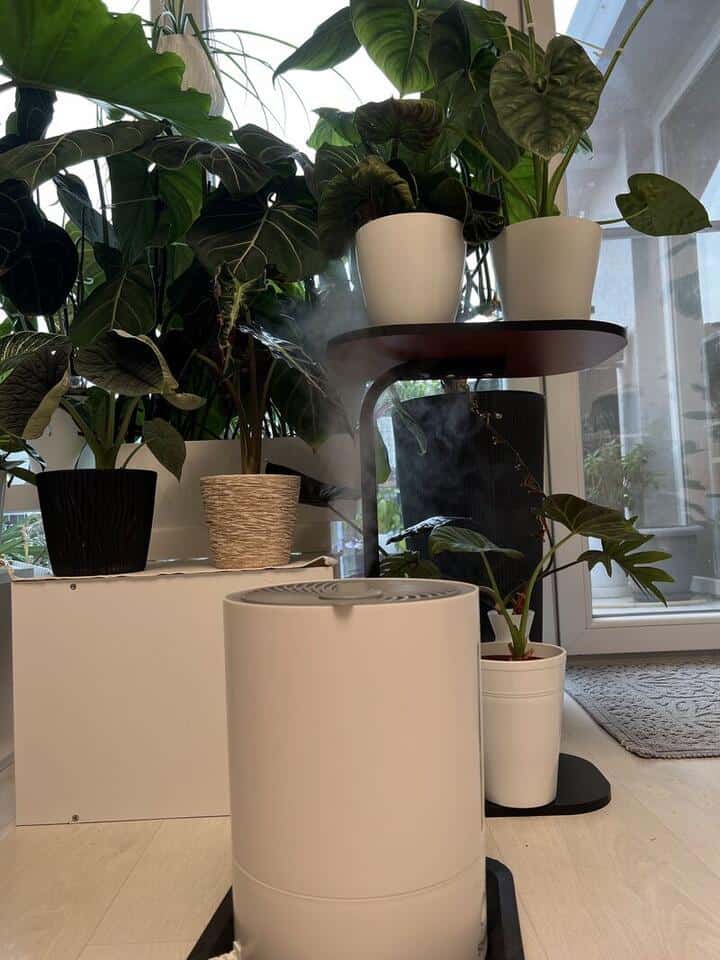
A quick mist won't keep the air humid for long, so don't rely on spraying alone (I explain why in my post on misting houseplants). And don't try to fix dry air by keeping the soil wetter. Her roots may already have enough water.
Dry, warm air is also exactly what spider mites love, so if you notice fine webbing or tiny speckles under the leaves, take a look at how to get rid of spider mites. For more on the heating season, see my winter houseplant care mistakes and humidity and temperature for houseplants.
Give her warmth without direct heat, and pay attention to the air as well as the soil.
Mistake #5: Ignoring Water Quality and Overfeeding
Maranta can be sensitive to what builds up in her soil. Minerals and salts from watering and too much fertilizer can collect over time. This can damage her roots and cause brown leaf tips and edges.
If new leaves keep getting brown tips even after you've checked watering, light, and humidity, take a look at your water and feeding routine. Hard tap water can be part of the problem. Try distilled water or clean rainwater and watch how the new leaves develop. Leaving tap water out overnight won't remove the minerals that make it hard.
Fertilizer needs care too. More food won't make a struggling Maranta recover faster. Too much can cause even more damage. I recommend using a liquid fertilizer diluted to half strength when she's actively growing. When growth slows, reduce or pause feeding. And don't fertilize when the soil is completely dry.
If salts have built up, you can flush the potting mix with plenty of fresh water, letting it drain fully through the bottom. So, choose suitable water, feed gently, and remember that more fertilizer isn't always better.
Should You Cut Off Damaged Prayer Plant Leaves?
Once you've corrected the care problems, what should you do with the damaged leaves? Brown, crispy parts won't turn green again. But a few brown tips don't mean you need to remove the whole leaf. If most of the leaf is still green, keep it. That healthy part is still helping your Maranta grow.
You can trim the dry tips with clean, sharp scissors. Follow the shape of the leaf and leave a thin brown edge, rather than cutting into healthy green tissue. If a leaf is completely yellow or dry, you can remove it by cutting its stalk near the base. Be careful not to damage nearby stems or new growth.
Trimming makes the plant look tidier, but it doesn't fix the cause. So, correct the care first, keep the healthy green leaves, and watch for fresh new growth.
I also wanted my Maranta to look a little bushier, so I added a small support for the stems that were hanging over the edge of the pot. Maranta naturally spreads as she grows, so this isn't a sign that something is wrong, and you can let her stems trail over the pot if you like that look.
Prayer Plant, Calathea and Pets
Calatheas are close cousins of the Maranta. They belong to the same plant family and are often sold as "prayer plants" too, so almost everything in this post applies to them as well. If you grow one, my Calathea orbifolia care guide goes deeper.
And if you share your home with cats or dogs, here's some good news: the true prayer plant (Maranta leuconeura) is listed as non-toxic by the ASPCA. You'll find it, together with other safe choices, in my list of pet-friendly houseplants.
Which problem have you had with your Maranta: yellow leaves, brown tips, or curling? Let me know in the comments. And if your plant is showing a problem that isn't on this list, my guide to houseplant pests and problems covers the rest.
Frequently Asked Questions
Why are my prayer plant leaves curling?
Mature leaves that stay curled during the day usually mean the soil dried out too much, or dry heat from a radiator or vent is pulling moisture from the leaves. Feel the soil first. If it is dry, water thoroughly. If it is still moist, move her away from the heat and check how dry the air is.
Why is my prayer plant drooping?
Feel the soil first. Drooping in dry soil usually means she is thirsty, so water thoroughly and let the excess drain. Drooping in soil that is still wet, especially with soft stems or yellow leaves, points to roots that are staying too wet, so let her dry out a little and check the roots.
Why does my prayer plant have brown tips?
Crispy brown tips usually come from drying out, dry air, hard tap water or too much fertilizer. Check them one by one. The brown parts will not turn green again, so judge your changes by how the new leaves come in.
Why are my prayer plant leaves turning yellow?
One old lower leaf turning yellow can be normal. Several yellow leaves, especially with soft stems and soil that stays wet, usually mean the soil is too wet or the pot does not drain well.
Is it normal for a prayer plant to fold its leaves at night?
Yes. Raising and folding the leaves in the evening and opening them again in the morning is completely natural, and it is where the name prayer plant comes from. Only mature leaves that stay tightly curled during the day point to a problem.
How often should I water a prayer plant?
There is no fixed schedule. Water when the top inch of the potting mix starts to feel dry while the soil below is still slightly moist, then let the excess drain away. Check more often when it is warm and bright.
What water is best for a prayer plant?
If your tap water is hard, distilled water or clean rainwater is a good choice. Leaving tap water out overnight will not remove the minerals that make it hard.
Is a prayer plant safe for cats and dogs?
Yes. The true prayer plant, Maranta leuconeura, is listed as non-toxic to cats and dogs by the ASPCA. Chewed leaves will still look damaged, so it is worth keeping her a little out of reach.
Related Topics
- How to Fix Root Rot
- Calathea Orbifolia Care
- Misting Houseplants
- Bathroom Plants: 8 Humidity-Loving Picks for Low Light
- Pet-Friendly Houseplants
- Houseplant Care for Beginners

Written by Bojana
Plant lover, grower, and music maker behind Plant House & Garden, with 35+ years of hands-on houseplant experience. Read more about Bojana →