When to Bring Houseplants Indoors for Fall & Winter (Complete Guide)
When to bring houseplants indoors is one of the most common questions at the end of summer. Warm days can stretch into September, but chilly nights arrive fast and your plants will feel the difference before you do. If you wait too long, the first cold snap can damage tropical leaves, stress roots, and invite pests to sneak in with the temperature swing.
The right timing makes the difference between plants that settle in happily and plants that sulk and drop leaves as soon as the cold arrives.
In this guide, I’ll walk you through the exact timing, how to prepare your plants before moving them, and the mistakes to avoid - so your green friends make the transition from patio to living room without shock. Get the timing right and they stay healthy and pest-free until spring.
Watch my short video below, where I show the 5 things I do before my plants come inside:

Click here to watch my video on YouTube
| Step | What to do |
|---|---|
| Timing | Move plants in before nights drop below about 50 to 55°F (10 to 13°C) |
| Tender first | Bring cold-sensitive tropicals indoors earliest |
| Pest check | Inspect leaves, stems, and soil, treat any pests before moving in |
| Clean up | Wipe leaves, clean pots, and remove dead growth |
| Transition | Move plants in gradually over a week or two to avoid shock |
| Indoors | Give them the brightest spot and reduce watering as growth slows |
Best Practices for When to Bring Houseplants Indoors
The magic number is 55°F (13°C) at night. Once temperatures regularly dip below this point, most tropical houseplants (monstera, philodendron, alocasia, ficus, etc.) start to suffer. Hardy plants like succulents and cacti can tolerate cooler nights, but even they shouldn’t be left outside once temps approach 45°F (7°C).
👉 Check your local 10-day forecast - if nights are trending down, it’s time to act. Don’t wait for the first frost alert; the stress happens earlier. The golden rule is simple: once evening temperatures drop below 55°F (13°C), that’s when to bring houseplants indoors. Moving them inside before the cold protects leaves from shock, keeps roots healthy, and helps prevent pest invasions that often happen when plants weaken outdoors.
Preparing Houseplants Before Moving Indoors
Transitioning correctly is more important than the actual date. Here’s how to prepare them so they don’t bring problems inside.
- Inspect for pests: Look under leaves, stems, and soil surface. Treat spider mites, aphids, or mealybugs before moving. Use my Homemade Leaf Shine & Pest-Free Recipe.
- Clean the foliage: Dust and grime reduce light absorption indoors. Wipe with a damp cloth or rinse gently.
- Prune & groom: Remove yellow leaves, leggy stems, and spent blooms.
- Check the soil: Refresh the top layer if compacted. Ensure pots have drainage before going into lower-light rooms.
- Repot? Not now: Fall is not ideal for major repotting. Wait until spring unless roots are truly bound.
These simple steps take very little time, and they save you a lot of trouble later. Skipping preparation often leads to pest outbreaks and yellowing leaves once inside.
The Indoor Transition (Step by Step)
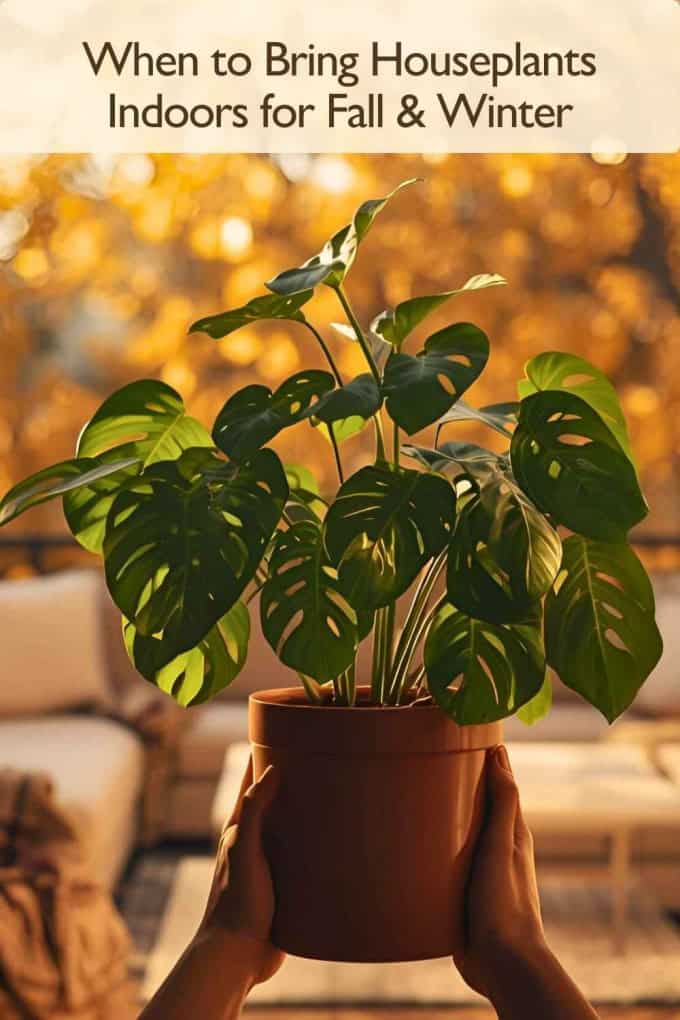
Don’t shock your plants by moving them from full sun outside straight into dim corners. How you move them matters just as much as when. By easing plants into indoor light and humidity, you reduce shock and help them adapt smoothly.
- Start with shade: Place them in a shaded outdoor spot for a week.
- Move inside gradually: Put them near the brightest window you have (south or west exposure works best).
- Boost humidity: Use pebble trays, humidifiers, or group plants together to fight dry indoor air.
- Adjust watering: Indoor growth slows in fall - check soil before watering. Learn how in my Houseplants Watering Tips.
Common Mistakes to Avoid
- Waiting for frost: By then, tropical leaves may already be damaged.
- Bringing pests inside: Skipping inspection means infestations later.
- Overwatering indoors: Cooler temps + less light = slower drying soil → root rot.
- Ignoring light needs: Plants that thrived in outdoor sun may decline indoors if placed in dark rooms.
Most of these mistakes happen because we wait too long. Acting early prevents nearly all of these problems.
Once your plants are inside, watch my video on the 5 winter care mistakes to avoid:

Related Articles
- How to Get Rid of Fungus Gnats in Houseplants Permanently
- Top 10 Fall Balcony Plants for easy care
- Weekly Plant Watering Planner
- Winter Houseplant Care Mistakes: 5 Things You Should Never Do
- Pruning and Repotting Houseplants in Fall: What You Should and Shouldn’t Do
Frequently Asked Questions
When should I bring my houseplants indoors for winter?
Bring them in during autumn, before night temperatures regularly drop below about 50 to 55°F (10 to 13°C) and well ahead of the first frost. Tropical and tender plants should come in first, as they are the most sensitive to cold.
How do I check houseplants for pests before bringing them inside?
Inspect the tops and undersides of leaves, the stems, and the soil surface for bugs, webbing, or eggs. Rinse the foliage, and treat any pests with neem oil or insecticidal soap before moving plants indoors, so you do not bring an infestation inside.
Should I repot before bringing plants indoors?
Only if a plant is clearly rootbound or in tired soil. Otherwise, autumn is not the ideal time for major repotting, as plants are slowing down. A quick top-up of fresh soil and a clean pot is usually enough.
Why do my plants drop leaves after coming indoors?
Some leaf drop is normal as plants adjust from bright outdoor light to dimmer indoor conditions. Move them in gradually, give them your brightest spot, and reduce watering, and they should settle within a few weeks.
How do I care for houseplants once they are indoors for winter?
Give them as much light as possible, water less often as growth slows, keep them away from cold drafts and hot radiators, and pause feeding until spring. Steady, gentle care helps them rest comfortably through winter.
Final Thoughts
Knowing when to bring houseplants indoors saves you from leaf drop, pest invasions, and winter decline. Use the 55°F (13°C) rule as your guide, prep them well, and adjust care once inside. Done right, your plants won’t just survive the colder months, they’ll stay lush until spring. If you are just starting out, remember the 55°F (13°C) rule. It is the safest guide for all tropical plants.
Tip: Play relaxing 432 Hz Music for Plants indoors after the move. I like how it makes the room feel calm while everyone settles in.


Written by Bojana
Plant lover, grower, and music maker behind Plant House & Garden, with 35+ years of hands-on houseplant experience. Read more about Bojana →