8 Rare and Colorful Pink Houseplants (and How to Keep Them Pink)
Part of my complete Philodendron Care Guide: light, water, problems, every variety, and propagation in one place.
Pink houseplants have a way of stopping you in your tracks. That flash of bubblegum, blush or deep rose against green leaves feels almost too good to be real, and honestly, sometimes it is (more on that below). If you have been hunting for rare pink houseplants that genuinely earn their spot on the shelf, this is my honest shortlist of eight pink houseplants, plus the one thing almost nobody tells you: how to actually keep them pink instead of watching them fade back to plain green.
A quick word on where the pink actually comes from. In most of these plants the colour is either true variegation (sections of leaf with no green chlorophyll, so the pink or cream underneath shows through) or anthocyanin pigment, the same family of pigments that turns autumn leaves red. Both react to light. Give them enough bright, indirect light and the colour deepens. Leave them in a dim corner and the plant quietly fills those cells back in with green so it can survive. That single fact is the key to almost everything below.
1. Philodendron Pink Princess (the one everyone wants)
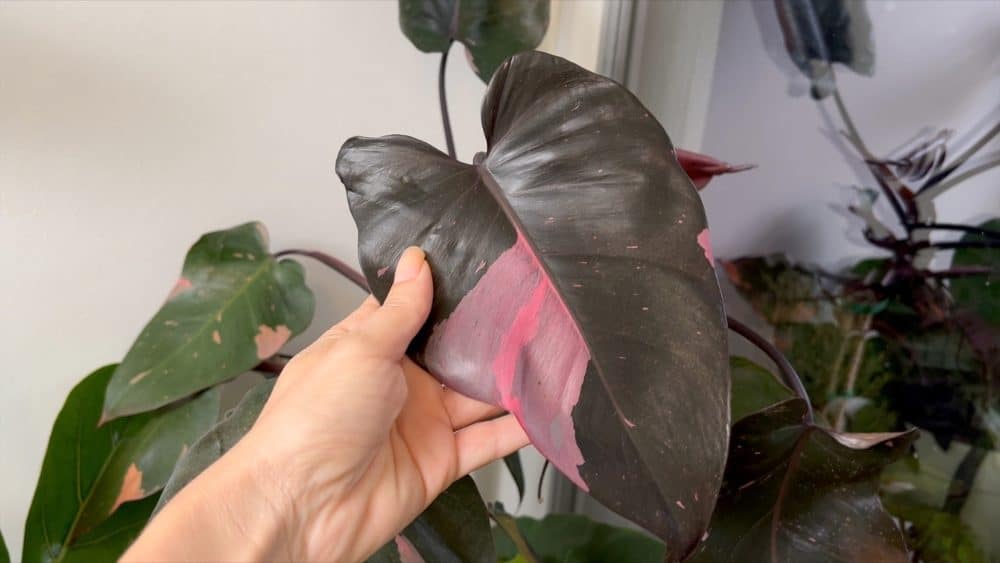
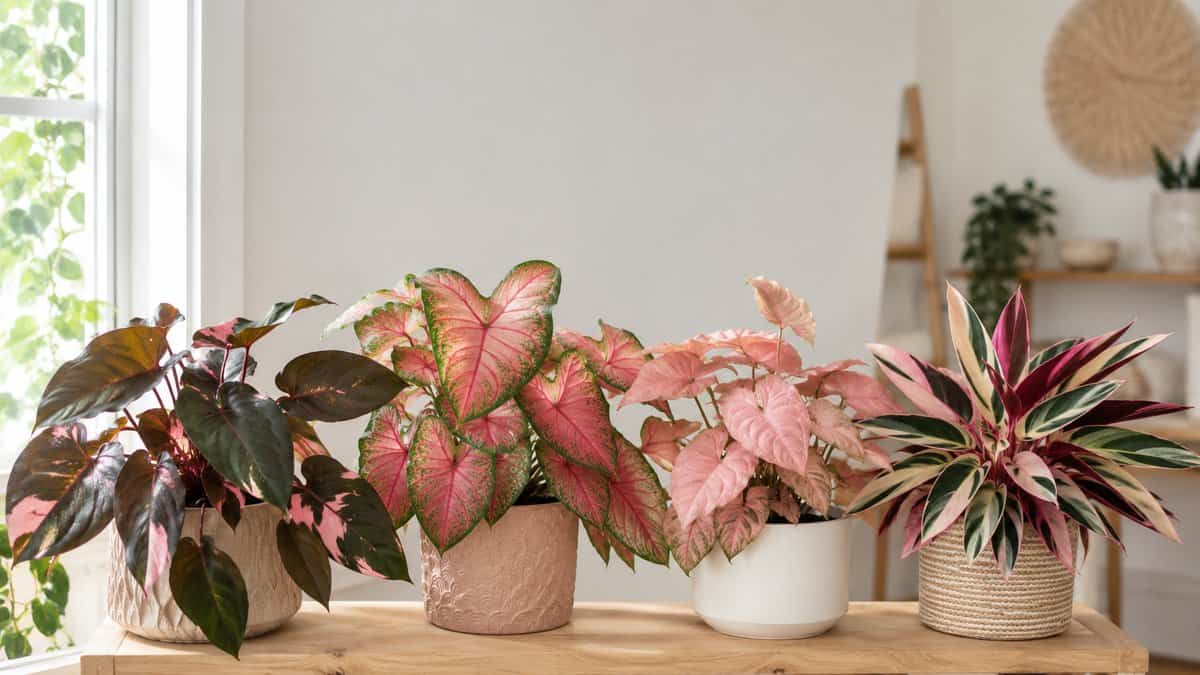
If there is a queen of pink houseplants, this is her. The Philodendron Pink Princess produces dark, almost black green leaves splashed with bubblegum pink, and no two leaves are ever the same. This is real, stable variegation, not a trick, which is exactly why she stays so desirable.
She is not difficult, just particular. Bright indirect light is non negotiable if you want strong pink. Water when the top inch or two of soil dries, use a chunky airy mix and keep her warm. The most common mistake I see is too little light, which makes new leaves come in all green.
For the full routine, my Philodendron Pink Princess care guide walks through light, watering and feeding step by step. If your plant is throwing tantrums, with brown leaves, no pink or slow growth, the Pink Princess problems guide covers the five mistakes that usually cause it. And when you are ready to make more, here is how to propagate a Pink Princess so every cutting keeps its colour. She has a paler cousin too, the Philodendron White Princess, if creamy variegation tempts you.
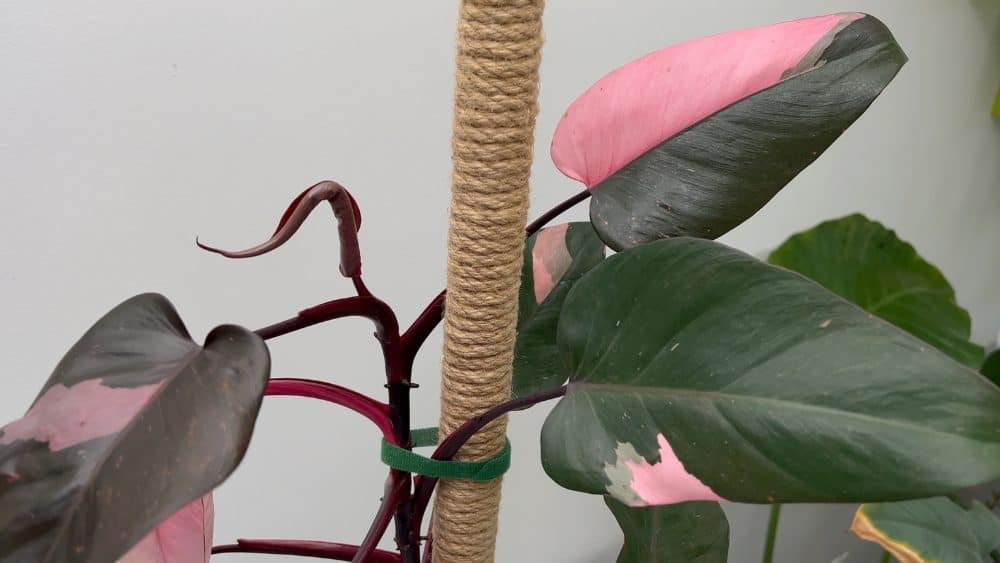
Keep it pink: give her the brightest indirect spot you have and prune back any fully green stems to push more variegated growth. Pet note: like all philodendrons, she is toxic to cats and dogs if chewed.
2. Philodendron Pink Congo (know this before you buy)
I have to include this one, because if you shop for pink houseplants you will run into it, and I would rather you hear the truth from me. The Pink Congo looks incredible in the shop, with whole leaves in solid hot pink. The problem is that the pink is artificially induced. Growers treat the plant with a chemical, with the evidence pointing to ethylene or a similar agent, that temporarily suppresses the green chlorophyll in new growth.
Within about six months to a year, every treated plant I have seen reverts to ordinary green, and it does not come back. It is less an outright scam than a mismatch between mass growers and collectors who expected the colour to last, but the result is the same: you pay a premium for pink that disappears. A genuine philodendron with natural variegation, like the Pink Princess above, is the honest alternative.
Keep it pink: you genuinely cannot, and that is the whole point. If a solid pink philodendron looks too perfect and too cheap for what it is, it is almost certainly a treated Pink Congo.
3. Pink Syngonium (the easy one)
If the Pink Princess is the diva, the pink Syngonium (sold as Neon Robusta or simply Pink) is the easygoing friend who still looks gorgeous. Its arrowhead leaves come in soft blush to bubblegum pink, and it grows fast, forgives the odd missed watering and roots almost too easily.
It will even grow in water for months on a bright windowsill, which makes it a lovely low commitment way into pink plants. In soil, keep it lightly moist and give it bright indirect light to hold the colour. Too little light and the leaves lean green and leggy.
Keep it pink: bright indirect light and regular pinching to keep growth compact and colourful. Pet note: toxic to cats and dogs.

4. Pink Aglaonema (colour for lower light)
When someone asks me for a pink plant that will cope with a less than perfect spot, I send them to the pink Aglaonema, also called Chinese Evergreen. Varieties like Pink Dalmatian and Anyamanee wash green leaves with speckles and blushes of pink and rose, and they handle medium to lower light far better than most colourful plants.
They are slow, steady and hard to kill. Water when the top of the soil dries, keep them warm and avoid cold draughts. Their pink is pigment rather than variegation, so it holds up better in lower light than a Pink Princess would, though brighter light still gives you more of it.
Keep it pink: medium to bright indirect light for the richest colour, and wipe the leaves now and then so they can actually use the light they get. Pet note: toxic to cats and dogs.

5. Caladium (the summer showstopper)
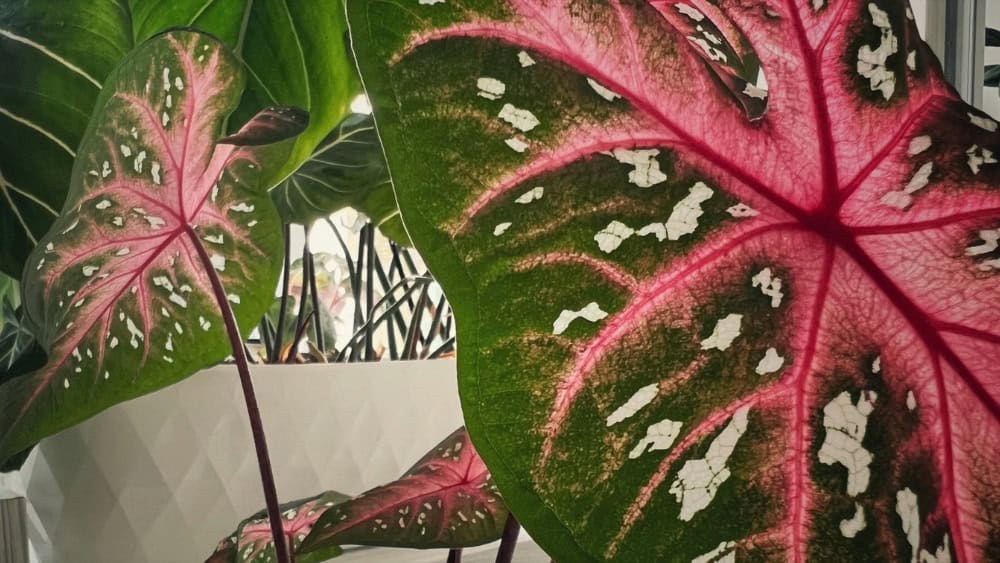
Caladiums are the fireworks of the pink houseplant world. Their heart shaped leaves come in translucent pinks and roses veined with green or white, and a well grown pot looks hand painted. The catch is that they grow from tubers, love warmth and humidity, and many varieties take a winter rest where they die back and then regrow.
Do not panic if yours drops its leaves as the days shorten. Ease right off the water, keep the tuber warm and barely moist, and it will wake again. Overwatering a resting tuber is the fastest way to lose one to root rot.
Keep it pink: warmth, humidity and bright indirect light right through the growing season. Pet note: toxic to cats and dogs, and one of the more irritating ones, so keep it well out of reach.
6. Stromanthe Triostar (pink you can trust around pets)
The Stromanthe Triostar is where things get exciting for pet owners, because it is one of the few genuinely pink plants that is safe for cats and dogs. Its long leaves are painted in cream, green and pink on top, with a gorgeous raspberry pink underside that flashes every time the leaves lift and lower through the day.
It is a prayer plant relative, so it loves humidity and steady moisture and hates being bone dry or sitting in cold, hard tap water. Give it bright indirect light, never harsh sun which scorches the pink, and it will reward you.
Keep it pink: steady humidity and bright indirect light. If the pink fades, the light is usually too low. Pet note: non toxic and safe around cats and dogs.
7. Hoya Krimson Princess and Krimson Queen (pink and pet safe)
Another win for pet households. The Hoya carnosa Krimson Princess and Krimson Queen are the classic wax plants dressed up in pink. Krimson Queen edges its leaves in creamy pink, while Krimson Princess pushes pink out from the centre, and fresh growth on both can emerge almost entirely pink before it settles.
Hoyas are succulent leaved and forgiving. Let them dry out between waterings, give them bright indirect light and be patient, because the more light they get, short of harsh midday sun, the more pink and eventually the more flowers you will see.
Keep it pink: the brightest indirect light you can offer without scorching, and never overwater. Pet note: non toxic and considered safe for cats and dogs.
8. Pink Rex Begonia (living stained glass)
Rex Begonias are grown purely for their leaves, and the pink varieties look like living stained glass, with swirls of rose, silver and plum that catch the light. They give you the most drama for the least space on this whole list.
They can be a little fussy about humidity and they dislike soggy soil, so water carefully and let the surface dry slightly between drinks. Because I get so many questions about them, I filmed the five mistakes that trip people up, just below.

If you would rather read it, my Begonia Rex problems guide breaks down watering, light and humidity in detail. Do subscribe to the channel while you are there if the video helps, it genuinely means a lot.
Keep it pink: bright indirect light and steady humidity without wet feet. Pet note: toxic to cats and dogs, the tubers most of all.
How to keep any pink houseplant pink
If you take one thing from this list, make it this. The single biggest reason pink houseplants lose their colour is not enough light. Pink, whether it comes from variegation or from pigment, costs the plant energy, and in a dim spot the plant quietly trades pink for green so it can photosynthesise and survive.
So the fixes are simple. Give them bright, indirect light, such as an east or west window, or a few feet back from a bright south facing one. Rotate the pot every week or two so the colour develops evenly. On a truly variegated plant like the Pink Princess, prune back stems that have reverted to all green, because green growth is more vigorous and will slowly take over. Feed lightly through the growing season and keep them warm and out of cold draughts. And be realistic about which plants can hold pink in lower light, because an Aglaonema will and a Pink Princess really will not.
One honest caveat: no amount of light will fix a chemically treated Pink Congo, because there is no real pink pigment there to encourage. For everything else on this list, light is your best friend. And if you are pairing these with pets, my guide to pet friendly houseplants shows at a glance which of your plants are safe and which to keep out of reach. It is always worth cross checking any new plant against the ASPCA list of toxic and non toxic plants too.
| Plant | Where the pink comes from | How rare | Care level | Pet safe |
|---|---|---|---|---|
| Philodendron Pink Princess | True variegation | Rare, sought after | Moderate | No |
| Philodendron Pink Congo | Chemically induced, fades | Common, best avoided | n/a | No |
| Pink Syngonium | Variegation and pigment | Common, easy to find | Easy | No |
| Pink Aglaonema | Pigment | Common | Easy | No |
| Caladium | Pigment | Common, seasonal | Moderate | No |
| Stromanthe Triostar | Variegation and pigment | Fairly common | Moderate | Yes |
| Hoya Krimson | Variegation | Common | Easy | Yes |
| Pink Rex Begonia | Pigment | Fairly common | Moderate | No |
Whichever of these pink houseplants you bring home, the trick to keeping every one of them looking its best is staying on top of light, watering and feeding, and that is exactly what my Plant Care Journal is built for.

Frequently asked questions about pink houseplants
Why is my pink houseplant turning green?
Your pink houseplant is turning green because it is not getting enough light. Pink colour, whether from variegation or pigment, costs the plant energy, so in a dim spot it fills those cells with green chlorophyll to keep photosynthesising. Move it to bright indirect light and new growth usually comes back pinker.
Is the Philodendron Pink Congo a real plant?
The Pink Congo is a real philodendron, but its solid pink colour is not natural. Growers treat it with a chemical that temporarily suppresses the green pigment, and the leaves revert to ordinary green within about six months to a year. A naturally variegated Pink Princess is the honest alternative.
Are pink houseplants safe for cats and dogs?
Some are, but many are not. The Stromanthe Triostar and Hoya Krimson are non toxic and safe around cats and dogs, while pink philodendrons, Syngonium, Aglaonema, Caladium and Rex Begonia are all toxic if chewed. Always check a plant before bringing it into a home with pets.
Can a pink Syngonium grow in water?
Yes, a pink Syngonium can grow in water for months on a bright windowsill. Change the water every week or two and keep it in bright indirect light so it holds its pink. Many people use water growing as an easy, low commitment way to enjoy one.
What is the rarest pink houseplant?
The Philodendron Pink Princess is the rarest and most sought after of the popular pink houseplants, thanks to its genuine, stable pink variegation. Most other pink plants, such as Syngonium and Aglaonema, are widely available and affordable.
How do I get more pink variegation?
To get more pink variegation, give the plant brighter indirect light and prune back stems that have turned fully green. Green growth is more vigorous and will slowly crowd out the pink, so removing it pushes the plant to produce more variegated leaves. Light is the single biggest factor.
Related articles
- Philodendron Pink Princess Care: Complete Guide
- Philodendron Pink Princess Problems: 5 Mistakes to Avoid
- How to Propagate Philodendron Pink Princess
- Philodendron White Princess Care Guide
- Pet Friendly Houseplants: Safe and Toxic Plants for Cats and Dogs

Written by Bojana
Plant lover, grower, and music maker behind Plant House & Garden, with 35+ years of hands-on houseplant experience. Read more about Bojana →