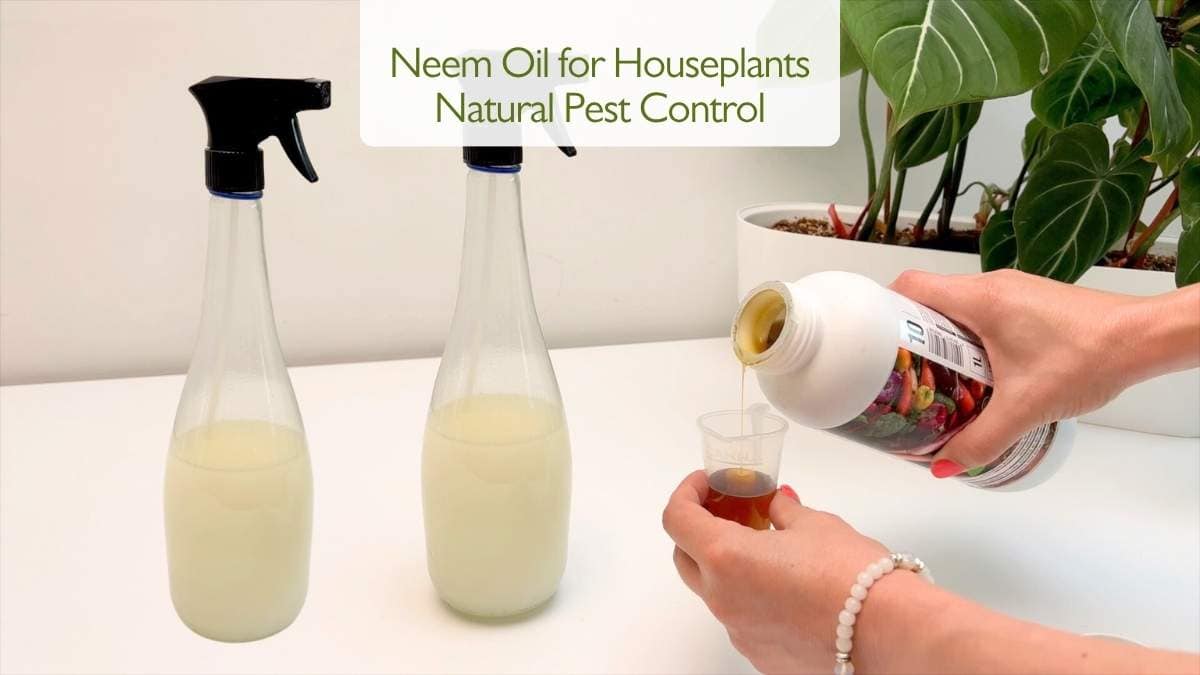
Neem Oil for Houseplants: The Complete Guide to Natural Pest & Disease Control
If you’ve been searching for neem oil for houseplants, you’re about to discover why this natural, biodegradable solution has become a staple in organic gardening. From crushing infestations of spider mites and aphids to preventing powdery mildew, neem oil offers versatile, eco‑friendly protection, without harming pets, children, or beneficial pollinators. In this expanded guide, you’ll learn everything from selecting and storing pure concentrate to advanced application techniques, so your indoor garden thrives disease and pest‑free.
For a detailed demonstration and extra tips, watch my video below:

Click here to watch the video on YouTube
| Step | What to do |
|---|---|
| Mix | 1 to 2 tsp neem oil plus a few drops mild soap per litre of warm water |
| Test | Spray one leaf first and wait 24 hours for any reaction |
| Apply | Coat tops and undersides of leaves in the evening, out of direct sun |
| Repeat | Every 7 to 14 days until pests are gone |
| Targets | Spider mites, aphids, mealybugs, scale, whitefly, fungus gnats |
| Avoid | Spraying in hot sun or on stressed, very dry plants |
What Is Neem Oil and Why Use It for Houseplants?
Neem oil for houseplants is extracted from the seed kernels of the neem tree (Azadirachta indica), native to India. Its active compounds - including azadirachtin, nimbin, and salannin - disrupt insect feeding, growth, and reproduction, while also exhibiting antifungal properties. Unlike synthetic pesticides, neem oil breaks down quickly into harmless compounds, making it safe around pets, children, and most beneficial insects when used correctly.
Key Benefits of Neem Oil for Houseplants
- Broad-spectrum pest control: Effective against aphids, whiteflies, spider mites, mealybugs, scale, thrips, and more.
- Fungicidal action: Prevents and treats powdery mildew, black spot, and other fungal diseases.
- Systemic and contact modes: Soil drenches offer systemic protection; foliar sprays provide immediate contact control.
- Safe and biodegradable: Breaks down within days, leaving no harmful residues.
Choosing and Storing Your Neem Oil Concentrate
To harness the full power of neem oil for houseplants, always select a pure, cold‑pressed neem oil concentrate with at least 0.5%-1% azadirachtin. Avoid blends with synthetic additives or fragrances.
Storage tips:
- Keep the bottle tightly sealed in a cool, dark place (below 75 °F) to preserve potency.
- Use glass containers for prepared sprays; plastic can leach chemicals into the mixture.
- Label homemade mixes with the date, they remain effective for up to two weeks.
Preparing Your Neem Oil for Houseplants Solutions

Spray Application (Contact Control)
- Dilution ratio: Follow manufacturer guidelines, commonly 1 part neem oil to 80 parts water (1:80). For home use, mix 8 mL neem oil + 650 mL warm water in a glass spray bottle.
- Emulsify: Add 2-3 drops of mild liquid soap or insecticidal soap to help the oil blend and adhere to leaf surfaces.
- Shake thoroughly: Warm water aids mixing; shake just before each use to maintain an even emulsion.
Soil Drench (Systemic Protection) Neem Oil for Houseplants
- Mix: 1-2 teaspoons neem oil + gallon of warm water + pinch of soap.
- Apply: Water your potted houseplants as usual, ensuring soil saturation. This method targets root aphids and soil‑borne fungi and provides low‑level systemic protection.
- Frequency: Every 2-4 weeks for prevention; apply at first sign of infestation for treatment.
When and How to Apply Neem Oil for Houseplants
Timing Your Applications
- Prevention: Spray foliage lightly every 2-3 weeks during active growing seasons (spring-early fall).
- Active Infestations: Apply weekly until no live pests remain; monitor and repeat if eggs hatch.
- Fungal Outbreaks: Drench and spray at first sign of powdery mildew or black spot; repeat every 7-10 days.
Best Practices for Effective Coverage
- Test first: Spray a single leaf; wait 24 hours to check for phytotoxicity.
- Spray in cooler hours: Early morning or late evening avoids leaf burn from sun‑heated oil droplets.
- Complete coverage: Mist both tops and undersides of leaves, stems, and trunk. Pests often hide in crevices.
- Post-application care: Avoid misting for 24 hours to allow oil to penetrate.
Advanced Tips and Troubleshooting
Combining Neem Oil for Houseplants with Other Organic Methods
- Insecticidal soap synergy: Adding a few drops of insecticidal soap enhances contact efficacy against hard‑bodied pests.
- Diatomaceous earth barrier: Dust soil surface with DE to trap crawling pests between drenches.
- Sticky traps: Yellow or blue adhesive cards catch flying adults to monitor population levels.
Common Application Issues
- Oil separation: Use warm water and soap to prevent droplets from floating.
- Leaf spotting: If leaves scorch, reduce concentration or move plants to diffused light for 24 hours after spraying.
- Resistant populations: Rotate neem oil applications with other organic sprays (e.g., pyrethrin) to avoid resistance buildup.
Integrating Neem Oil into Your Overall Houseplant Care
- Clean leaves regularly: For extra shine and removal of residue, try my Homemade Leaf Shine Recipe.
- Optimize watering: Balance moisture to prevent fungal issues, read my Houseplants Watering Tips for precision scheduling.
- Boost nutrition naturally: Complement pest control with my DIY Organic Fertilizer Recipe for Houseplants.
Safety Precautions
- Wear gloves if you have sensitive skin.
- Avoid inhalation of spray mist, use in well‑ventilated areas.
- Keep away from direct sunlight until leaves dry completely to prevent phototoxicity.
By mastering neem oil for houseplants, you’ll gain a powerful, all‑natural tool to maintain clean, thriving indoor greenery. Whether you’re combating a stubborn pest outbreak or simply fortifying your plants against future problems, neem oil delivers effective, eco‑friendly results.
If you suspect pests but don’t see them clearly, I tested a simple and popular method using 70% alcohol on houseplants and documented exactly what happened - what worked, what didn’t, and how to use it safely: 👉70% Alcohol on Houseplants to Kill Pests? I Tested This Method - Here’s What Happened
Neem oil works best alongside good, consistent care. My Plant Care Journal helps you track treatments and spot pest problems early, before they spread.
Frequently Asked Questions
How do I mix neem oil for houseplants?
Mix about one to two teaspoons of pure neem oil with a few drops of mild liquid soap, which helps it blend, into one litre of warm water. Shake well and use it straight away, as the mixture separates and loses strength over time.
How often should I apply neem oil?
For an active pest problem, spray every seven days until the pests are gone. As a preventive treatment, every two weeks is usually enough. Always spray in the evening or out of direct sun to avoid leaf burn.
Is neem oil safe for all houseplants?
Most houseplants tolerate neem oil well, but some delicate or fuzzy-leaved plants can be sensitive. Always test on a single leaf first and wait a day before treating the whole plant, and avoid spraying stressed or very dry plants.
What pests does neem oil kill?
Neem oil works on a wide range of soft-bodied pests, including spider mites, aphids, mealybugs, scale, whitefly, and fungus gnats. It works slowly by disrupting feeding and breeding, so it can take a couple of weeks and repeat sprays to fully clear an infestation.
Is neem oil safe for pets and people?
Neem oil is generally low in toxicity and considered safe when used as directed, but it is best to keep pets away from freshly sprayed plants until the leaves have dried. Avoid getting it in eyes, and store it safely out of reach.

Written by Bojana
Plant lover, grower, and music maker behind Plant House & Garden, with 35+ years of hands-on houseplant experience. Read more about Bojana →