Philodendron Red Emerald Care: How I Grew Mine Tall in 5 Months
Part of my complete Philodendron Care Guide: light, water, problems, every variety, and propagation in one place.
Quick answer: Philodendron Red Emerald is an easy-care climbing aroid with glossy green leaves on deep red stems. Give it bright, indirect light, water when the top 1 to 2 inches of soil dry out, a chunky well-draining aroid mix, and warm, humid conditions. Note that it is toxic to cats and dogs.
For the wider basics, see my full Philodendron care guide.
| Care | Quick guide |
|---|---|
| Light | Bright, indirect light; avoid direct sun |
| Water | When the top 1 to 2 inches of soil are dry |
| Soil | Chunky, well-draining aroid mix |
| Humidity | High, around 60% or more |
| Temperature | 18 to 27 C (65 to 80 F) |
| Growth habit | Climber, so give it a moss pole |
| Toxicity | Toxic to cats, dogs and people |
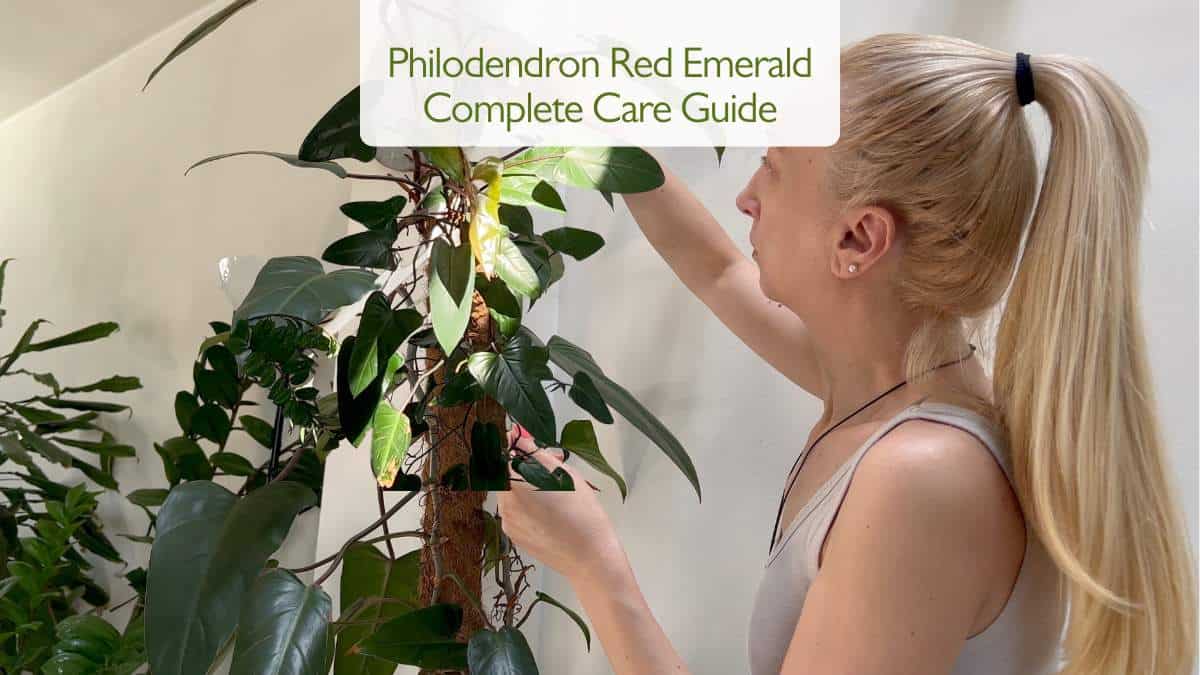
My Philodendron Red Emerald started life with me as a dusty nursery rescue, and in just five months she turned into a tall, thriving beauty that outgrew her pole. Here is my Philodendron Red Emerald care routine, exactly as it worked for me: the light, watering, soil mix and support, plus a few tips that encourage bigger leaves and steady new growth.
For a visual demonstration and extra insights, be sure to watch my video below:
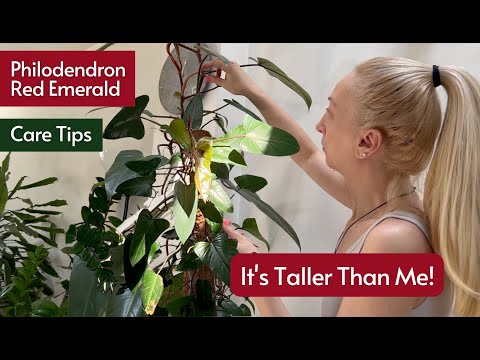
Click here to watch the video on YouTube
Name & Origin: Understanding Your Philodendron Red Emerald
Philodendron Red Emerald is a cultivar of Philodendron erubescens, a climber from the tropical rainforests of Colombia, where it scrambles up tree trunks beneath a dense canopy. Known as the Blushing Philodendron, it sports striking red petioles that mature to lush, glossy green leaves. Copying that warmth and humidity at home is the key to a happy plant.
Appearance: What Makes Red Emerald So Special
New leaves emerge a deep burgundy‑red, gradually transitioning to heart‑shaped green blades with a subtle sheen. In bright, filtered light and high humidity, leaves grow rapidly, reaching impressive sizes in just weeks. Its climbing habit demands vertical support, so be prepared with a moss or trellis pole to showcase those vibrant stems.
How Much Light Does Red Emerald Need?
Philodendron Red Emerald thrives in bright, indirect light, with a gentle dose of direct sun during cooler morning or late‑afternoon hours. I experimented with several spots before settling mine under roof windows, where it enjoys two hours of filtered sun without scorching. If you move your plant to a brighter location, do so gradually to avoid leaf burn. In low‑light areas, expect slower growth and smaller leaves, so find a bright, evenly lit spot.
Watering Your Philodendron Red Emerald
This philodendron prefers evenly moist, but never waterlogged, soil. I check mine twice weekly, watering thoroughly only when the top two to three inches feel dry. Room‑temperature water prevents shock, and always let excess drain freely to avoid root rot. Yellowing leaves with mushy stems signal overwatering; crisp, drooping foliage indicates it’s time for a drink. For more on precise moisture management across all your plants, see my Houseplants Watering Tips.
Soil & Potting Mix
Aroids demand an airy, nutrient‑rich blend. I use my signature mix: coco coir, perlite, orchid bark, and charcoal, to ensure optimal drainage and moisture retention. If you’d rather purchase ready‑made soil, enhance it with perlite and bark for that perfect balance. To see exactly how I prepare my DIY blend, visit my guide on Soil‑Free Aroid Potting Mix: The Best DIY Recipe for Healthy Aroid Plants.

Repotting: When and How to Give Your Philodendron Room to Grow
Repot your Red Emerald every one to two years, ideally in spring or early summer. Choose a pot only one to two inches larger to prevent excess moisture retention. Gently tease apart the root ball, preserving as much old soil as possible to reduce shock. After repotting, soak the new mix for 15 to 20 minutes to settle soils around the roots, then let it drain thoroughly.
Fertilizing for Vigorous Growth
Feed monthly during spring and summer with a balanced liquid fertilizer at half strength, applying it only to moist soil prevents root burn. In fall and winter, cut back to once every two to three months. If you prefer organic boosts, my DIY Organic Fertilizer Recipe for Houseplants delivers deep‑green growth without chemical buildup.

Temperature & Humidity: Mimicking the Rainforest
Maintain daytime temperatures between 65 to 80 °F (18 to 27 °C) and never let temps fall below 60 °F (15 °C). High humidity (60 to 80%) encourages the Red Emerald’s fastest growth and largest leaves. If your home dries out in winter, use a humidifier, pebble tray, or group plants together. Occasional misting helps, but won’t raise ambient humidity, consider relocating your Philodendron to a steamy bathroom or kitchen for an instant boost.
If you want to know more about humidity and temperature and why they matter so much for healthy growth, read my full article: Humidity and Temperature for Houseplants.
Pruning & Support: Shaping and Guiding Vertical Growth
Regular pruning keeps your Red Emerald looking full and healthy. Remove yellow or damaged leaves with sterilized scissors, cutting just above the leaf node. For climbing support, secure stems to a moss pole or trellis with soft ties, guiding new growth upward. I trained mine from a sapling; it outgrew its pole in under five months, so plan ahead for taller stakes to accommodate vigorous growth.
Common Red Emerald Problems
Yellowing leaves can signal watering or nutrient issues: adjust your moisture routine or feeding schedule accordingly. Brown leaf tips often point to low humidity or salt buildup, so flush the soil occasionally and up your humidity game. Watch for spider mites and aphids on new growth; a gentle neem oil spray can curb infestations early. Root rot, signaled by wilting despite moist soil, demands immediate repotting in fresh, well‑draining mix.
Propagation: Expanding Your Collection
Philodendron Red Emerald roots readily from stem cuttings. Select a healthy stem with aerial roots or nodes, snip just below a node, and place the cutting in moist aroid mix or water until roots emerge. Transplant into soil once roots reach an inch long.

Leaf Cleaning & Shine: Keeping Foliage Flawless
A weekly wipe with a soft, damp cloth keeps leaves free of dust and maximizes photosynthesis. For an added gloss, try my Homemade Leaf Shine Recipe, which conditions foliage while forming a light protective barrier against pests.
Frequently Asked Questions
Is Philodendron Red Emerald easy to care for?
Yes. It is a beginner-friendly climbing philodendron. Give it bright indirect light, water when the top inch or two of soil dries out, and a chunky aroid mix, and it grows quickly.
How often should I water Philodendron Red Emerald?
Water when the top 1 to 2 inches of soil feel dry, usually about once a week. Let the excess drain away and never leave the pot sitting in water, which leads to root rot.
Does Red Emerald Philodendron need a moss pole?
Yes. It is a natural climber, so a moss pole or support helps it grow bigger leaves and stay tidy and upright.
Why are my Red Emerald leaves turning yellow?
Usually overwatering. Let the soil dry out more between waterings and make sure the pot drains well. Too little light can also cause yellowing.
Is Philodendron Red Emerald toxic to pets?
Yes. Like other philodendrons it is toxic to cats and dogs (calcium oxalates), so keep it out of reach. See our guide to indoor plants safe for cats and dogs for pet-safe alternatives.

Written by Bojana
Plant lover, grower, and music maker behind Plant House & Garden, with 35+ years of hands-on houseplant experience. Read more about Bojana →