Pruning and Repotting Houseplants in Fall: What You Should and Shouldn’t Do
As the days get shorter and cooler, many plant lovers wonder about pruning and repotting houseplants in fall. It feels natural to refresh soil, trim back growth, and tidy plants before winter arrives. But the truth is that pruning and repotting don’t play the same role this season. Light pruning is helpful for health and appearance, while major repotting is usually best postponed until spring.
Some plants are fussier to repot than others. If you have a bird of paradise, see our guide to repotting a Strelitzia Nicolai.
In this extended guide, you’ll learn what tasks are safe, what should wait, and how to keep your houseplants thriving as they transition into winter.
| Task | What to do in fall |
|---|---|
| Repotting | Wait until spring unless badly rootbound or rotting |
| Pruning | Light tidy-up only, remove dead or damaged growth |
| Hard cutback | Avoid now, save heavy pruning for spring |
| Fertilising | Reduce or stop as growth slows toward winter |
| Best time | Spring is the ideal season for repotting and shaping |
Should You Repot Houseplants in Fall?
Most experts agree that pruning and repotting houseplants in fall are not equal tasks - while light pruning is safe, full repotting is best avoided. Repotting houseplants in fall is usually not recommended. Why? Because plants slow down as light hours shrink and temperatures drop. Roots don’t recover as quickly, which makes plants more vulnerable to rot, pests, and stress. A major repot now can set growth back until spring.

When to repot in fall anyway:
- If a plant is severely rootbound (roots circling or pushing out of drainage holes).
- If soil is compacted, moldy, or infested with pests.
- If drainage has failed and the mix stays soggy.
Safer alternative: Refresh the top 1-2 inches of soil with fresh, airy mix. This gives nutrients and oxygen without disturbing roots.
👉 For a complete transition routine, see my Prepare Houseplants for Winter Checklist.
Why Spring Is the Best Repotting Season
Spring is the season of growth. Days are longer, temperatures rise, and plants produce new roots and leaves. Repotting in spring means houseplants recover quickly, establish themselves in fresh soil, and show strong new growth. Instead of pruning and repotting houseplants in fall, save the major work for spring when plants are actively growing.”
If you know some of your plants will need attention, fall is the time to plan ahead:
- Make notes on which plants are pot-bound.
- Gather new pots, choose the right size (1-2 inches bigger), and stock up on high-quality mix.
- Consider specialized soils (succulent mix, aroid mix, orchid bark) so you’re ready when spring comes.
👉 Drainage is key year-round. For details, read my Houseplants Watering Tips.
Fertilizing Before Winter
When people think about pruning and repotting houseplants in fall, fertilizing also comes to mind - but the truth is, feeding should mostly pause for the season. Many people ask: should I fertilize after pruning or repotting in fall? The answer is usually no. Most houseplants naturally slow down, so they won’t use extra fertilizer. Overfeeding now leads to weak, leggy growth.
Exceptions:
- Blooming plants like cyclamen, African violets, or Christmas cactus may still benefit from light feeding.
- Use a gentle, balanced liquid fertilizer at half strength, once a month.
Otherwise, stop feeding in late fall and resume in spring when growth picks up.

Pruning Houseplants in Fall: What You Should Do
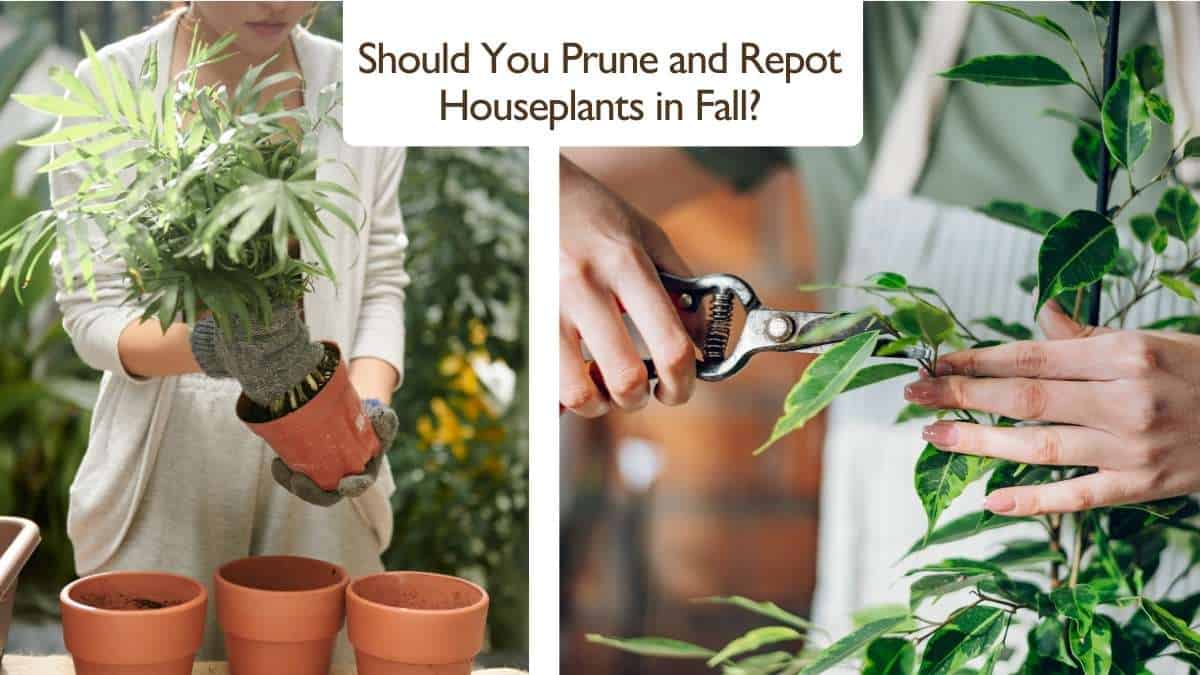
Unlike repotting, pruning in fall is often recommended. Light grooming helps plants stay neat, healthy, and pest-free indoors. Light grooming is the safest part of pruning and repotting houseplants in fall, helping to reduce pests and improve airflow indoors.
What to prune now:
- Yellow or brown leaves.
- Spent flowers.
- Leggy summer growth that won’t thrive indoors.
- Any leaves with signs of pests or damage.
What not to prune:
- Avoid heavy structural pruning or reshaping - plants won’t push new growth until spring.
- Don’t prune dormant plants too much (e.g., alocasia, caladiums).
Light pruning is enough to reduce stress, improve airflow, and make your houseplants easier to care for indoors.
👉 Unsure of timing? Check my guide on When to Bring Houseplants Indoors.
Common Mistakes to Avoid with pruning and repotting houseplants in fall
- Repotting too late in the season: Roots stay cold and damp, leading to rot.
- Over-pruning: Cutting too much weakens plants before winter dormancy.
- Fertilizing heavily in fall: Encourages weak, spindly growth.
- Ignoring pest checks: Moving plants indoors without inspection can lead to infestations.
Avoiding these errors will make pruning and repotting houseplants in fall a safe and simple routine.
Step-by-Step Fall Prep Checklist
Here’s a quick reference for pruning and repotting houseplants in fall:
- Inspect all plants for pests.
- Clean foliage (wipe large leaves, rinse smaller ones).
- Remove yellow or damaged leaves and spent blooms.
- Lightly prune leggy growth, but avoid heavy cuts.
- Refresh topsoil if needed, instead of full repotting.
- Skip fertilizer unless you’re supporting active bloomers.
- Move plants indoors gradually, starting from shade.
Autumn care is mostly about easing off at the right time. My Plant Care Journal helps you track watering and feeding through the seasons. For more troubleshooting, see our houseplant pests and problems guide.

Frequently Asked Questions
Should I repot houseplants in fall?
Usually no. Autumn is a resting time for most houseplants, so repotting now stresses them when they cannot recover quickly. Wait until spring unless a plant is severely rootbound or showing root rot, in which case repot carefully.
Can I prune houseplants in fall?
Light pruning is fine. Removing dead, damaged, or yellowing leaves keeps plants tidy and healthy. Avoid hard cutting back in autumn, though, as plants are slowing down and recover much better from heavy pruning in spring.
Why is spring better for repotting than fall?
In spring, plants are entering their active growing season, so they quickly grow new roots and bounce back from the disturbance of repotting. In autumn they are winding down, so they sit in fresh soil without growing, which can lead to rot.
Should I fertilise houseplants in fall?
Ease off. As light levels drop and growth slows, most houseplants need little or no feeding through autumn and winter. Reduce fertilising in fall and pause it over winter, then resume in spring when new growth appears.
How do I prepare houseplants for winter in fall?
Tidy up dead growth, check for pests before plants come indoors, reduce watering and feeding, and move plants to your brightest spots. Hold off on major repotting, and your plants will rest comfortably and be ready to grow in spring.
Final Thoughts
When it comes to pruning and repotting houseplants in fall, the golden rule is simple: prune lightly, repot rarely. A little grooming now helps plants transition indoors without stress, while saving the big repot for spring ensures healthy root growth and strong recovery. Remember, pruning and repotting houseplants in fall should focus on gentle clean-up, while heavy work waits for spring.
Pair this guide with my Fall Balcony Plants for outdoor inspiration and Winter Plant Care Tips video below to keep your indoor jungle thriving until spring.

Click here to watch the video on YouTube

Written by Bojana
Plant lover, grower, and music maker behind Plant House & Garden, with 35+ years of hands-on houseplant experience. Read more about Bojana →