Lucky Bamboo Care Tips for Fast Growth and Healthy Plants
Scientific Name: Dracaena sanderiana;
Family: Asparagaceae;
Common Name: Lucky Bamboo

Lucky Bamboo Care Tips: Symbol of Good Fortune and Prosperity
Lucky Bamboo is more than just a popular indoor plant, it’s a centuries-old symbol of good luck and prosperity, especially in Chinese culture. Although it’s called bamboo, Lucky Bamboo is actually a member of the Dracaena family. Many people choose this elegant and low-maintenance plant to invite positive energy into their homes and offices.
The significance of Lucky Bamboo goes beyond its beauty; the number of stalks in an arrangement carries special meanings. For example, three stalks stand for happiness, wealth, and longevity, while nine stalks are believed to bring overall good fortune and luck. This symbolism makes Lucky Bamboo a meaningful gift as well as a stunning decorative piece.
| Need | What Lucky Bamboo likes |
|---|---|
| Light | Bright, indirect; keep out of direct sun and cold drafts |
| Water | Distilled or filtered (or tap left out 24 hours); keep the roots covered |
| Change water | Every 2 to 4 weeks so it does not go stagnant |
| Container | Room for the roots, anchored with pebbles or stones |
| Feeding | A drop of mild liquid fertilizer every 1 to 2 months |
| Trimming | Snip off yellow or brown leaves with clean scissors |

Origins and Varieties of Lucky Bamboo
Native to the tropical rainforests of Southeast Asia, Lucky Bamboo thrives in warm, humid environments as an understory plant. It adapts well indoors when provided the right conditions.
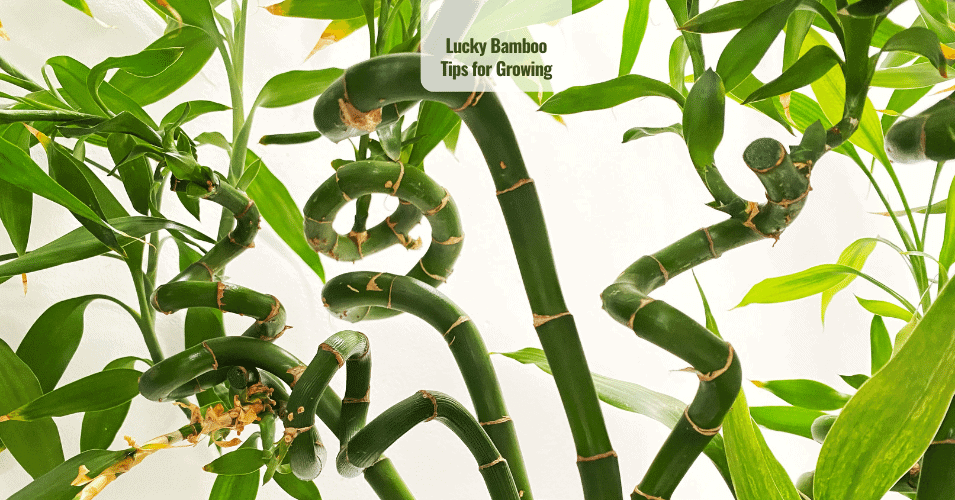
There are many varieties of Lucky Bamboo, from straight bright green stalks to those with curly or braided stems and variegated leaves. While it can grow up to three feet tall naturally, most growers trim and shape their plants into artistic forms to fit home aesthetics.
Essential Lucky Bamboo Care Tips for Fast Growth
Proper care is key to helping your Lucky Bamboo grow quickly and stay healthy. Follow these Lucky Bamboo care tips to ensure your plant flourishes:
- Choose the Right Container: Use a container that allows the roots some room to grow. A slightly larger container filled with pebbles or stones works well when growing Lucky Bamboo in water.
- Water Quality: Always use distilled or filtered water. If you use tap water, let it sit for at least 24 hours to let chlorine evaporate, which can harm the plant.
- Water Changes: Refresh the water every 2 to 4 weeks. This prevents stagnation and keeps your plant healthy.
- Fertilizing: Add a small drop of liquid fertilizer designed for Lucky Bamboo once every 1-2 months to provide essential nutrients.
- Light Requirements: Lucky Bamboo thrives in bright, indirect light. Avoid placing it in direct sunlight, which can scorch the leaves, or in cold drafts.
- Trimming: Remove any yellow or brown leaves promptly using clean scissors. This encourages fresh, healthy growth and keeps the plant looking its best.
Following these Lucky Bamboo care tips regularly can dramatically improve your plant’s vitality and appearance.
Lucky Bamboo Care Tips and Health Benefits in Your Home
Besides its symbolic meaning, Lucky Bamboo is great for improving your indoor environment. Lucky Bamboo is often listed among air-purifying plants from a 1989 NASA study, though that testing was done in sealed lab chambers. In a normal room the effect on air quality is very small, so it is best enjoyed for its beauty and good-luck symbolism rather than as an air cleaner.
Additionally, having Lucky Bamboo or any greenery indoors adds a calm, pleasant touch to a room - perfect for your home or workspace.
Common Misconceptions About Lucky Bamboo

While Lucky Bamboo care tips can help you maintain this beautiful plant, it’s important to clear up some myths:
- Lucky Bamboo is not edible. Although it’s generally safe for pets and humans, ingesting large quantities can be toxic.
- It cannot survive in complete darkness. Lucky Bamboo needs some indirect sunlight to stay healthy and vibrant.
- The plant prefers water or soil, but is most commonly grown hydroponically in water with support stones.
Understanding these facts ensures you don’t fall into common pitfalls and keep your Lucky Bamboo thriving.
Common Mistakes to Avoid When Following Lucky Bamboo Care Tips
Even with the best Lucky Bamboo care tips, some common mistakes can hinder your plant’s growth and health. One frequent error is overwatering - although Lucky Bamboo grows in water, stagnant or dirty water can cause root rot and yellowing leaves. Be sure to change the water regularly and avoid letting the roots sit in unfiltered tap water without letting chlorine dissipate.
Another mistake is placing the plant in direct sunlight, which can burn the leaves and cause discoloration. Lastly, using fertilizers not formulated for Lucky Bamboo or applying too much fertilizer can lead to nutrient burn. To ensure your Lucky Bamboo thrives, follow care tips carefully, monitor your plant regularly, and adjust your routine as needed for the best results.
How to Grow Huge Lucky Bamboo at Home?
If you’re aiming for a show-stopping, lush Lucky Bamboo, following Lucky Bamboo care tips for fast growth is essential. Growing Lucky Bamboo in water is simple, but consistent care is key.
In the video below, I demonstrate how to cultivate Lucky Bamboo so it develops dark green, shiny leaves and avoids yellowing. The example container shown holds nine stalks, a lucky number said to bring good fortune.
Regular watering, proper light, and occasional feeding are the pillars of fast-growing Lucky Bamboo.
Frequently Asked Questions
How often should I change Lucky Bamboo water?
Every two to four weeks. Fresh water stops it going stagnant, which is the main cause of yellowing and root rot. If the water starts to smell or look cloudy, change it sooner.
Why is my Lucky Bamboo turning yellow?
Usually stagnant or chlorinated water, too much fertilizer, or direct sun. Switch to distilled or filtered water, feed only lightly, move it to bright but indirect light, then trim the yellow parts away.
Can Lucky Bamboo grow in just water?
Yes, that is the most popular way. Keep the roots covered in a couple of inches of clean water, anchor the stalks with pebbles, and refresh the water regularly. You can also grow it in soil if you prefer.
Does Lucky Bamboo really purify the air?
It is often listed among air-purifying plants from a 1989 NASA study, but that was done in sealed chambers. In a normal room the effect on air quality is very small, so enjoy it for its looks and good-luck symbolism rather than as an air cleaner.
How do I grow Lucky Bamboo bigger?
Give it bright, indirect light, clean water changed on schedule, and a light monthly feed. Healthy roots and steady conditions are what encourage taller, thicker stalks over time.
Final Thoughts on Lucky Bamboo Care Tips
Lucky Bamboo is an elegant, meaningful plant that brings beauty and positivity to any space. With these detailed Lucky Bamboo care tips, you can keep your plant healthy and growing fast, while enjoying the many benefits it offers. Whether you are new to houseplants or an experienced gardener, incorporating these care tips will help you get the most out of your Lucky Bamboo.
If you want to listen to my 11 hours music for plants which stimulates growth and happiness, click on the video below:


Written by Bojana
Plant lover, grower, and music maker behind Plant House & Garden, with 35+ years of hands-on houseplant experience. Read more about Bojana →