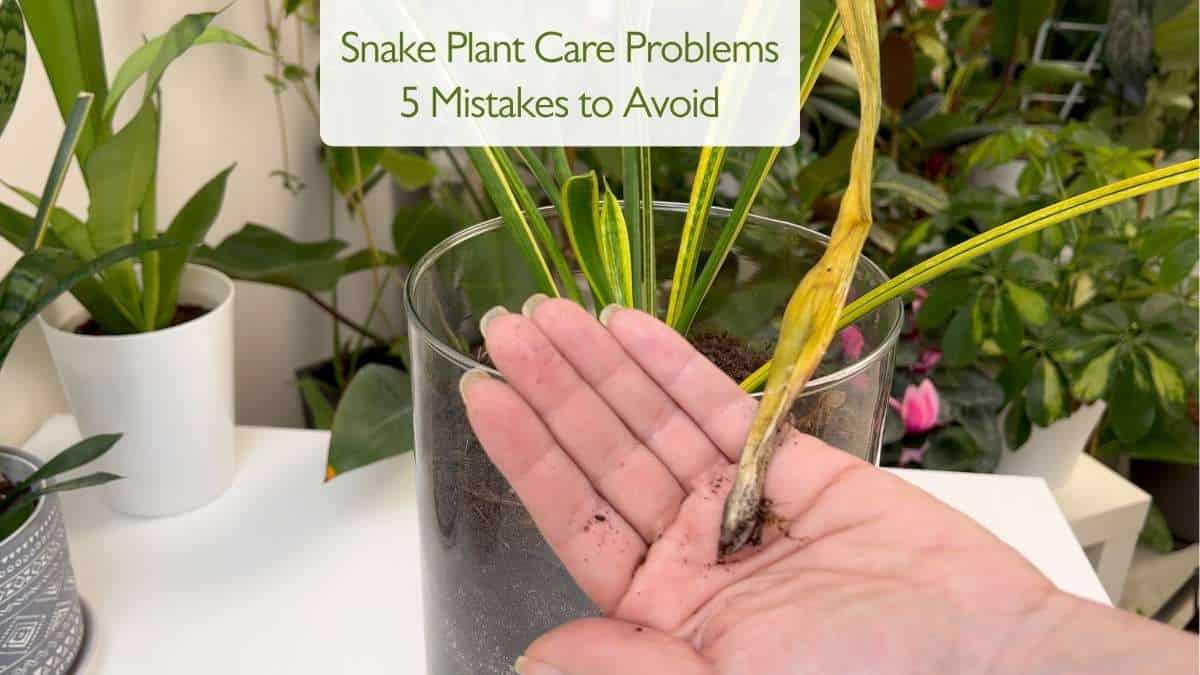
Snake Plant Problems: 5 Common Mistakes to Avoid for Healthy Plants
Quick answer: Most snake plant problems come from overwatering. Yellow, soft or drooping leaves and a mushy base usually mean root rot, so let the soil dry out fully and repot in dry, well-draining soil with drainage holes. Firm yellow leaves or brown crispy tips usually point to underwatering or low light instead.
Snake Plant Problems at a Glance
| Problem | Likely cause | Fix |
|---|---|---|
| Yellow leaves, soft mushy base | Overwatering and root rot | Let soil dry fully, unpot, trim mushy roots, repot in dry well-draining mix |
| Yellow leaves, still firm | Underwatering or very low light | Water a little more often, move to brighter indirect light |
| Drooping or falling leaves | Overwatering or root rot | Check the roots, dry the plant out, repot if any are mushy |
| Soft, mushy base | Root rot from wet soil or no drainage | Cut away the rot, use fresh dry soil and a pot with drainage holes |
| Brown, crispy tips | Underwatering, hard tap water or dry air | Water when fully dry, try filtered water |
| Curling leaves | Underwatering or thrips | Water, and check the leaves for pests |
| Not growing | Low light or winter dormancy | Move to brighter indirect light; growth slows in winter |
Snake Plants (Sansevieria) are among the easiest houseplants to grow, yet many plant owners still encounter frustrating Snake Plant problems that hinder their growth and health. If your Snake Plant looks stretched, yellowed, or stopped growing, it may be due to some common care mistakes.
In this article, I will guide you through the five most frequent Snake Plant problems, explain why they occur, and share practical tips to help your Snake Plant flourish.
If you prefer a visual guide, you can also watch my detailed video below, where I cover these tips step-by-step for Snake Plant Problems:

1. Overwatering: The Most Common Snake Plant Problem
Overwatering is the number one cause of Snake Plant problems. These plants naturally store water in their thick, fleshy leaves, so they don’t require frequent watering, especially during cooler months.
If the soil remains wet for too long, roots can suffocate and develop root rot, a serious condition that can kill your plant.
When I moved my Snake Plant to a darker spot, I noticed the soil dried much slower. This led to soggy conditions perfect for root rot, causing the leaves to yellow and wilt.
Signs of overwatering include:
- Yellow leaves that feel soft or mushy
- Wilting despite wet soil
- A foul smell from the soil
- Older leaves dropping prematurely
To avoid overwatering, check the soil moisture before watering by sticking your finger a few inches in. If it’s still damp, wait a few more days.
Water deeply but infrequently, and always let excess water drain out of the pot. Avoid letting the plant sit in standing water.
If you suspect root rot, carefully repot the plant into fresh, well-draining soil and trim any rotten roots.
For more detailed advice on watering and general summer care adjustments for your houseplants, check out my comprehensive Summer Tips for Houseplants article.
2. Poor Drainage and Wrong Soil Mix Lead to Snake Plant Problems
Even with good watering habits, poor drainage and unsuitable soil can cause major Snake Plant problems.
Using pots without drainage holes traps excess water and creates conditions for root rot.
Always choose pots with drainage holes and avoid overly large containers. Smaller pots encourage healthier root systems and more side shoots.
Repot your Snake Plant every two years or when it becomes root-bound, using a pot only one size bigger.
For soil, a mix designed for succulents or cacti, light, gritty, and well-draining, is best. You can mix regular potting soil with perlite or sand.
Avoid heavy, moisture-retentive soils that hold water too long.
3. Yellow or Discolored Leaves Indicate Snake Plant Problems

Yellowing leaves can be a natural sign of aging, but when multiple leaves turn yellow or brown, it signals underlying Snake Plant problems. If the yellow appears only along the leaf edges, that is usually natural variegation rather than a problem, so it helps to know the difference between snake plant yellow edges vs green leaves.
Causes include:
- Overwatering causing root suffocation
- Exposure to cold drafts or temperature stress
- Nutrient deficiencies leading to pale foliage
Soft, mushy yellow leaves will not recover and should be trimmed to keep the plant healthy.
Firmer but discolored leaves can improve with proper watering, light, and fertilization.
4. Incorrect Light Conditions Are a Common Cause of Snake Plant Problems
While Snake Plants tolerate low light, insufficient light causes poor growth and stretched, pale leaves, a frequent Snake Plant problem.
Too much direct sunlight causes leaf burn, resulting in brown, crispy spots.
The ideal light for Snake Plants is bright but indirect - filtered sunlight or a few hours of moderate light daily.
If natural light is limited, consider supplemental grow lights, especially in winter.
When changing light conditions, transition slowly to prevent shock.
5. Cold Temperatures and Drafts Cause Leaf Damage and Other Snake Plant Problems
Snake Plants prefer warm, stable environments and suffer when exposed to cold temperatures below 50°F (10°C) or drafts.
Cold-stressed plants may develop soft, wrinkled, or discolored leaves and become more susceptible to rot and disease.
Avoid placing your Snake Plant near drafty windows, doors, or air conditioning vents.
Remove damaged leaves and allow the soil to dry before watering if you suspect cold damage.
What Is Wrong With My Snake Plant? Diseases and Signs It May Be Dying
If you are asking what is wrong with my snake plant, start with the roots and the base of the leaves. Most snake plant trouble is not a mystery disease, it is overwatering that has turned into rot. Still, a few real diseases and pests can show up, so here is how to tell them apart and what to do.
Common snake plant diseases:
- Root rot. The most common by far. It comes from soggy soil. The base goes soft, the soil smells sour, and the roots turn brown and mushy.
- Southern blight. A fungus that leaves white cottony threads near the soil line and rots the base.
- Red leaf spot. Reddish brown sunken spots, usually where water has sat on the leaves.
- Bacterial soft rot. Mushy, slimy patches with a bad smell, often after cold or very wet conditions.
Two pests, mealybugs (little white cottony dots) and spider mites (fine webbing and tiny specks), are often mistaken for disease, so check the leaves closely before you treat.
Why is my snake plant dying? The signs to watch:
- A soft, mushy base or a sour smell
- Roots that are brown and slimy instead of firm and pale
- Widespread yellowing and browning, not just one old leaf
- Leaves bending or falling over at the base
- Wrinkled, curling leaves that do not firm up after watering
- No new growth for months
What to do: take the plant out of its pot and look at the roots. Cut away anything soft, brown, or smelly with clean scissors. Let the healthy part dry for a day, then repot in fresh, gritty, well draining soil and water only when the soil is fully dry. If you see pests, wipe the leaves and isolate the plant. When in doubt, cut a healthy leaf into sections and propagate it as a backup. Snake plants are tough, and most that look like they are dying are simply recovering from too much water.
My Best Snake Plant Care Routine for Avoiding Problems
My healthiest Snake Plant sits near a west-facing window with bright indirect light and some gentle afternoon sun.
I water only when the soil is nearly dry, usually every 2-3 weeks, less in winter.
It’s planted in a succulent soil mix with perlite for drainage and lives in a pot with drainage holes.
This balanced care keeps it growing vigorously and free from common Snake Plant problems.
For more detailed guidance on how to water your Snake Plant correctly and avoid common watering mistakes, check out my video Watering Tips: How, When & How Much to Water” below. This video covers everything you need to know to keep your plant perfectly hydrated and healthy.


Final Thoughts on Avoiding Snake Plant Problems
Understanding and addressing these common Snake Plant problems helps you maintain a beautiful, resilient plant in your home or office.
Related Articles
- Why Is My Schefflera Dropping Leaves? (Causes + Fix)
- Schefflera Plant Care: Complete Guide to Growing a Healthy Umbrella Plant
- Spider Plant Brown Tips? Here’s Exactly Why It Happens (+ Easy Fixes)
- Rubber Plant Problems: 5 Mistakes to Avoid (Ficus Elastica)
Frequently Asked Questions
Why are my snake plant leaves turning yellow?
Most often overwatering. If the base is soft and the soil smells sour, it is root rot, so let the soil dry fully and repot. Firm yellow leaves usually mean underwatering or too little light.
Why is my snake plant drooping?
Drooping is usually overwatering or root rot weakening the roots. Check the roots, let the plant dry out, and repot in dry, well-draining soil if any feel mushy.
How often should I water a snake plant?
Only when the soil is completely dry, often every 2 to 6 weeks depending on light and season. Snake plants store water and hate staying wet.
Can a snake plant recover from root rot?
Yes, if you catch it early. Unpot it, cut away all the mushy roots and leaves, and repot the healthy part in fresh dry soil with drainage.
Why does my snake plant have brown tips?
Usually underwatering, hard tap water, or very dry air. Water only when fully dry and try filtered water.
How much light does a snake plant need?
It tolerates low light but grows best in bright, indirect light. Too little light leads to weak, floppy leaves and slow growth.
What is wrong with my snake plant?
Usually water. A soft base, sour soil, and brown mushy roots point to root rot from overwatering. Firm yellow or wrinkled leaves usually mean the opposite, too little water or light. Check the roots first, then adjust from there.
Why is my snake plant dying?
The most common reason is root rot from soggy soil. Look for a mushy base, a bad smell, and slimy roots. Catch it early, cut away the rot, let it dry, and repot in dry, well draining soil. Most snake plants bounce back.
What diseases do snake plants get?
Root rot is the main one, along with southern blight, red leaf spot, and bacterial soft rot. All of them are linked to too much moisture, so drier soil and good airflow prevent most snake plant diseases.
How do I know if my snake plant is dying or just stressed?
A stressed snake plant has firm leaves and maybe one or two yellow older leaves. A dying one has a soft base, a foul smell, mushy roots, and several leaves falling over at once. Firm and slow is stressed. Soft and smelly is serious.

Written by Bojana
Plant lover, grower, and music maker behind Plant House & Garden, with 35+ years of hands-on houseplant experience. Read more about Bojana →