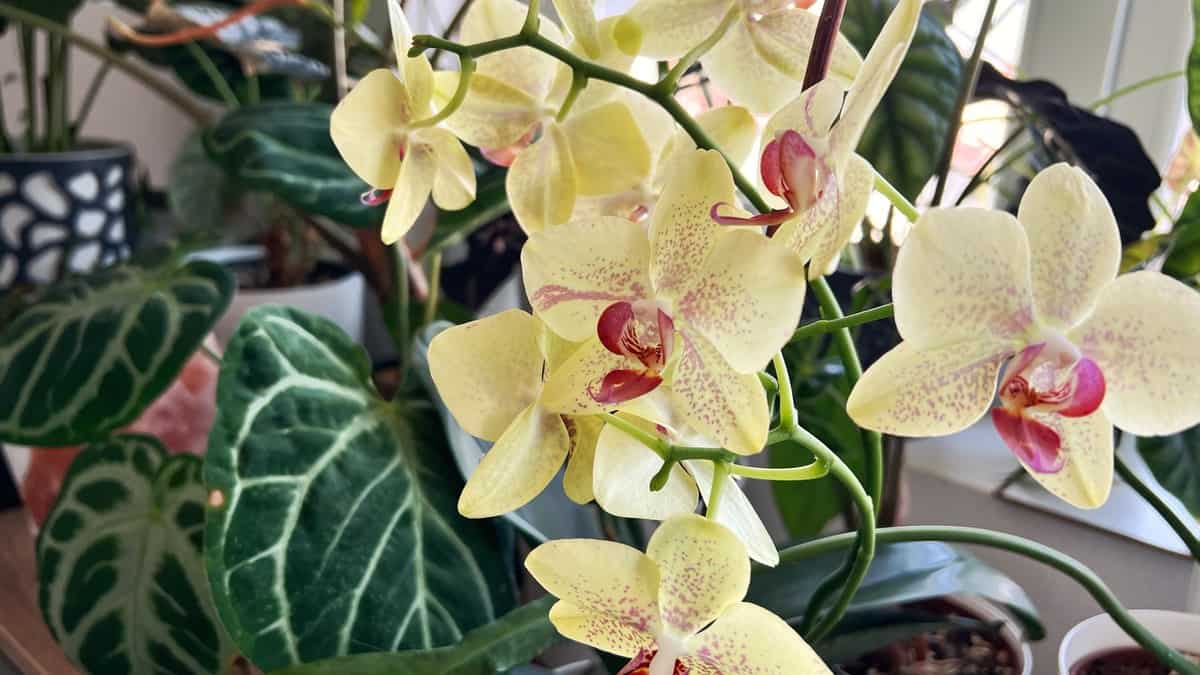
Orchid Problems: 5 Mistakes That Stop Your Orchid Blooming (and How to Fix Them)
If your orchid has dropped its flowers and now just sits there, or the leaves have gone yellow, wrinkled, or limp, you have not killed it. Orchids get a reputation for being fussy, but the truth is most of them are moth orchids (Phalaenopsis), and they are far tougher than people think.
Quick answer: Most orchid problems come from overwatering and the wrong pot. A moth orchid is not a soil plant, so soft leaves and black, mushy roots usually mean it is sitting too wet, while a plant that will not rebloom almost always needs more light. Water only when the roots turn silvery, use a chunky bark mix, and give bright, indirect light.
Almost every one of the orchid problems I get asked about comes back to the same short list of mistakes, and the good news is that every one of them is fixable. I have grown orchids on a windowsill for years, watched a few go downhill, and learned that this plant wants something quite different from a leafy tropical. Here are the five mistakes behind yellow leaves, mushy roots, wrinkled leaves, and an orchid that just will not rebloom, and exactly what I do to turn each one around.
| Symptom | Most likely cause and fix |
|---|---|
| Soft, wrinkled leaves | Root problems, usually from overwatering that rotted the roots so they can no longer drink. Check the roots and repot into fresh bark. |
| Yellowing lower leaf | Often normal if it is one old bottom leaf. Several yellow leaves at once means overwatering or too much direct sun. |
| Black or mushy roots | Root rot from staying wet. Trim the dead roots, let it dry, and repot into a chunky orchid bark mix. |
| Will not rebloom | Not enough light, or no cool night dip to trigger a new spike. Move it brighter and let nights cool in autumn. |
| Dropping buds or flowers | Bud blast from dry air, a cold draft, or a sudden move. Keep it warm, humid, and settled while in bud. |
| Limp, leathery leaves | Underwatering or dead roots that cannot take up water. Water and check whether the roots are alive. |
Mistake #1 - Watering It Like a Normal Houseplant (and the Ice Cube Trick)
This is the big one, and it is behind most sad-looking orchids. A moth orchid does not grow in soil in the wild, it clings to trees with its roots in the open air, so those thick roots are built to get wet, then dry out fully between drinks. When we water on a weekly habit, or leave the plant sitting in a saucer of water, the roots stay soaked, turn brown and mushy, and rot. That is when leaves go soft and wrinkled, because the rotten roots can no longer take up water even though the plant is drowning.
The fix is to water by what the roots tell you, not the calendar. Healthy orchid roots are plump and green when wet and turn silvery-grey when they are ready for more. Water only then, let it drain completely, and never leave it standing in water. I skip the ice cube trick too, cold water is a shock to a warm-climate plant, so I use room-temperature water instead. If your orchid is already mushy at the roots, my guide on how to fix root rot walks through the rescue step by step.

Mistake #2 - The Wrong Pot and Potting Mix
Even careful watering cannot save an orchid planted in regular potting soil. Ordinary mix packs tight around those air-loving roots, holds water like a sponge, and suffocates them. A decorative pot with no drainage hole does the same thing, it traps water at the bottom where you cannot see it. This is one of the most common reasons a supermarket orchid slowly declines a few months after you bring it home.
Give an orchid a chunky, open orchid bark mix (bark, sometimes with a little sphagnum moss or perlite) in a pot with real drainage holes. A clear plastic pot is genuinely useful here, it lets you see the roots and the moisture so you can water at the right moment, and orchid roots actually like a bit of light. Repot every year or two once the bark breaks down into a dense, soggy mush, because old broken-down bark is a hidden cause of rot. If you are repotting anyway, my notes on repotting houseplants in fall cover timing and technique.

I share more real plant fixes and calming music for plants on my channel. Subscribe to grow along with me.
Mistake #3 - Not Enough Light (the Real Reason It Will Not Rebloom)
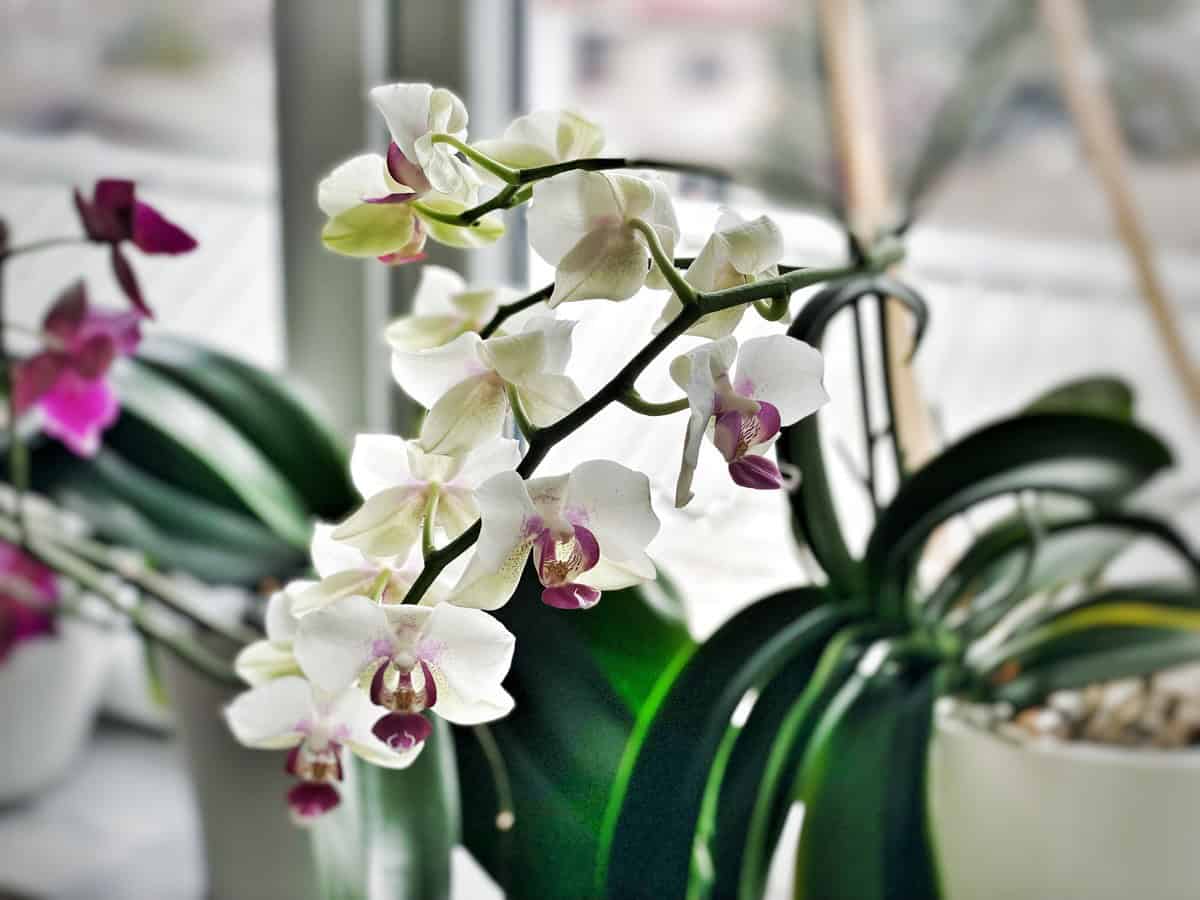
If your orchid is healthy and green but simply will not flower again, light is almost always the reason. Orchids need bright, indirect light to build the energy for a new spike, and a spot that feels bright to us is often too dim for blooming. People assume the plant is just done after its first flowers, when really it is only ever going to give leaves in that low light.
Move it to the brightest spot you have that does not get harsh midday sun directly on the leaves, an east window is close to perfect, and a sheer-curtained south or west window works too. Leaves should be a bright, slightly yellowish green, dark green leaves mean too little light. The other half of reblooming is temperature: many orchids need a run of cooler nights in autumn, around ten degrees cooler than the day, to trigger a fresh spike, which is why a plant near a window that cools at night often reblooms on its own. Too much raw sun causes the opposite problem, so if you see yellow or scorched patches, see my best plants for low light roundup for what actually belongs in a dim corner instead.
Mistake #4 - Dry Air, Cold Drafts, and Dropping Buds
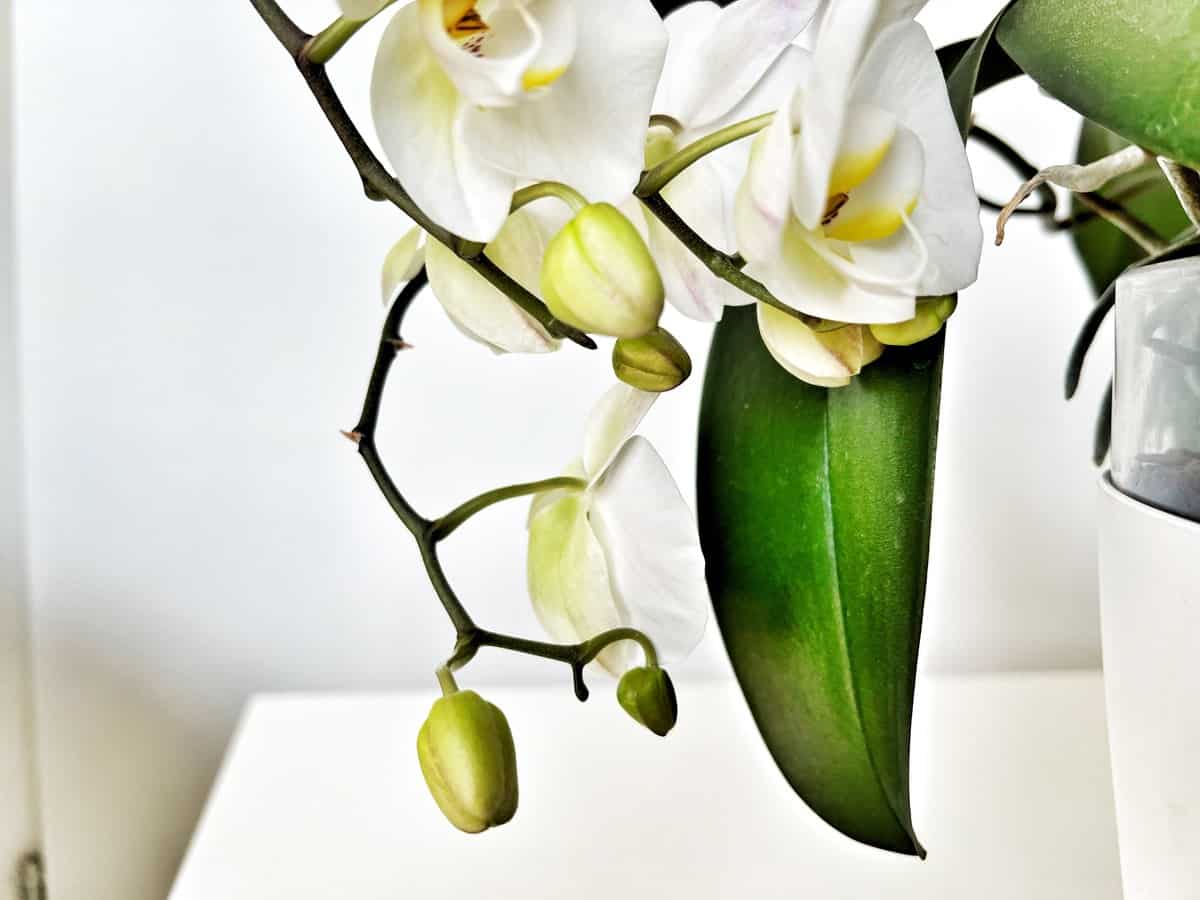
Nothing is more heartbreaking than an orchid covered in buds that go soft and drop before they open. This is called bud blast, and it is almost always a comfort problem rather than a care one. Dry indoor air, a cold draft from a window or door, a hot radiator nearby, or simply moving the plant while it is in bud can all make it abandon the flowers to protect itself.
Orchids are happiest in the humidity of a bright bathroom or kitchen, or sitting on a tray of pebbles and water so the air around them stays a little moist. Keep them out of the path of cold drafts and away from heat sources, and try not to shuffle a budding orchid around the house. Getting the humidity and temperature right is what gets buds to open, steady, warm, humid, and settled. Some of the same humidity-loving bathroom plants enjoy exactly the conditions an orchid quietly craves indoors.
Mistake #5 - Cutting the Spike Wrong and Skipping Feeding
The last cluster is the little things that make a big difference. When the flowers fade, do not pull the whole plant out or cut the spike right down by reflex. If the flower stem is still green, a moth orchid can often rebloom from the same spike, so cut it just above a lower node and see if a side shoot forms. Only cut a spike all the way back to the base once it has turned brown and dry.
Feeding matters too. Orchids are light feeders, so a weak, balanced orchid fertilizer every couple of waterings during active growth (weakly, weekly) gives them the energy to bloom, and then ease off while they rest. And when you do repot, always trim away any dead, hollow, or blackened roots so only firm, living roots go back into fresh bark. Get these small habits right and reblooming stops feeling like luck. Heading into the colder months, my prepare houseplants for winter checklist covers the light and draft changes that catch orchids out.
Final Thoughts - Orchid Problems
Almost every struggling orchid I have brought back came down to the same theme: it was being treated like a leafy houseplant when it wanted to be treated like the air-rooted, tree-dwelling plant it really is. Give it bright indirect light, a chunky bark mix in a pot that drains, water only when the roots turn silvery, and a little humidity and calm while it buds, and most orchid problems simply stop happening. For catching trouble early across your whole collection, see my guide to houseplant pests and problems. Fix the cause, be patient through the resting phase, and a moth orchid will reward you with flowers for months, year after year.

Frequently Asked Questions
Why is my orchid not blooming again?
The most common reason an orchid will not rebloom is too little light. Move it to a bright spot with indirect light, keep the leaves a bright yellowish green rather than dark green, and let nights cool by about ten degrees in autumn to trigger a new flower spike.
How often should I water an orchid?
Water only when the roots turn from green to a silvery grey, then soak it and let it drain completely, never leaving it in standing water. In a warm bright home that is often about once a week, but always go by the roots and the weight of the pot rather than a fixed schedule.
Why are my orchid leaves wrinkled or limp?
Wrinkled, leathery leaves usually mean the roots cannot take up water, most often because overwatering has rotted them. Slide the plant out, trim any black or mushy roots, and repot into fresh chunky bark so the healthy roots can drink again.
Should I cut the orchid spike after the flowers fall?
If the flower spike is still green, cut it just above a lower node and it may rebloom from a side shoot. Only cut the spike all the way back to the base once it has turned brown and dry.
Are orchids safe for cats and dogs?
Yes. Moth orchids (Phalaenopsis) are non-toxic to cats and dogs, which makes them one of the safer flowering houseplants for a home with pets.
Related Topics
- Houseplant Pests and Problems
- Root Rot: How to Save a Dying Plant
- Bathroom Plants: Humidity-Loving Picks
- Humidity and Temperature for Houseplants
- Jewel Orchid (Ludisia) Care
- Pet-Friendly Houseplants
- Pruning and Repotting Houseplants in Fall
- Houseplant Care for Beginners

Written by Bojana
Plant lover, grower, and music maker behind Plant House & Garden, with 35+ years of hands-on houseplant experience. Read more about Bojana →