Houseplant Propagation: 5 Proven Methods to Multiply Your Plants for Free
There is a special kind of joy in turning one plant into many, and the best part is that it costs you nothing but a little patience. Houseplant propagation is how a single pothos becomes a whole shelf of green, how a snapped-off leaf becomes a brand new plant, and how you end up with enough cuttings to gift to every friend who admires your collection. I have propagated just about everything in my home, sometimes on purpose and sometimes by rescuing a piece that broke off, and I want to walk you through every method that actually works.
I filmed several of these methods step by step, so watch them and subscribe on my channel if that helps.
As your collection grows, a simple plant wishlist helps you track what to propagate or hunt down next.
Quick Answer: What Is Houseplant Propagation?
Houseplant propagation is the simple craft of growing new plants from an existing one, for free. The five proven methods are water rooting, stem cuttings, leaf cuttings, division, and growing from seed. Most leafy houseplants root fastest in water, while succulents, corm plants and woody trees prefer soil or seed. Pick your plant below and follow the step-by-step guide.
The 5 Propagation Methods at a Glance
Not every plant likes the same method, so this table is the fastest way to find your starting point. Skim it, find your plant type, then jump to that section below.
| Method | Best for | Difficulty | Time to roots | Success rate |
|---|---|---|---|---|
| Water propagation | Pothos, philodendron, monstera, syngonium | Easy | 2 to 4 weeks | High |
| Stem cuttings in soil | Birkin, alocasia, monstera | Easy to medium | 3 to 6 weeks | High |
| Leaf cuttings | Snake plant, panda plant and other succulents | Medium | 4 to 8 weeks | Medium |
| Division, corms and offsets | Alocasia corms, ponytail palm pups | Easy | Instant plants | Very high |
| Growing from seed | Oak, chestnut, basil and herbs | Medium | Weeks to months | Varies |
Method 1: Water Propagation
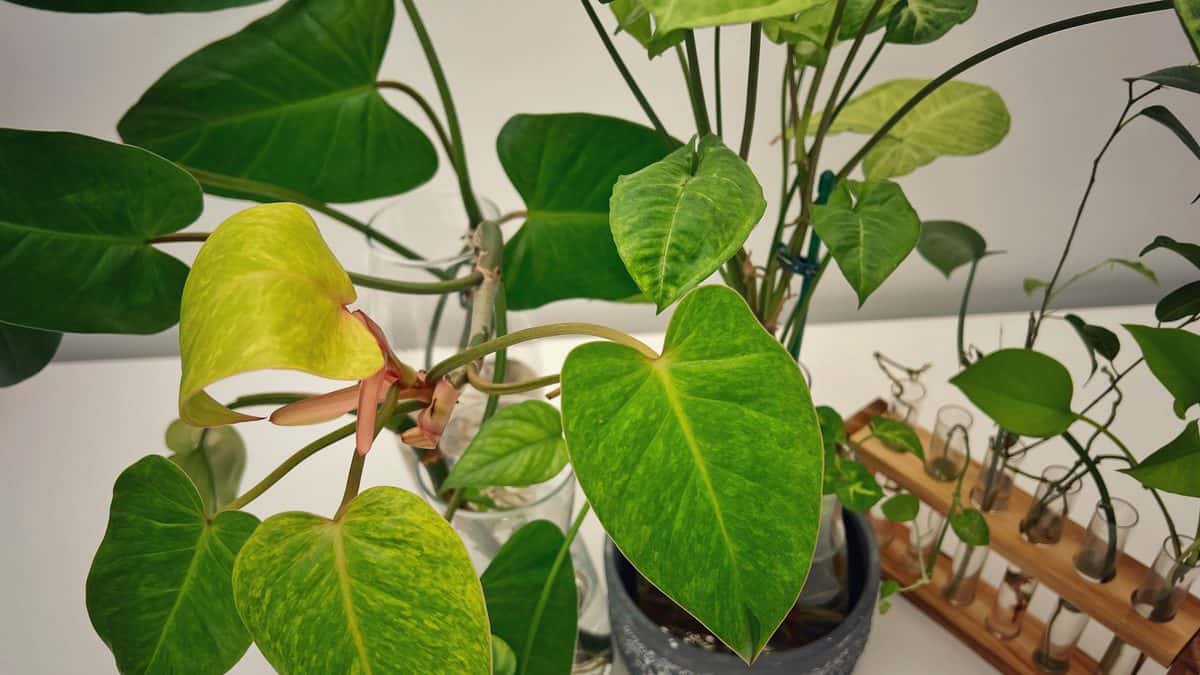
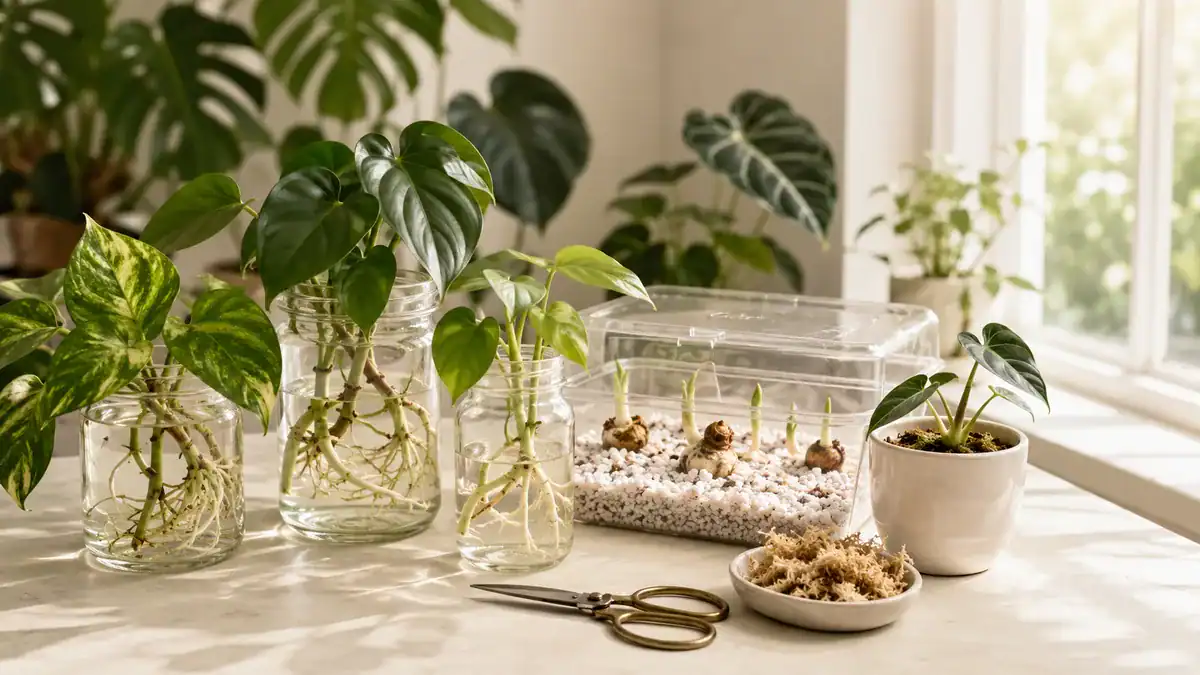
Water propagation is where almost everyone starts, and for good reason. You take a healthy cutting with at least one node, drop it in a clean jar of room-temperature water, set it in bright indirect light, and refresh the water every few days. Within a couple of weeks you get to watch the roots grow, which is honestly half the fun. It works beautifully for trailing and vining aroids.
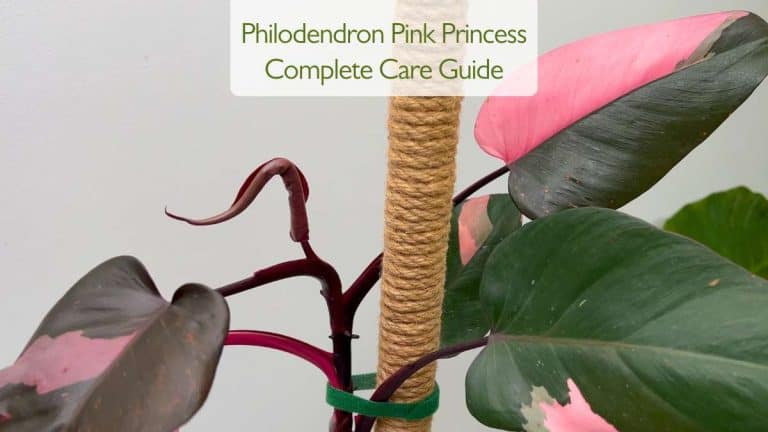
If you have a snake plant, you can root it straight from a leaf section in water with my guide to propagating snake plants from leaves in water. Philodendron lovers have plenty to work with too: here is how to propagate philodendron heartleaf, my step-by-step on propagating philodendron White Princess in water, and a full walkthrough of propagating philodendron Pink Princess plus a root rot rescue for when things go a little sideways.
People often ask whether a plant can simply live in water forever. The answer is yes, with the right care, and I have the long-term results to prove it. See what happened when I kept a golden pothos in water for three years, and my honest report on whether a syngonium can live in water permanently. Even herbs are happy to root this way, which is exactly how I keep my kitchen stocked using these easy tips to grow and propagate basil at home.
If you would rather watch water propagation happen than read about it, I filmed the whole snake plant process from leaf cutting to roots. Press play below, and if it helps, subscribing to my channel is the easiest way to catch every new propagation project I share.

Method 2: Stem Cuttings in Soil
Some plants skip the water step and root better when you plant the cutting directly into a light, airy mix. This is my preferred method for chunkier aroids because the roots that form are already soil-adapted, so there is no transplant shock later. Take a cutting with a node, let the cut end callus for an hour or two, dip it in rooting hormone if you have it, then nestle it into moist mix and keep the humidity up.
For the details by plant, I have you covered: philodendron Birkin propagation, the full steps to multiply your Birkin, how to propagate alocasia Portodora from stem cuttings, and my complete guide to monstera deliciosa propagation and care. The right medium makes a real difference here, so it is worth reading about my favorite soil-free aroid potting mix recipe before you pot up a single cutting.

Method 3: Leaf Cuttings
This one feels like a little bit of magic. With certain plants you do not even need a stem, just a leaf. Succulents are the classic example: lay a healthy leaf on top of barely moist soil, wait, and tiny roots and a baby plant appear at the base. My favorite demonstration is propagating a panda plant (Kalanchoe tomentosa) from cuttings, which roots reliably with very little fuss.
Snake plants straddle this method and the last one, since a single leaf cut into sections will root in either water or soil. If you want the leaf route, my snake plant propagation guide shows exactly how I do it. One honest heads-up: leaf propagation is the slowest method on this list, so set your expectations to weeks, not days, and resist the urge to keep checking for roots.
Method 4: Division, Corms and Offsets
Division is the closest thing to instant gratification in the whole plant world. Instead of waiting for roots to form, you separate a plant that has already grown multiple crowns, pups, corms or offsets, and each piece is a fully rooted plant from day one. It is the highest success-rate method there is, and it doubles as a refresh for a pot that has gotten crowded.
Alocasias are wonderful for this because they produce little corms around the base. Here is exactly how to propagate an alocasia Regal Shield from corms. You can also see the 5 mistakes to avoid when growing Alocasia from corms. For something completely different, my ponytail palm propagation guide with real results walks through separating the pups this quirky plant sends up. Sphagnum moss is my go-to for nursing small divisions and corms along, and you can read why in my guide to using sphagnum moss for houseplants.
Method 5: Growing From Seed
Growing from seed asks for the most patience, but it is also the most rewarding when you want a real project. There is nothing quite like watching a tree emerge from a single nut you found on a walk. If you want to try it, start with my step-by-step on how to plant an oak tree from an acorn or how to grow a chestnut tree from seed. Both need a cold stratification period, which is just a fancy way of saying the seeds need to think they have been through winter.
Edibles are the friendlier place to begin if trees feel like a big commitment. Herbs sprout quickly and reward you in the kitchen, and my basil growing guide is a gentle, fast first seed project.
Give Your New Roots the Best Start
Propagation is really just the beginning. Once your cuttings root, they need the same fundamentals as any houseplant, so it is worth bookmarking my complete houseplant care guide for beginners for the light, water and feeding basics. And since philodendrons are the single most propagated group in my home, my philodendron care guide is the natural next stop for keeping all those new plants thriving.
If you like to track your propagations the way I do, my printable Plant Care Journal has pages for logging cutting dates and root progress, which is oddly satisfying. And for a little extra encouragement to those baby roots, some growers like to play 174 Hz music for root growth while their cuttings settle in. I share new propagation projects and updates over on my YouTube channel too, so come say hello if you want to follow along.
Houseplant Propagation FAQ
What is the easiest plant to propagate for beginners?
Pothos and heartleaf philodendron are the easiest plants to propagate. Take a cutting with one node, place it in a jar of water in bright indirect light, and you will see roots in two to four weeks. They root almost every time, which makes them perfect confidence builders for a first try.
Is it better to propagate in water or soil?
Water is easier to start with because you can watch the roots form and spot problems early. Soil is better for plants prone to rot and means no transplant step later. Leafy aroids love water, while succulents and chunky-stemmed plants usually do better rooted directly in a light, airy mix.
Do I need rooting hormone to propagate houseplants?
No, most common houseplants root happily without it. Rooting hormone can speed things up and improve your odds with woody or stubborn cuttings, but pothos, philodendron, monstera and similar plants do not need it at all. A clean cut at a node matters far more than any product.
Why are my cuttings rotting instead of rooting?
Rotting usually means too much moisture and not enough fresh oxygen. In water, change it every few days and keep the jar in bright light. In soil, let the cut end callus before planting and avoid soggy mix. Cutting below a clean node, rather than mid-stem, also helps prevent mushy ends.
How long does houseplant propagation take?
It depends on the method. Water and stem cuttings of aroids root in two to six weeks, leaf cuttings take four to eight weeks, division gives you fully rooted plants instantly, and growing from seed can take months. Warmth, bright indirect light and patience speed up almost every method.
Can you propagate any houseplant?
Almost, but the method has to match the plant. Vining and leafy plants root from cuttings, clumping plants are divided, succulents grow from single leaves, and trees come from seed. A few plants without nodes or offsets are tricky, so always match your plant to the right method from the table above.

Written by Bojana
Plant lover, grower, and music maker behind Plant House & Garden, with 35+ years of hands-on houseplant experience. Read more about Bojana →