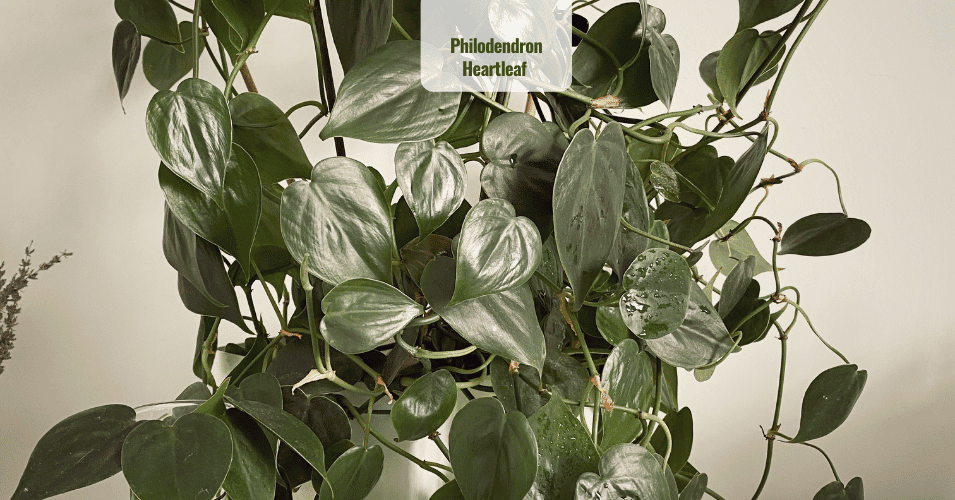
How to Propagate Philodendron Heartleaf
Part of my complete Philodendron Care Guide: light, water, problems, every variety, and propagation in one place.
Heartleaf philodendron was one of the first plants I ever propagated, and it is still the one I hand to anyone who tells me they are nervous about taking cuttings. It roots so willingly that it is almost hard to get wrong. I have filled shelves, gifted dozens of little plants, and rescued leggy vines this way. Here is exactly how I do it.
What you'll need
A healthy heartleaf vine, a pair of clean scissors or snips, and a glass of water. If you would rather skip the water stage, have a small pot of moist, well-draining soil ready instead.
Step 1: Take a healthy cutting
Find a vine with a few good leaves and cut just below a node, the little bump where a leaf meets the stem. That node is where the new roots will grow from, so every cutting needs at least one, plus a leaf or two on top. Remove the lowest leaf so the node sits bare and ready.
Step 2: Root the cutting in water
Pop the cutting into a glass of water so the bare node is submerged but the leaves stay dry. Set it somewhere bright and out of direct sun, and change the water once a week to keep it fresh. Within two to three weeks you will see little white roots pushing out of the node.
Step 3: Pot up your new plant
Once the roots are one to two inches long, move the cutting into a small pot of moist, well-draining soil. Keep it a touch more damp than usual for the first couple of weeks while it settles in, then treat it like any other heartleaf. I like to plant a few rooted cuttings together for a fuller, bushier pot.
Water or soil: which should you choose?
| Method | Why I like it | Best for |
|---|---|---|
| Water | Easy to watch the roots form, very reliable | Beginners |
| Soil | Skips the transplant step, roots settle faster | Once you are confident |
Common propagation problems (and quick fixes)
- Cutting turned mushy: the water was left too long or a leaf was sitting in it. Refresh the water weekly and keep every leaf above the surface.
- No roots after a month: usually not enough warmth or light, or the cutting had no node. Move it somewhere brighter and warmer, and check there is a node under the water.
- Leaves yellowing in water: the odd old leaf dropping is normal, but if several yellow at once the cutting is ready for soil and its nutrients.
Watch how I do it

Want to see it in real time? Here is the full walkthrough on my channel, and subscribing helps me share more plant guides like this one.
How long does philodendron heartleaf take to root in water?
Usually two to three weeks for the first roots, and about four to six weeks before they are long enough to pot up. Warmth and bright, indirect light speed things along.
Can you propagate philodendron heartleaf in soil instead of water?
Yes. Push the bare node into moist, well-draining soil and keep it lightly damp. You skip the transplant, but you cannot watch the roots form, so water is easier when you are starting out.
Where do you cut a philodendron to propagate it?
Just below a node, the small bump where a leaf and roots grow from. Every cutting needs at least one node, since that is where the roots appear.
Can I leave my cutting in water too long?
Cuttings can happily sit in water for ages, but they root strongest in soil. Left for months they form water roots that take a little longer to adjust when potted, so it is best to move them once roots are an inch or two.

This guide is part of my complete houseplant propagation guide, where I walk through every method in one place.

Written by Bojana
Plant lover, grower, and music maker behind Plant House & Garden, with 35+ years of hands-on houseplant experience. Read more about Bojana →