Money Tree Leaves Turning Yellow or Falling Off? 5 Mistakes to Avoid (and How to Fix Them)
Is your Money Tree turning yellow, losing her leaves, or growing tall and leggy? Well, you're not alone.
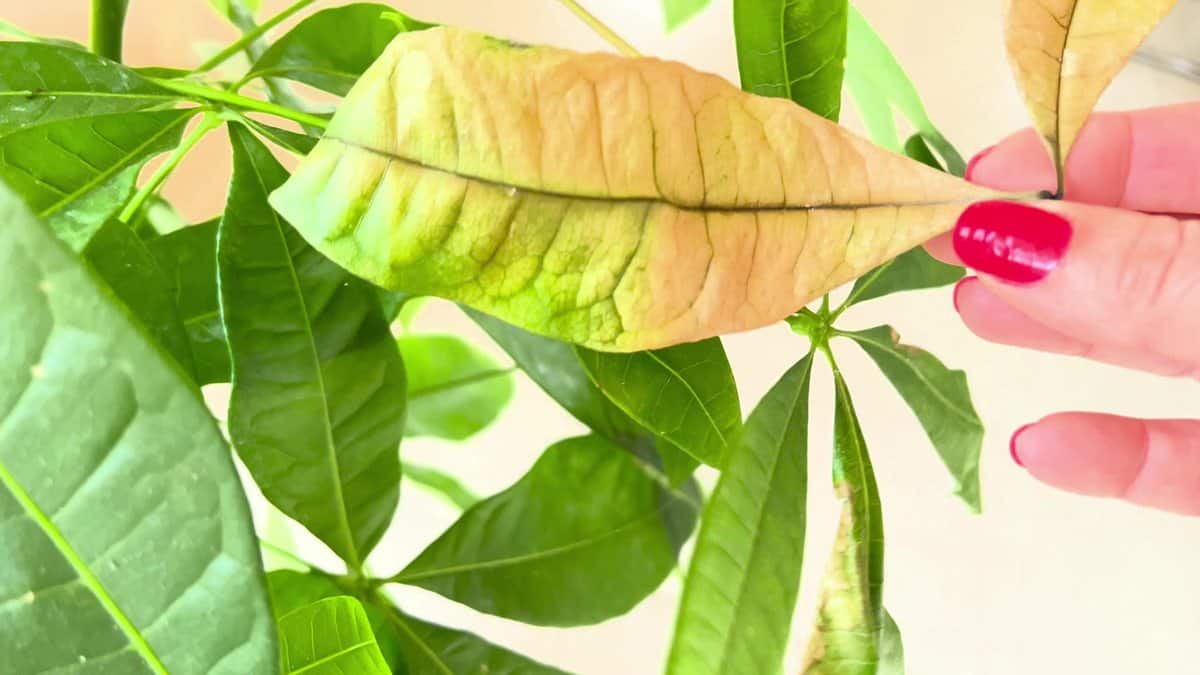
Quick answer: Money tree leaves turning yellow usually means the soil stays too wet. Soft yellow leaves and wet soil point to too much water. Dry, crispy yellow leaves and dry soil mean too little. Leaves falling off after a move are stress, brown crispy edges point to dry air, and a soft trunk means rot.
The Money Tree is usually quite easy to grow. But a few common care mistakes can leave her looking sad and slow down new growth. And sometimes, it's not obvious what's going wrong. Often, a few simple changes in care can help, but first you need to know what's causing the problem.
In this post, I'll show you five Money Tree care mistakes to avoid, the signs to look for, and what to do instead to help your plant stay healthy and full.
The Money Tree, also known as Pachira aquatica, is easy to recognise by her braided trunk and beautiful green leaves. And if you have pets, here's some good news: the Money Tree is non-toxic to cats and dogs. I have 2 cats at home, so this is important to me. You'll find more safe choices in my list of pet-friendly houseplants.
I've had my Money Tree for three years now, and she has taught me a few things along the way which I want to share with you. And don't miss mistake number two. It's a simple check most people never do, but it can save your whole Money Tree.
If you prefer to watch, my full video is right here.

I share more real plant fixes and calming music for plants on my YouTube channel. Subscribe if you'd like to grow along with me.
Money Tree Leaves Turning Yellow, Brown or Falling Off? What Each Sign Means
| What you see | Most likely cause and what to check |
|---|---|
| Soft yellow leaves, soil still wet | Watering too often. Let almost all of the soil dry out before you water again. |
| Dry, crispy yellow leaves, soil dry | Too little water. Water slowly until the excess runs through the drainage holes. |
| One older, lower leaf turning yellow | Usually normal, if the rest of the plant looks healthy and new growth is coming in. |
| Drooping, even though the soil is wet | Damaged roots can no longer take up water. Check the trunk and the roots for rot. |
| Soft, darker or collapsing trunk | Root or stem rot. Check each trunk in the braid. |
| Leaves falling off, even green ones | A move, a cold draft, a heater or a sudden change in temperature. |
| Long gaps between leaves, branches leaning to the window | Too little light. |
| Brown, crispy tips and edges | Very dry air, or soil left dry for too long. |
| Tiny bugs under the leaves or along the stems | Pests: spider mites, mealybugs, scale or aphids. |
These signs can overlap, so always check the soil and the trunk before you change anything. Now let's go through the five mistakes one by one.
Mistake #1: Watering Too Often
Money Trees like almost all of the soil to dry out before you water them again. The thick base of the trunk stores water, which helps them cope with short dry periods, so you don't need to keep the soil constantly wet.
But letting the whole pot stay completely dry for too long can also cause problems. So, how can you tell the difference?
If the soil stays too wet, you may notice yellowing leaves that eventually fall off. If this continues over time, the roots can start to rot. Root rot is a serious problem and can eventually kill the plant.
The plant can also droop, even though the soil is still wet. That's because damaged roots can no longer take up enough water.
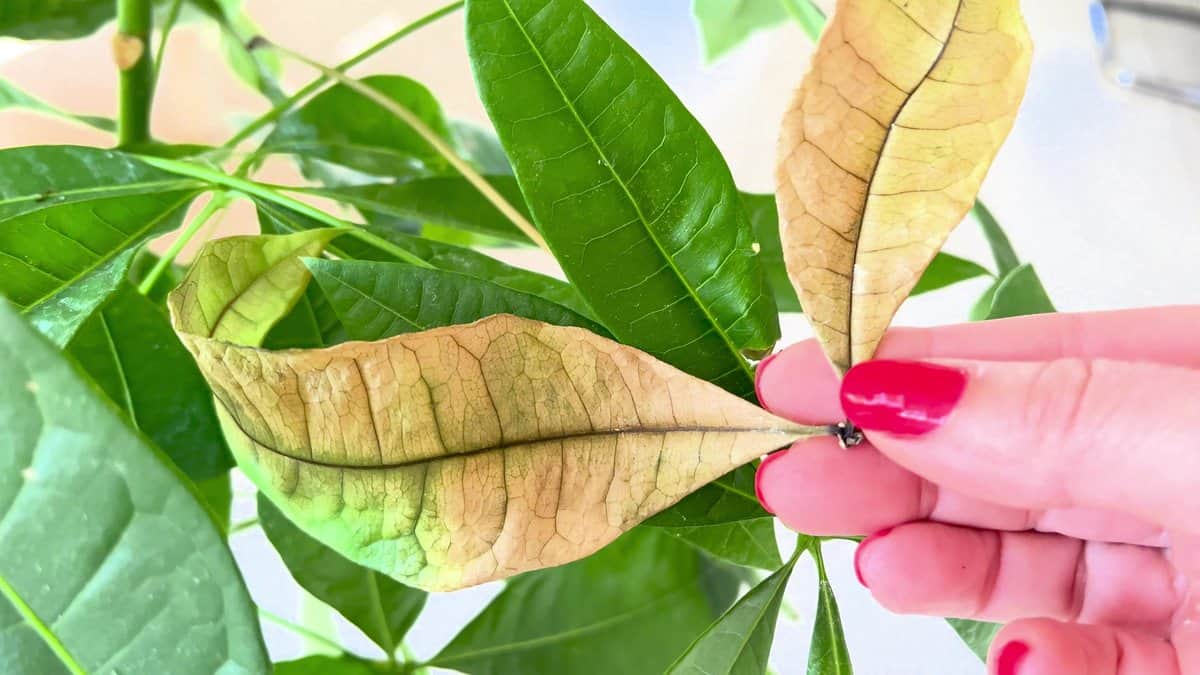
If the soil gets too dry, the leaves may droop or curl, and develop dry, crispy tips and edges. Some may turn yellow and fall off too. An occasional older, lower leaf turning yellow can be normal, especially if the rest of the plant looks healthy and new growth is coming in.
Because these signs can overlap, always check the soil before reaching for the watering can. Drooping doesn't automatically mean your plant is thirsty.
A simple way to tell the difference:
- Soft yellow leaves and wet soil usually mean too much water.
- Dry, crispy yellow leaves and dry soil usually mean too little.
Don't check only the top of the soil. The top can feel dry, while the soil deeper down is still wet.
I usually lift the pot. When the soil is dry, the pot feels much lighter. You can also push a wooden stick deep into the soil, almost to the bottom of the pot. If it comes out clean and dry, it's time to water. If it comes out dark or with wet soil on it, wait a few more days. A moisture meter works too, just push it deep enough into the pot.
When it's time to water, water slowly and evenly until the excess runs through the drainage holes. Let it drain, then empty the saucer or decorative pot.
Avoid giving small amounts of water every few days, or watering just because it's your usual watering day. Use a loose, well-draining mix so the roots don't stay wet for too long.
This is one of the reasons I created Leaftend, my plant care app. It helps me keep track of care for all my plants. You still need to check the soil before watering, but it makes staying consistent easier. It's free for your first three plants.
Mistake #2: Ignoring a Soft Trunk
The second mistake is ignoring a trunk that starts to feel soft. Sometimes we notice yellow leaves or slow growth, but forget to check the base of the plant.
A healthy Money Tree trunk should feel firm. If the base becomes soft, turns darker, or starts to collapse, especially while the soil is wet, this can be a sign of root or stem rot.
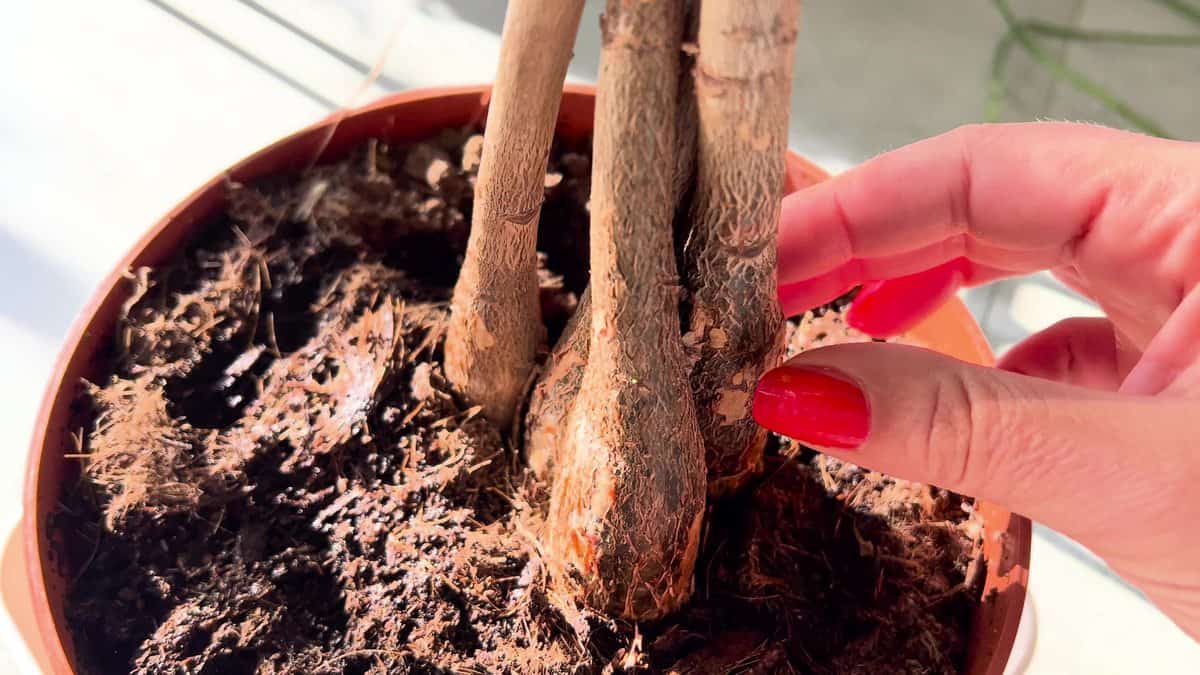
Gently check each trunk near the soil. This is especially important with a braided Money Tree, because the braid is made up of several separate plants. One can be rotting while the others still look healthy.
If you find a soft trunk, take the plant out of the pot and check the roots. Healthy roots are firm and light in colour. Rotten roots are brown or black, soft, and may smell bad. Remove the rotten roots, and if one trunk is completely rotten, remove it too. Then repot the healthy plants in fresh, well-draining soil. Use a pot that fits the roots, not a bigger one.
A rotten trunk won't become firm and healthy again, but the other plants may still recover. Luckily, I've never had a soft trunk on my own Money Tree. To prevent it, just water her the way I showed you in the first mistake. If you're already dealing with rot, my step by step guide on how to fix root rot walks you through the rescue.
Mistake #3: Moving the Plant Too Often
The third mistake is moving the plant around too often.
Money Trees don't like sudden changes. After a move or a change in temperature, they often drop leaves, sometimes even green ones. This is very common after you bring a new plant home.
I've noticed this with my Money Tree too, especially when the temperature changes.
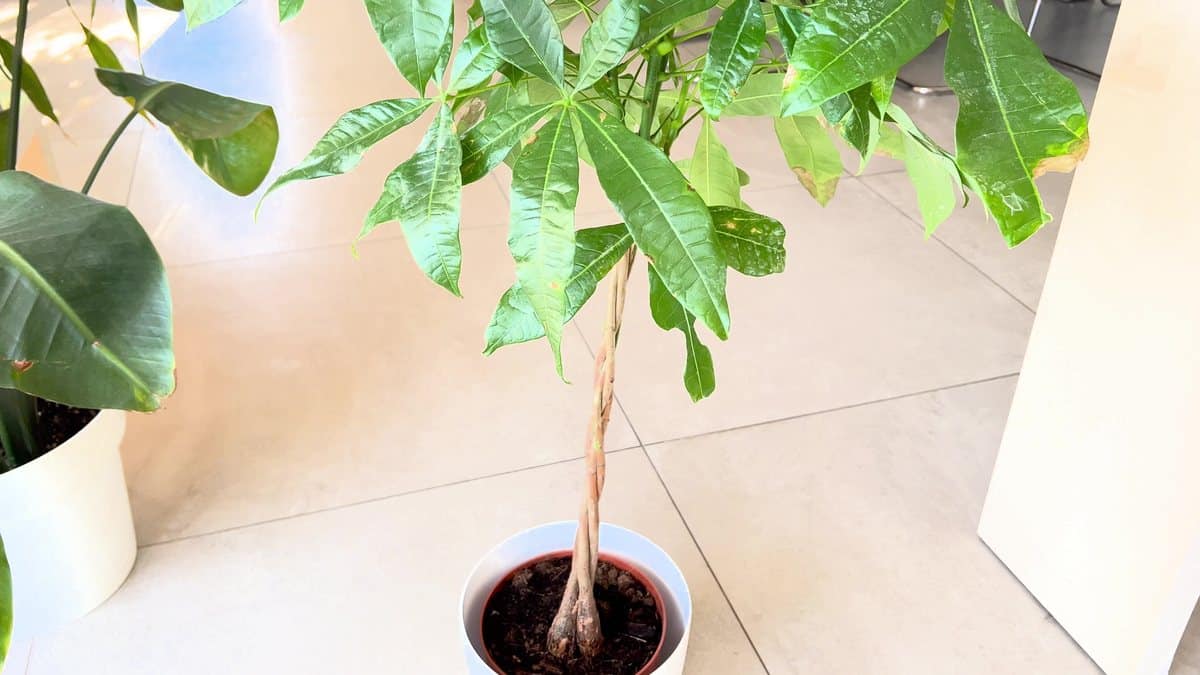
So choose a good spot, away from heaters and cold drafts. Then leave the plant there to adjust.
Don't give extra water or fertiliser to stop the leaf drop. It won't help.
Some leaf loss is normal, and the plant should settle in a few weeks. But if the leaves keep falling, check the soil, roots, and light too. The same thing happens with other indoor trees, like the Schefflera, and I explain it in why is my Schefflera dropping leaves.
Mistake #4: Keeping the Plant in Too Little Light
The fourth mistake is keeping your Money Tree in a spot that doesn't get enough light. She may survive there for a while, but over time, growth can slow down and the plant can become tall and leggy.
You might notice long gaps between the leaves, thin new stems, or branches leaning toward the nearest window. Instead of looking full and bushy, the plant starts looking uneven, with most of her leaves at the ends of long branches.
I suggest choosing a spot near a window with bright, indirect light. A dark corner across the room usually won't provide enough light for healthy, compact growth.
I keep my Money Tree a few feet away from a west window. In summer, when the sun gets stronger and reaches her, I pull a sheer curtain to protect her leaves.
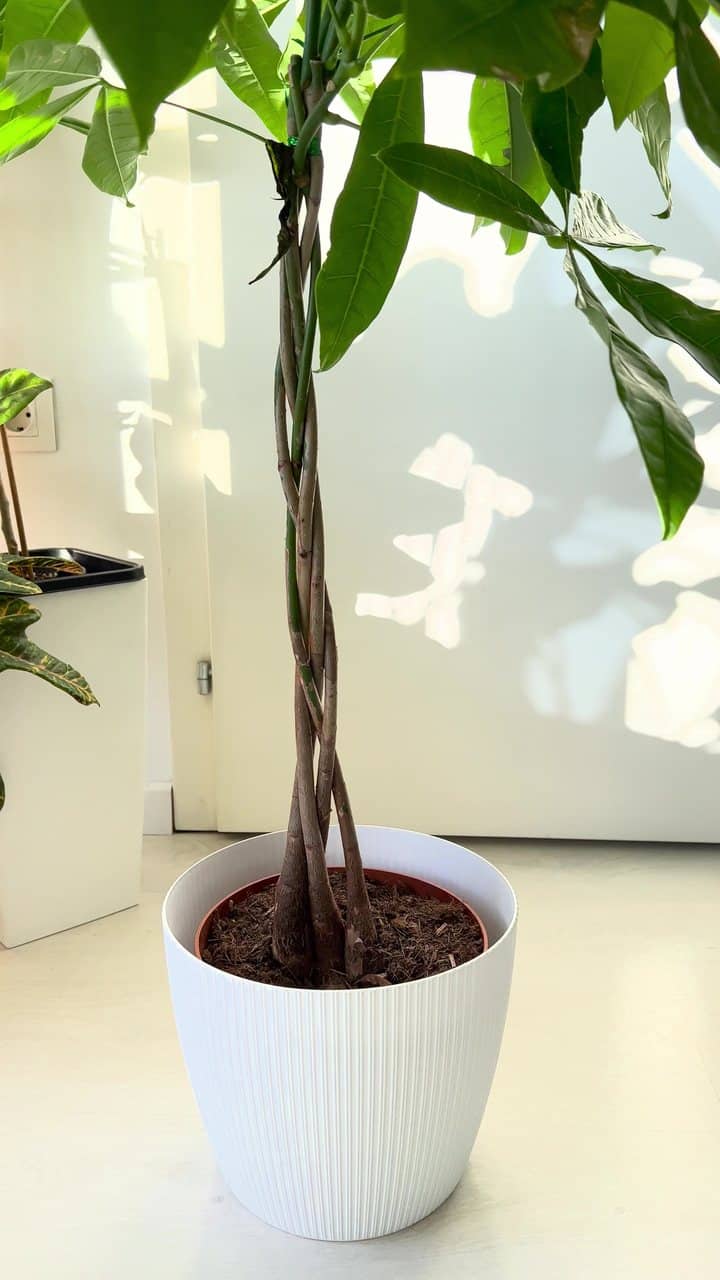
If the plant has been in a dim spot for a long time, introduce brighter light gradually. Avoid putting her straight into strong afternoon sun, because the leaves can burn.
You can also give the pot a small turn every time you water, so all sides receive light more evenly.
If your Money Tree is already leggy, better light will help future growth, but it won't shorten the stems that have already stretched. Once the plant is healthy and growing well, you can trim back long branches to encourage a fuller shape.
The best time for this is spring or during active growth. Use clean, sharp scissors and cut just above a leaf node, the point where a leaf grows from the stem. New branches may develop below the cut. Only trim the branches above the braid, and don't cut into the braided trunks.
Start with a light trim. With better light and careful pruning, your Money Tree can gradually grow into a fuller, bushier plant.
Mistake #5: Ignoring Very Dry Air
The fifth mistake is overlooking how dry the air becomes, especially in winter when the heating is on.
Money Trees can do well in normal household humidity, but very dry air can cause brown, crispy tips and edges. The leaves may also curl as the damage develops.
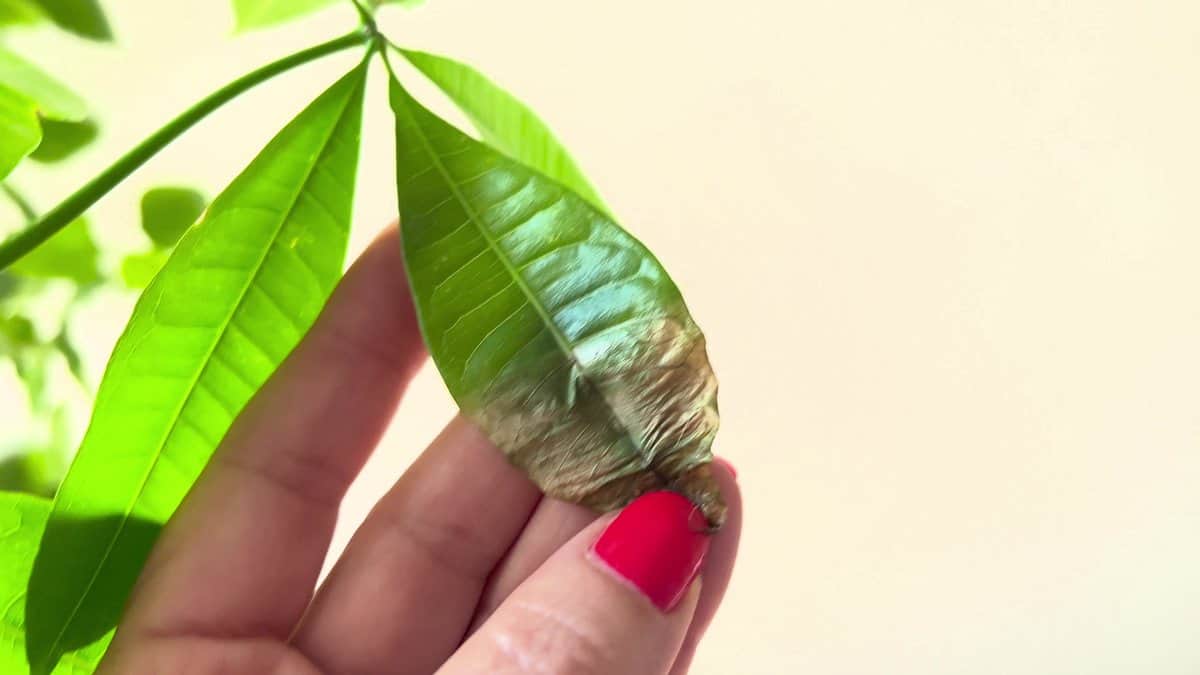
But brown edges don't always mean low humidity. Letting the soil stay dry for too long can cause similar damage. Check the soil first, and if your watering is right, look at the conditions around the plant.
If the room is very dry, I suggest using a small humidifier nearby. A simple humidity meter can help you check the air. Money Trees do best at 50% humidity or higher.
Spraying the leaves with water only raises humidity briefly, so it won't solve a dry room. I explain why in the truth about misting houseplants. And don't try to make up for dry air by watering the soil more often. You can end up with wet roots and still have the same leaf problem.
Dry air can also bring pests, so check under the leaves and along the stems too. The most common pests on Money Trees are spider mites, mealybugs, scale, and aphids. If you find any, keep the plant away from your other plants. You'll find how to recognise and treat each one in my houseplant pests and problems guide, and the method I use on my own plants in 70% alcohol on houseplants.
The brown parts won't turn green again. You can trim the dry edges for appearance, but keep leaves that are still mostly healthy. Watch the new growth to see whether the changes in care are helping.
So, those are the five Money Tree mistakes I wanted to share with you. If you have any questions, you can write them in the comments under my video. I'll be happy to answer. Happy growing!
Frequently Asked Questions
Why are my money tree leaves turning yellow?
Most often the soil stays too wet. Soft yellow leaves with wet soil usually mean too much water, while dry, crispy yellow leaves with dry soil mean too little. An occasional older, lower leaf turning yellow can be normal if new growth is coming in.
Should I cut yellow leaves off my money tree?
A leaf that is mostly yellow won't turn green again, so you can gently remove it. Fix the cause first, though, or the new leaves will turn yellow too.
Why is my money tree dropping leaves?
Money Trees don't like sudden changes. After a move or a change in temperature they often drop leaves, sometimes even green ones, especially after you bring a new plant home. Choose a good spot away from heaters and cold drafts, leave her there, and don't add extra water or fertiliser. She should settle in a few weeks.
Why is my money tree trunk soft?
A soft, darker or collapsing trunk, especially while the soil is wet, can be a sign of root or stem rot. Check each trunk in the braid, take the plant out of the pot and remove rotten roots. A rotten trunk won't become firm again, but the other plants in the braid may still recover.
Why are my money tree leaves turning brown and crispy?
Brown, crispy tips and edges usually come from very dry air, especially in winter when the heating is on. Letting the soil stay dry for too long can cause similar damage, so check the soil first. A small humidifier helps, and Money Trees do best at 50% humidity or higher.
How often should I water a money tree?
There is no fixed schedule. Water when almost all of the soil has dried out. Check deep in the pot, not just the top: lift the pot, push a wooden stick almost to the bottom, or use a moisture meter.
How much light does a money tree need?
Bright, indirect light near a window. Too little light makes her tall and leggy, with long gaps between the leaves. Strong afternoon sun can burn the leaves, so a sheer curtain helps when the sun reaches her.
Is a money tree safe for cats and dogs?
Yes, the ASPCA lists the Money Tree (Pachira aquatica) as non-toxic to cats and dogs. Don't confuse her with the jade plant, which is sometimes also called a money tree and is toxic to pets.
Related Topics
- Root Rot: How to Save a Dying Plant
- Houseplant Pests & Problems
- 70% Alcohol on Houseplants
- Misting Houseplants
- Why Is My Schefflera Dropping Leaves?
- Pet-Friendly Houseplants
- Houseplant Care for Beginners: The Complete Guide

Written by Bojana
Plant lover, grower, and music maker behind Plant House & Garden, with 35+ years of hands-on houseplant experience. Read more about Bojana →