Snake Plant Care: The Complete Guide to a Nearly Unkillable Plant
The snake plant is the plant I hand to anyone who swears they have a black thumb. It is almost impossible to kill, it looks striking in any room, and it quietly forgives the odd missed watering or forgotten corner. I have grown these for decades, and the truth is that most snake plant problems come from kindness, from watering too often, not from neglect. Get a few simple things right and this plant will outlast almost everything else on your shelf.
Meet the Snake Plant (Sansevieria, now Dracaena trifasciata)
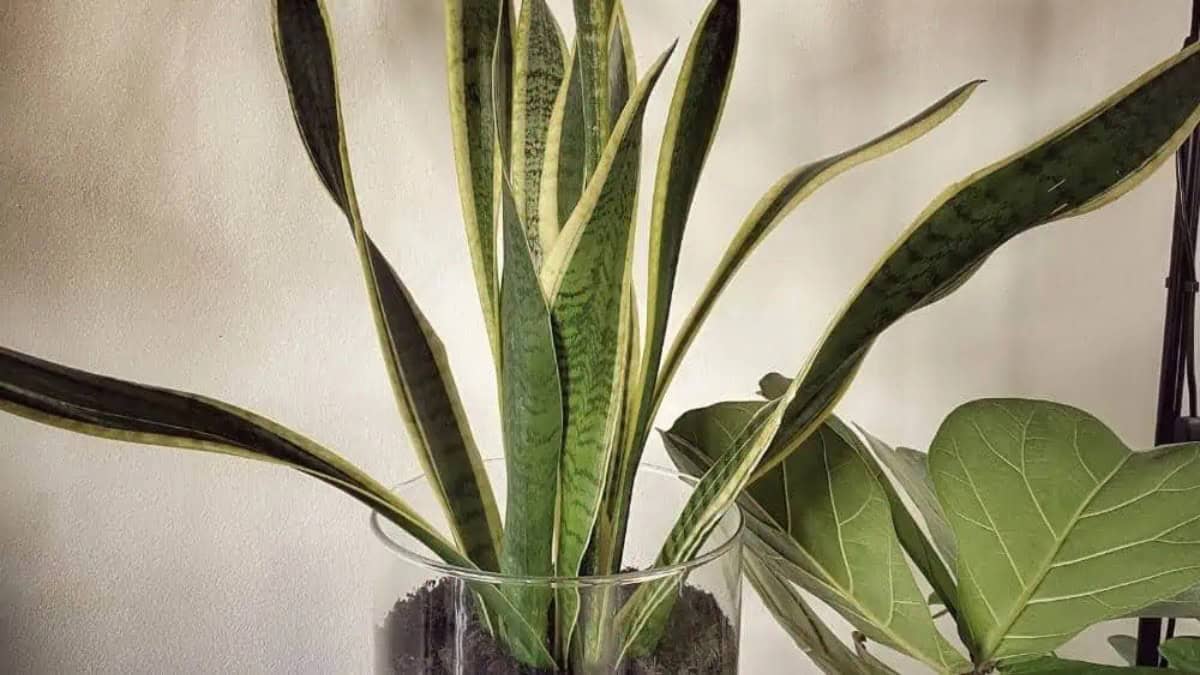
You will still see it sold as Sansevieria, and that is the name most of us grew up with, but botanists reclassified it as Dracaena trifasciata back in 2017. Both names point to the same tough, upright plant, so do not worry if a label says one or the other. You may also hear the old nickname "mother-in-law's tongue," a nod to those tall, sharp-edged leaves.
It comes from the dry, rocky parts of West Africa, and that origin explains everything about its care. It is built to store water in its thick leaves and roots and to sit through long dry spells. Once you picture it growing in poor, gritty soil under bright African light, the care rules stop feeling like rules and start making sense.
Snake Plant Care at a Glance
| Care factor | What the snake plant wants |
|---|---|
| Light | Bright indirect is ideal; tolerates low light and some direct sun |
| Water | Only when soil is fully dry; every 2 to 3 weeks in summer, less in winter |
| Soil | Free-draining cactus or succulent mix, pot with drainage holes |
| Temperature | 60 to 85 F (16 to 29 C); keep above 50 F (10 C) |
| Humidity | Normal room humidity is fine; no misting needed |
| Feeding | A diluted feed once or twice in spring and summer only |
| Toxicity | Mildly toxic to cats and dogs if eaten |
Light: Flexible, but Brighter Is Better
The snake plant has a reputation as a "low light" plant, and it is true that it will survive in a dim corner longer than almost anything else. But surviving and thriving are two different things. In real low light it simply stops growing and holds still. Give it bright, indirect light near a window and you will see new leaves push up and the colors and variegation stay strong.
It also handles a few hours of gentle direct sun, which many tropical plants hate. The only light it dislikes is harsh, all-day midday sun through glass, which can bleach the leaves. If your room is genuinely dark, the snake plant is one of the best low-light indoor plants you can choose, just expect slow, steady growth rather than a fast flush of new leaves.

Watering: The One Thing That Actually Matters
If you remember nothing else, remember this. Snake plants are killed by overwatering far more often than by anything else. Those fat leaves are water stores, so the plant is perfectly happy being dry. What it cannot tolerate is sitting in soggy soil, because the roots need air and wet soil starves them, which leads straight to root rot.
The method is simple: water thoroughly so the whole root ball is soaked, let every drop drain away, then wait until the soil is completely dry before you water again. In a warm, bright spot that is often every two to three weeks in spring and summer. In winter, when the plant is resting, it can stretch to once a month or even less. Do not water on a fixed schedule. Push a finger deep into the soil, or lift the pot to feel its weight, and only water when it is truly dry. When you are unsure, wait a few more days. This plant would always rather be thirsty than drowned.
Soil and Potting: Drainage Above All
Because everything comes back to drainage, the soil matters. A dense, moisture-holding potting soil is the wrong home for a snake plant. Use a free-draining cactus or succulent mix, or lighten a standard houseplant mix with plenty of perlite, coarse sand or grit so water runs through fast and air can reach the roots.
Just as important is the pot itself. It must have drainage holes. A beautiful pot with no hole is a slow trap, because water pools invisibly at the bottom and rots the roots from below. If you love a cachepot with no drainage, keep the plant in a plain nursery pot inside it and tip out any water that collects. Terracotta is a lovely choice here too, since it breathes and dries the soil faster.
Temperature and Humidity: Easy Company
Snake plants like the same temperatures we do, roughly 60 to 85 F (16 to 29 C), so normal room warmth suits them all year. The main thing to avoid is cold. Keep them away from frosty windows and cold drafts in winter, and do not let them sit below about 50 F (10 C), as chilly, wet conditions are what cause soft, mushy leaves.
Humidity is a non-issue, which is part of why this plant is so easy. It is perfectly happy in dry indoor air and does not want misting. If anything, extra moisture around the leaves does more harm than good.
Feeding: Less Is More
This is not a hungry plant. In poor native soils it grows slowly and steadily, and it keeps that habit indoors. A diluted, balanced houseplant fertilizer once or twice across spring and summer is all it needs. Skip feeding entirely in autumn and winter while it rests. Overfeeding will not make it grow faster; it just builds up salts in the soil and can scorch the roots. When it comes to snake plant care, doing less really is doing more.
Repotting: Only When It Is Truly Crowded
Snake plants actually like being a little root-bound, so there is no rush to repot. Every two to three years is plenty, and the signs are clear: roots pushing out of the drainage holes, the pot bulging or cracking from strong rhizomes, or the plant drying out much faster than it used to. Move it up just one pot size, always into one with drainage, refresh the mix, and do it in spring when it is actively growing. A pot that is too big holds too much wet soil, which brings us right back to the overwatering risk.

Common Snake Plant Problems
Almost every snake plant problem traces back to water. Soft, mushy, yellowing leaves or a squishy base nearly always mean overwatering and the start of root rot; catch it early, unpot the plant, cut away any brown mushy roots, and repot into fresh dry mix. My full walkthrough is in the root rot rescue guide. Leaves that fall over or crease at the base are usually a mix of too much water and too little light, so the plant grows weak and floppy. Brown, crispy leaf tips point the other way, to underwatering or cold, dry drafts, though the plant will usually push through it.
If you are troubleshooting a specific symptom, I go deeper in my guide to snake plant problems and the five mistakes to avoid. And if your plant's leaves are shifting from bright green to pale or yellow-edged and you are not sure whether that is a problem or just its natural variegation, my post on snake plant color differences explains exactly what the light and the variety are doing.

How to Propagate a Snake Plant
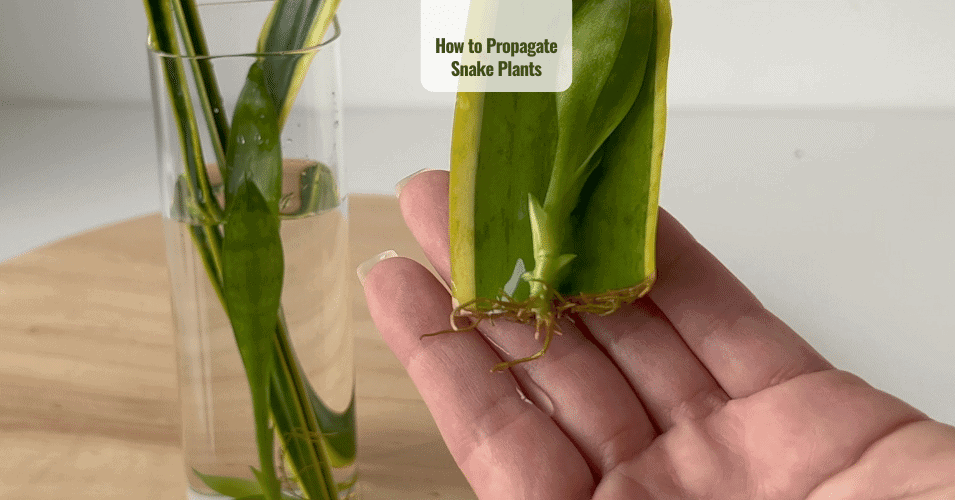
Making more snake plants is genuinely satisfying, and there are two easy routes. The first is leaf cuttings: cut a healthy leaf into sections, let the cut ends callus for a day, then stand them in water or push them into moist mix and wait for roots. The second is division, where you unpot a mature plant and separate the rhizomes into new plants, each with roots and leaves.
There is one honest catch worth knowing. If your snake plant is a variegated variety, such as the yellow-edged Laurentii, leaf cuttings will almost always grow back plain green, because the variegation does not carry through this way. To keep those beautiful yellow margins, use division instead. I walk through the whole process, water and soil both, in my step-by-step guide to propagating snake plants, and you will find more methods for other plants in my houseplant propagation guide.
Is the Snake Plant Safe, and Does It Really Clean the Air?
Two things people always ask. First, pets: the snake plant is mildly toxic to cats and dogs if they chew it, thanks to natural compounds called saponins, and it can cause drooling, vomiting or an upset stomach. It is not usually dangerous, but if you have curious pets, place it out of reach or see my roundup of pet-friendly houseplants for safer options.
Second, the famous air-cleaning claim. The snake plant did feature in NASA's clean-air research, and it is a little unusual in that it releases oxygen at night rather than only in daylight. That is a genuine and charming quirk. The honest caveat is that the air-purifying effect in a normal room is very modest, because you would need a lot of plants to measurably change your air. So grow it because it is beautiful and nearly indestructible, and treat the fresh-air bonus as a small extra. If clean-air plants are your thing, I have gathered the best of them in my guide to air-purifying houseplants.

If you would rather watch than read, here are my quick snake plant care tips on camera. If it helps, come subscribe on my YouTube channel, where I fix struggling plants and grow new ones to my 432 Hz music.
Frequently Asked Questions
The snake plant is one of my top picks for low-light rooms, which is why it turns up in my bedroom plants, bathroom plants and office plants guides too.
How often should I water a snake plant?
Only when the soil is completely dry, never on a fixed schedule. In a bright, warm spot that is usually every two to three weeks in spring and summer, and once a month or less in winter. If you are unsure, wait, because a snake plant would always rather be too dry than too wet.
Why are my snake plant leaves falling over?
Drooping or folding leaves usually mean too much water combined with too little light, so the plant grows weak and floppy. Let the soil dry out fully, move it somewhere brighter, and check the roots for softness, which is the first sign of overwatering and root rot.
Can a snake plant live in low light?
Yes, it is one of the most low-light tolerant houseplants there is, which is why it survives in offices and dim corners. It will not grow much in deep shade though. For steady new leaves and strong color, give it bright indirect light.
Is the snake plant toxic to cats and dogs?
Yes, mildly. It contains saponins that can cause drooling, vomiting or an upset stomach if a pet chews the leaves. It is rarely serious, but keep it out of reach of curious pets, or choose a pet-safe plant instead.
How do I propagate a snake plant?
By leaf cuttings in water or soil, or by dividing the rhizomes of a mature plant. Use division for variegated types like Laurentii, because leaf cuttings of variegated snake plants grow back plain green and lose the yellow edges.
Do snake plants really clean the air?
They featured in NASA's clean-air study and release oxygen at night, which is a fun quirk, but the real-world air-cleaning effect in a normal room is small. Grow the snake plant because it is beautiful and almost unkillable, and enjoy the fresh-air angle as a minor bonus.
Final Thoughts
Snake plant care really does come down to restraint. Bright light if you can give it, dry soil between drinks, a free-draining mix in a pot that drains, and very little feeding. Do that and this plant will reward you for years with almost no fuss, which is exactly why it is one of the best plants to start with. If you are new to all of this, it fits right into the five basics in my houseplant care for beginners guide, where the snake plant earns its place as a first plant that is truly hard to kill.

Written by Bojana
Plant lover, grower, and music maker behind Plant House & Garden, with 35+ years of hands-on houseplant experience. Read more about Bojana →