Alocasia Regal Shield Care: Simple Tips for Big, Dark Leaves
Is your Alocasia Regal Shield drooping, yellowing, or pushing out small leaves? Well, you’re not alone. This big elephant ear can look intimidating, but after more than four years with mine, I can tell you she is not difficult once you know what she wants. She has bloomed three times, and in one year I managed to triple the size of her leaves.
Below I share my whole Alocasia Regal Shield care routine: light, watering, humidity, cleaning the leaves, feeding, soil, pests, blooming and propagation. Want to see her? Watch my care video below.

Click here to watch this video on YouTube
| Need | What it likes |
|---|---|
| Light | Bright, indirect light, no harsh direct sun |
| Water | When the top inch of soil dries, never soggy |
| Humidity | High, 60 percent or more is ideal |
| Temperature | Warm, around 18 to 27 C, no cold drafts |
| Soil | Chunky, airy, well-draining aroid mix |
| Feeding | Half-strength balanced fertilizer every 2 to 4 weeks from spring to early autumn |
| Toxicity | Toxic if eaten, keep away from pets and children |
What Makes the Regal Shield Special
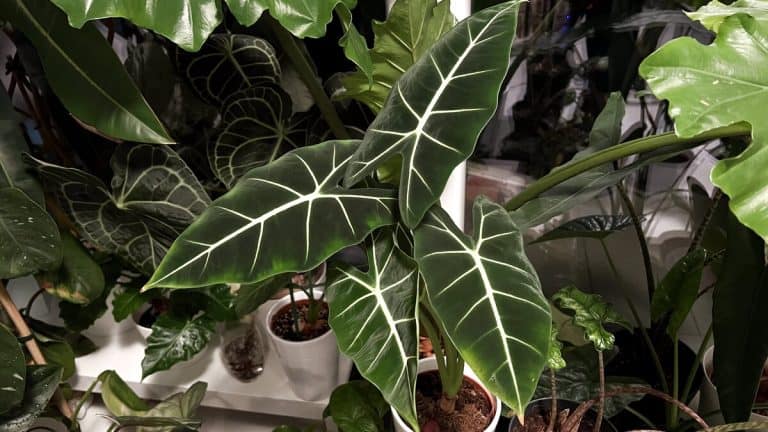
Alocasia Regal Shield is a hybrid of two Southeast Asian alocasias (Alocasia odora and Alocasia reginula), and the leaves are the star of the show. They are deep green and arrow-shaped, with prominent pale veins, thick and slightly waxy, and in ideal conditions mature leaves can reach up to 3 feet (about 90 cm) long.
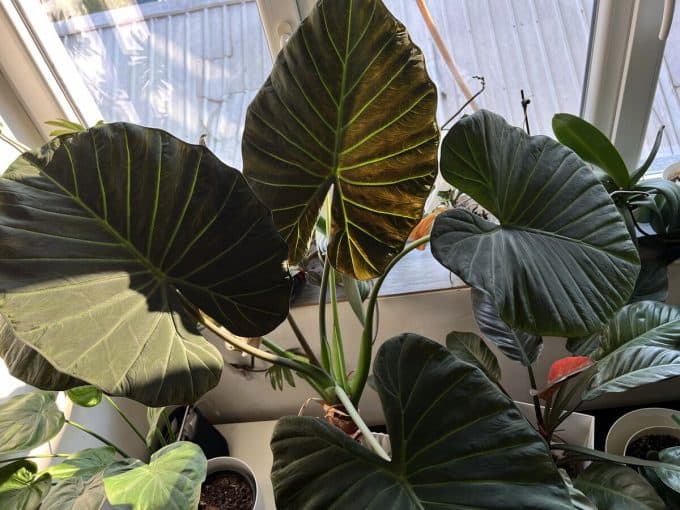
During the growing season she pushes out new leaves often, and it is completely normal for the oldest leaves to turn yellow and die off to make room for new ones. Just cut them off when they dry.

Light: Bright but Indirect
I keep my Regal Shield next to a north-facing window, together with my other plants, where she gets bright, indirect light all day and only a little direct sun, less than an hour. Too much direct sun burns the leaves, while too little light makes her leggy and weak. East, west or north-facing windows usually work best.
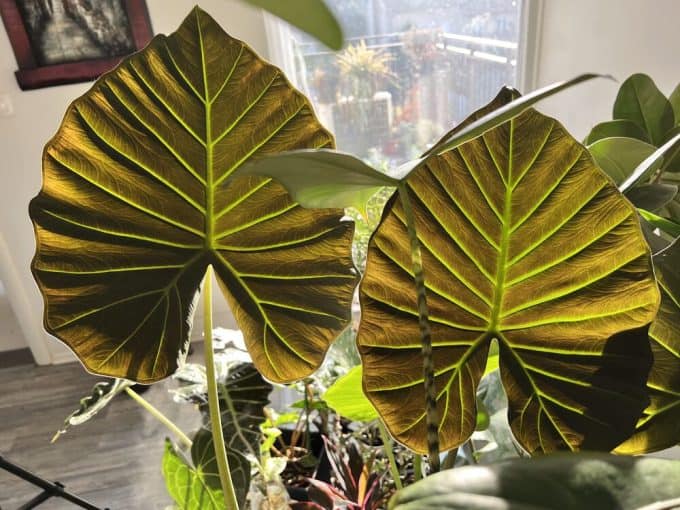
I also rotate her once a week, because she starts leaning towards the window. This gives all the leaves even light, prevents the stems from breaking, and keeps her upright and bushy.
Watering: A Thirsty Alocasia
My Regal Shield needs more water than my other alocasias. The big leaves need a lot of water and nutrients, so even in a big pot she dries out quickly. Check the soil often, and water when the top inch or two (2.5 to 5 cm) feels dry. In the growing season I usually water her twice a week, once with fertilizer and once with plain water, and much less in winter.
Every couple of months I soak or shower her instead. Soaking the pot for about 15 minutes wets all the soil, so it dries out more slowly, which is also great if you are going away for a week. Always let the extra water drain, never leave the roots sitting in water, and pour the water onto the soil rather than the leaves.
For a simple routine that works for most houseplants, see my Houseplants Watering Tips.

Humidity
Like all alocasias, the Regal Shield loves high humidity, ideally 60 to 80 percent. These are the ways I keep it up:
- A humidifier nearby, especially in winter when the heating is on.
- A pebble tray: a layer of pebbles in a tray with water up to the top of the pebbles, with the pot standing on top so it never touches the water.
- A small plastic container with water placed under the plant inside the decorative pot, so the inner pot stays above the water.
- An occasional light misting is fine, but not too much, because constant wet leaves can lead to fungal spots and leaf rot.
Cleaning the Leaves
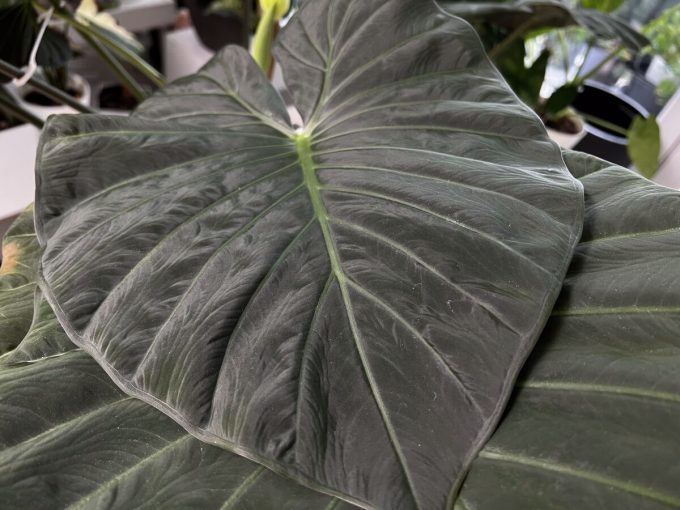
Keep the leaves clean and free of dust, because dust blocks light and attracts pests. Because of their texture, I don’t wipe them with a towel. Instead, I gently clean them with a soft-bristled brush, which protects the leaf surface.
Feeding: She Is a Heavy Feeder
Alocasias are heavy feeders and need a lot of nutrients to produce big leaves. From spring to early autumn, I feed every 2 to 4 weeks with a liquid fertilizer for green plants, diluted to half strength, and always water with plain water first so the fertilizer doesn’t burn dry roots. Once a month I also use my homemade lentil organic fertilizer, and I noticed the leaves getting bigger. I don’t feed at all in winter.
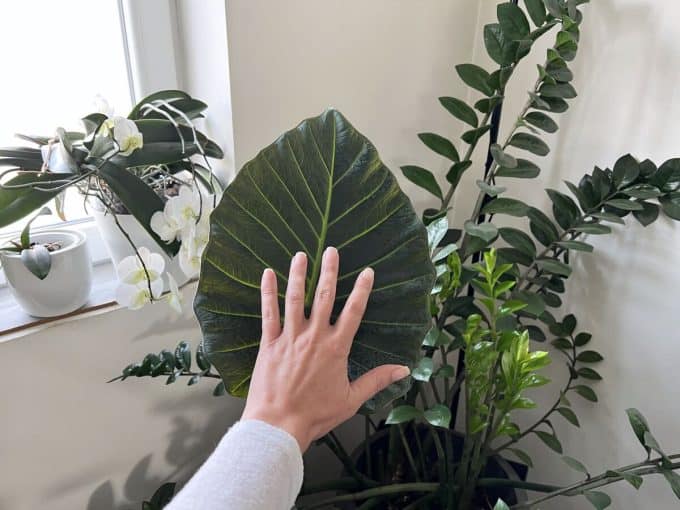
Want bigger leaves? I share exactly how I tripled the size of my Regal Shield’s leaves in How to Grow Bigger Leaves on Alocasia Regal Shield.
Soil and Repotting
Alocasias thrive in a chunky, well-draining but nutrient-rich mix. I use my own aroid potting mix for all my aroids and calatheas, and you can also watch how I make it in my aroid soil mix video.
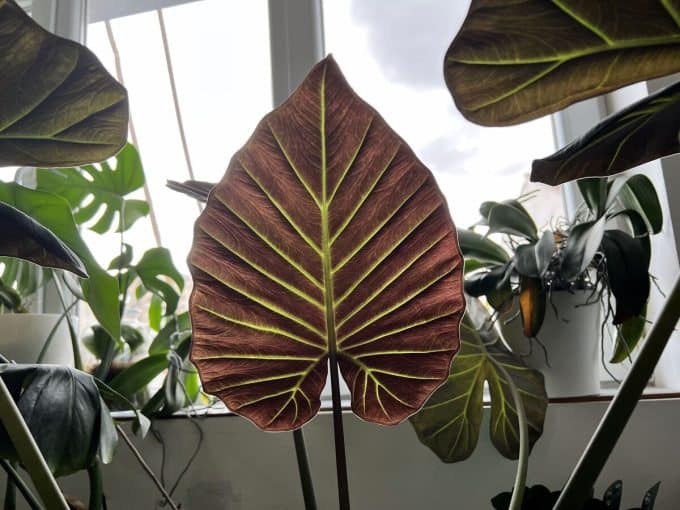
It is good to repot or refresh the soil every year, ideally in spring, because fertilizer leaves mineral build-up in the soil over time. If the pot is already big enough, keep it and just replace as much old soil as you can without disturbing the roots too much. And keep an eye out for corms while you repot, those are her babies!
Temperature
Keep her between 65 and 80°F (18 to 27°C), and away from cold drafts, heating vents and air conditioners. Temperatures below 60°F (15°C) make the leaves yellow and drop.
Pests
Like other humidity-loving plants, the Regal Shield can get spider mites, aphids and mealybugs. To prevent them, I spray her with a mixture of water and neem oil about twice a month, covering both sides of the leaves, the stems and the top of the soil. Shake the mixture well, and keep the plant out of direct sun for a few hours afterwards. Inspect the undersides of the leaves regularly, so you catch any pests early.
Blooming and Rest
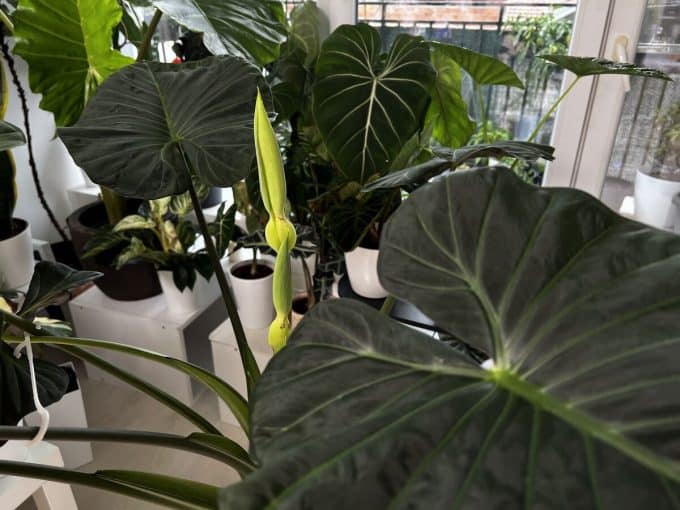
In four years my Regal Shield has bloomed three times. After each bloom she went through a quiet period with no new leaves, which is quite normal for alocasias, because they put their energy into recovering after flowering. So if your alocasia is blooming, simply give her time.
Propagation
The easiest way to multiply a Regal Shield is from the small corms you find around the roots when you repot. I show the whole process in Alocasia Propagation: How to Propagate Alocasia Regal Shield from Corms, and the mistakes to avoid in Growing Alocasia From Corms. A mature plant can also be divided when it makes offsets with their own roots.
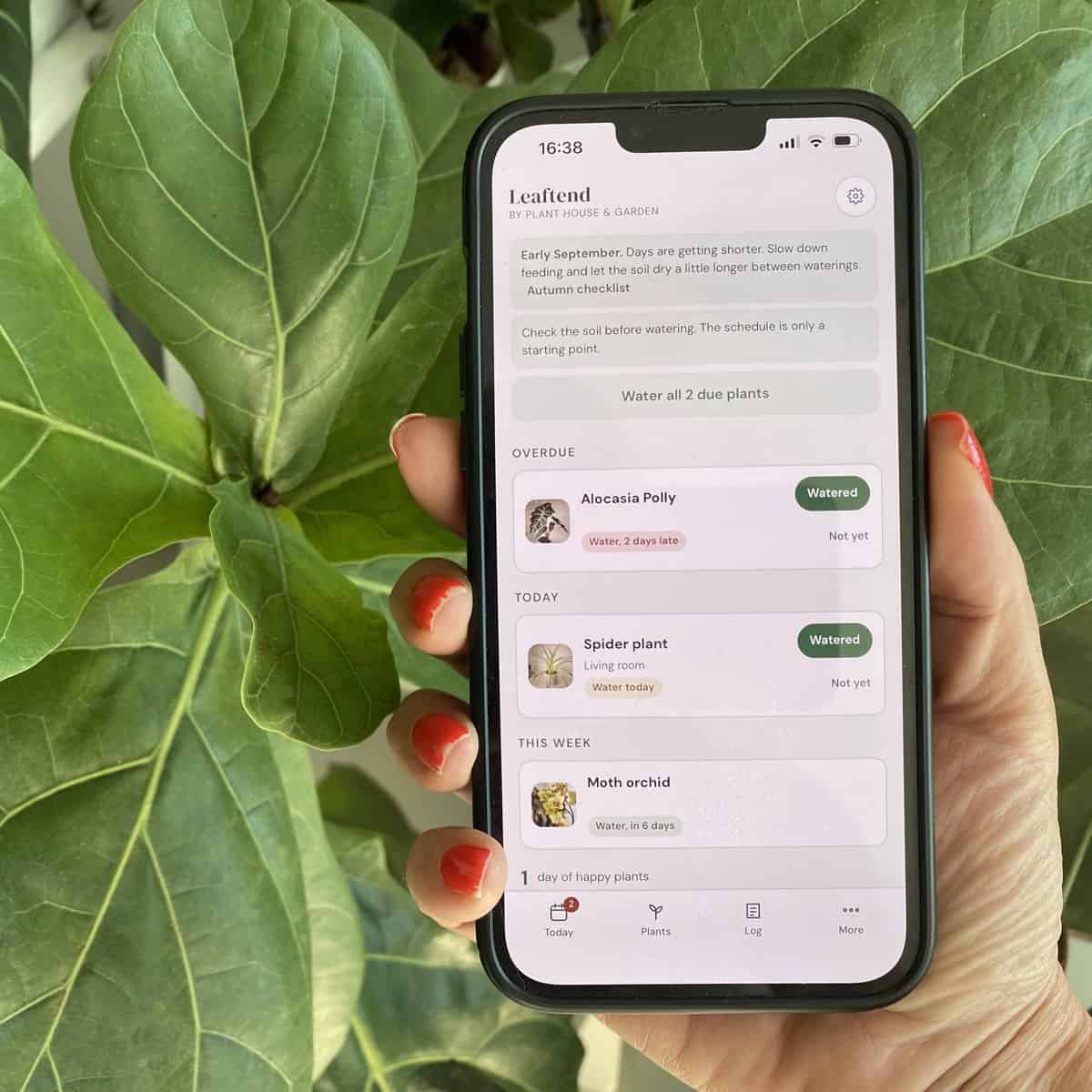
Alocasias love consistency, especially with watering and humidity. My Plant Care Journal helps you track it all, so your Regal Shield keeps pushing out those big, dramatic leaves.
Frequently Asked Questions
Why are my Alocasia Regal Shield leaves drooping?
Drooping is usually about watering. It can mean the plant is thirsty and the soil has gone too dry, or that it is overwatered and the roots are struggling. Check the soil: water if the top inch is dry, and ease off if it is soggy. Stable moisture keeps the leaves upright.
How often should I water an Alocasia Regal Shield?
Water when the top inch or two of soil feels dry, often every few days to once a week in the growing season and much less in winter. Keep the soil lightly moist but never waterlogged, and always let excess water drain away to protect the roots.
Why does my Regal Shield have yellow leaves?
Yellow leaves are most often a sign of overwatering or poor drainage. Let the soil dry a little more between waterings and use a chunky, airy mix. Older leaves also yellow and die back naturally, especially if the plant is settling in or going dormant.
How do I keep spider mites off my Alocasia?
Spider mites love dry air, so good humidity is your best defence. Check the undersides of leaves regularly, wipe them down, and treat any infestation with insecticidal soap or neem oil. Higher humidity and clean leaves keep this common Alocasia pest away.
Is Alocasia Regal Shield toxic to pets?
Yes. Like other alocasias, it contains calcium oxalate crystals that are toxic if chewed or eaten and can irritate the mouth and throat. Keep it out of reach of pets and children, and wash your hands after handling or repotting it.
Final Thoughts
Patience and consistency are the secret. Once you find the right light, watering and feeding rhythm for your home, Alocasia Regal Shield care gets easy, and every new leaf comes out bigger than the last. For all the other varieties, see my Alocasia care guide. If this guide helped, I would love for you to subscribe to my YouTube channel for more plant care videos. Thanks for reading, and happy growing!

Written by Bojana
Plant lover, grower, and music maker behind Plant House & Garden, with 35+ years of hands-on houseplant experience. Read more about Bojana →