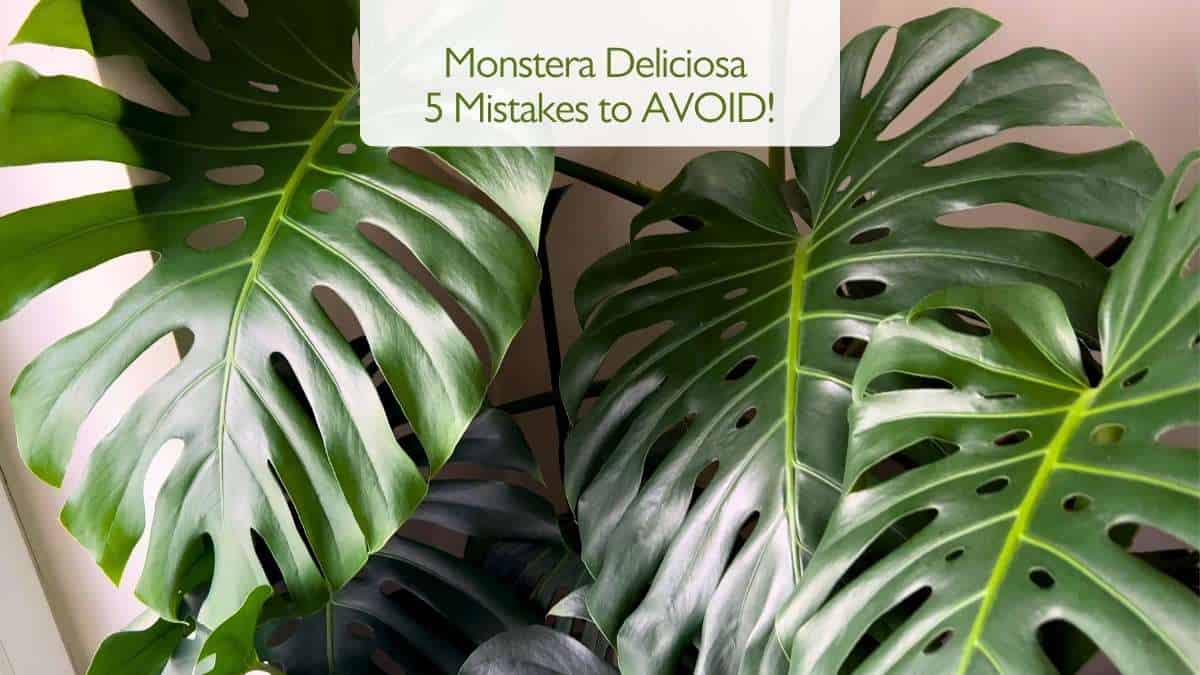
Monstera Deliciosa Problems: 5 Common Mistakes and Expert Care Tips
Part of my complete Philodendron Care Guide: light, water, problems, every variety, and propagation in one place.
If you’ve been struggling with Monstera Deliciosa problems, you’re not alone. From yellowing leaves and root rot to stunted growth, these tropical beauties can be finicky without the right care. In this article, you’ll discover the five most frequent errors that Monstera owners make and learn exactly how to correct them for lush, healthy plants. Plus, stick around for extra tips to boost growth and keep your Monstera thriving.
For a visual walkthrough and more in‑depth tips, I suggest you watch my video below:

Click here to watch the video on YouTube
| Mistake | How to fix it |
|---|---|
| Overwatering | Let the top inch or two of soil dry, use a chunky mix and a pot with drainage |
| Too little light | Give bright, indirect light to encourage big, split leaves |
| No support | Add a moss pole or stake so it climbs and grows larger leaves |
| Wrong soil | Use a loose, airy aroid mix, not dense water-holding potting soil |
| Ignoring aerial roots | Guide them into the pole or soil, do not cut them all off |
Mistake #1: Improper Watering Leads to Monstera Deliciosa Problems
Overwatering is the leading cause of Monstera Deliciosa problems it causes yellow leaves, soggy soil, and root rot. Conversely, underwatering results in dry, crispy leaf edges and drooping foliage. To avoid both extremes, always test the soil before watering. Insert your finger two to three inches down: if it feels dry, give your Monstera a thorough soak until water drains freely. Then let the top half of the soil dry out before the next watering. This balanced approach prevents waterlogged roots while ensuring consistent moisture for optimal growth.
Mistake #2: Neglecting Support Creates Growth Issues
In nature, Monsteras climb tree trunks for support. When grown unsupported, stems can flop and fenestrations (leaf splits) may never fully develop. A sturdy moss pole, trellis, or stake encourages upright growth and larger leaves. It’s best to install support early, while your plant is still manageable - so you can guide its direction and secure stems gently with soft ties. Proper support not only prevents breakage but also addresses many Monstera Deliciosa problems related to misshapen, undersized leaves.

Mistake #3: Insufficient Light Stunts Development
Lack of bright, indirect light is another root cause of Monstera Deliciosa problems. In low‑light conditions, Monsteras become leggy, and new leaves may lack characteristic splits and holes. Position your plant near a window with filtered light or use a grow light if natural illumination is limited. East or west‑facing windows typically provide the perfect balance. Signs you need more light include slow growth and small leaves; if you see these, adjust your plant’s location to ensure at least four to six hours of bright, indirect sun daily.
Mistake #4: Wrong Potting Mix and Pot Size Encourage Root Rot
Using heavy, compacted soil or an oversized pot can exacerbate Monstera Deliciosa problems like root rot and poor leaf growth. Monsteras prefer a loose, well‑draining mix, combine regular potting soil with orchid bark and perlite for ideal aeration. When repotting, choose a container only one to two inches larger than the current one; that way, the plant focuses on growing foliage instead of expanding its root system. Always verify that the pot has drainage holes to allow excess water to escape.
Mistake #5: Ignoring Aerial Roots Undermines Plant Health
Many Monstera enthusiasts mistakenly trim away aerial roots, thinking they’re unsightly or unnecessary. In fact, these roots stabilize the plant and absorb moisture and nutrients from the air. Rather than cutting them, guide aerial roots toward your moss pole or stake, or braid them gently for a neat appearance. Embracing these natural structures will solve many Monstera Deliciosa problems, helping your plant establish a strong framework and maintain robust health.
For a complete step‑by‑step walkthrough on propagating and essential care techniques, be sure to check out my Monstera Deliciosa Propagation and Detailed Care Guide.
Extra Tips for Monstera Deliciosa Problems & Care
Beyond avoiding these five mistakes, adopting a few additional habits can take your Monstera’s health and appearance from good to spectacular:
1. Keep the Leaves Gleaming - Monstera Deliciosa problems
Monsteras’ large, glossy leaves are their signature feature, but dust and grime build up quickly indoors, blocking light and inviting pests. Every two to four weeks, gently wipe each leaf with a soft, damp cloth, supporting the leaf from beneath with your other hand to avoid stress or tearing. For smaller or hard‑to‑reach plants, a lukewarm shower works beautifully: place the pot in the sink or tub and use a gentle spray to rinse away debris. Clean foliage not only enhances photosynthesis but also makes your Monstera look its absolute best. Check out my homemade recipe for healthy and shiny leaves here.
2. Rotate for Balanced Growth - Monstera Deliciosa problems,
Monsteras instinctively lean toward their light source, which can result in uneven growth and lopsided canopies. To counteract this, give your plant a quarter‑turn every time you water. This simple rotation ensures all sides receive equal light exposure, encouraging symmetrical leaf development and a fuller overall shape.
3. Boost Leaf Health with DIY Fertilizer
For truly lustrous, vibrant foliage, supplement your regular feeding with my all‑natural DIY Organic Fertilizer Recipe for Houseplants. This nutrient‑rich blend promotes deeper green hues and lasting shine without the risk of chemical buildup, perfect for Monsteras and all your treasured indoor plants.
By incorporating these extra steps into your routine - cleaning, rotating, and nutrient‑boosting, you’ll see your Monstera Deliciosa reward you with stronger growth, richer colors, and healthier leaves season after season.
Most Monstera problems come from inconsistent care. My Plant Care Journal helps you track watering, feeding, and light, so your Monstera keeps pushing out big, healthy, split leaves.
Frequently Asked Questions
Why are my Monstera leaves turning yellow?
Yellow leaves are most often a sign of overwatering. Let the top inch or two of soil dry before watering again, make sure the pot drains freely, and use a chunky, airy mix. An occasional old lower leaf yellowing with age is normal.
Why does my Monstera not have splits or holes?
A lack of fenestrations usually means the plant is too young or not getting enough light. Give it bright, indirect light and a support to climb, and as it matures the new leaves should develop the classic splits and holes.
Why is my Monstera leggy and floppy?
Monsteras are climbers, so without support they sprawl and grow leggy. Add a moss pole or stake for it to climb, prune any straggly growth, and give it brighter light to keep the stems compact and strong.
Should I cut off my Monstera aerial roots?
It is best not to. Aerial roots help the plant climb and take up moisture. Tuck them into a moss pole or down into the soil instead. You can trim the odd messy one, but removing them all is not good for the plant.
Why does my Monstera have brown leaf edges?
Brown, crispy edges usually point to low humidity, underwatering, or salt build-up from fertilizer or tap water. Raise the humidity, keep watering consistent, and flush the soil occasionally to wash out excess salts.

Written by Bojana
Plant lover, grower, and music maker behind Plant House & Garden, with 35+ years of hands-on houseplant experience. Read more about Bojana →