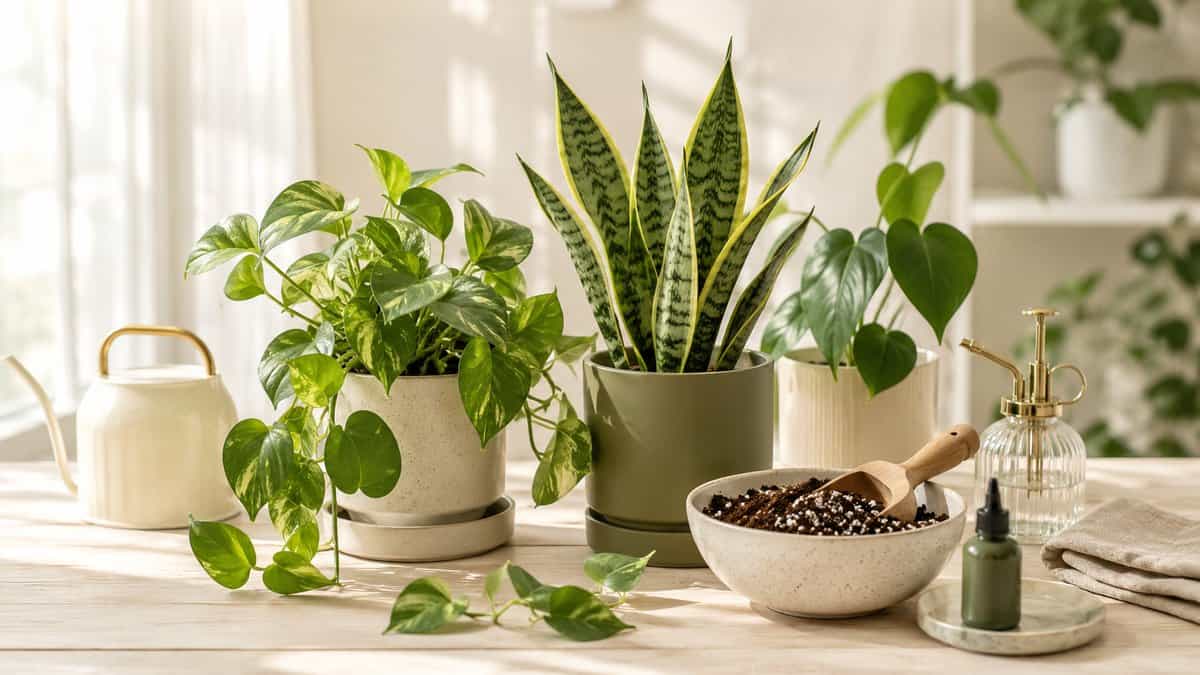
Houseplant Care for Beginners: The Complete Guide
The most common beginner mistake is not too little attention, it is too much water. When in doubt, check the soil with your finger before you reach for the watering can.
The Five Basics of Houseplant Care for Beginners
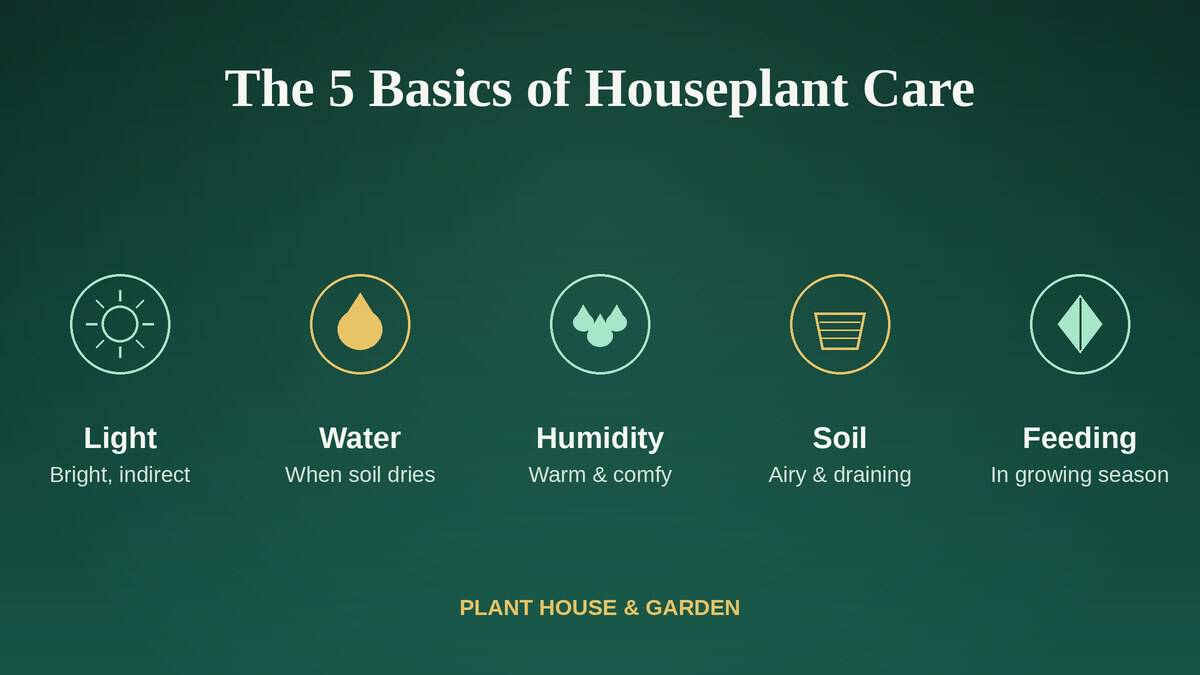
Think of these as the foundation. Every plant has its own preferences, but they all need these five things in some balance.
I also walk through a lot of this on camera, so if you learn better by watching, come subscribe on my YouTube channel.
1. Light: the most important factor
Light is food for plants, so it matters more than almost anything else. Most houseplants are happiest in bright, indirect light, near a window but out of harsh midday sun. Low-light plants tolerate dimmer corners, and a few sun lovers want direct rays. If a plant gets leggy, pale or stops growing, light is usually the first thing to check. For how to read the light in each room, see my full guide: Light Requirements for Houseplants.
2. Water: less often than you think
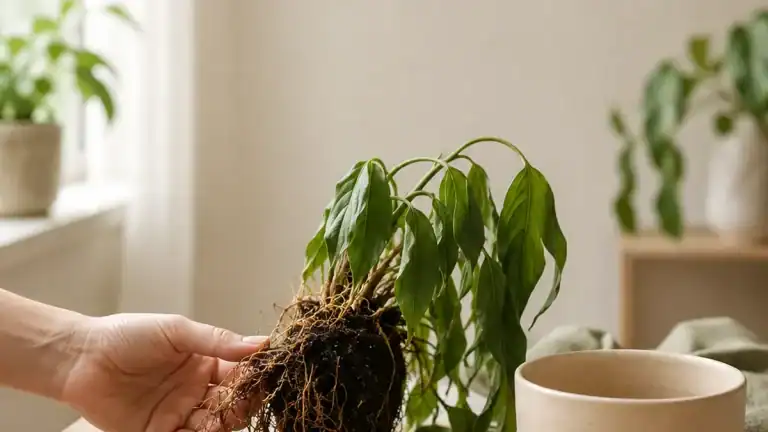
More houseplants are killed by overwatering than by anything else. Roots need air as well as moisture, and sitting in soggy soil is what causes root rot. The simple rule for most plants: water thoroughly, let the excess drain away, then wait until the top inch or two of soil is dry before watering again. How often that happens depends on light, season and pot size, not on a fixed schedule. My complete method is here: Houseplant Watering Tips.
3. Humidity and temperature: keep it comfortable
Most houseplants come from warm, humid places, so they like normal room temperatures and dislike cold drafts, sudden swings and dry winter air from heaters. Tropical plants in particular appreciate a little extra humidity, which you can raise by grouping plants together, using a pebble tray or a small humidifier. For the ideal ranges, see: Humidity and Temperature for Houseplants.
4. Soil and potting mix: drainage is everything
The bag labelled potting soil is not one-size-fits-all. Most houseplants, especially aroids like Philodendron, Monstera and Pothos, want a light, airy, fast-draining mix rather than dense soil that stays wet. A chunky mix with bark, perlite and other amendments gives roots the air they need. Here is the exact recipe I use for my aroids: Aroid Potting Mix Recipe. I also like adding zeolite to improve aeration and hold nutrients.
5. Feeding: a little food in the growing season
Plants use up the nutrients in their soil over time, so a gentle feed during spring and summer keeps them growing strong. You do not need much, and more is not better. A diluted, balanced fertilizer every few weeks in the growing season is plenty, and most plants rest in winter and want little or none. I prefer gentle, natural options, which I cover here: Organic Fertilizer for Houseplants.
Repotting: When and How
Most houseplants like to be repotted every one to two years, or when you see roots growing out of the drainage holes, the plant drying out very fast, or growth slowing down. Go up just one pot size, always use a pot with drainage holes, and refresh the soil. Spring is the best time. For a gentle walkthrough, see my repotting guide, and for a tricky example, how to repot a cactus without getting hurt.
Seasonal Care: Plants Change With the Light
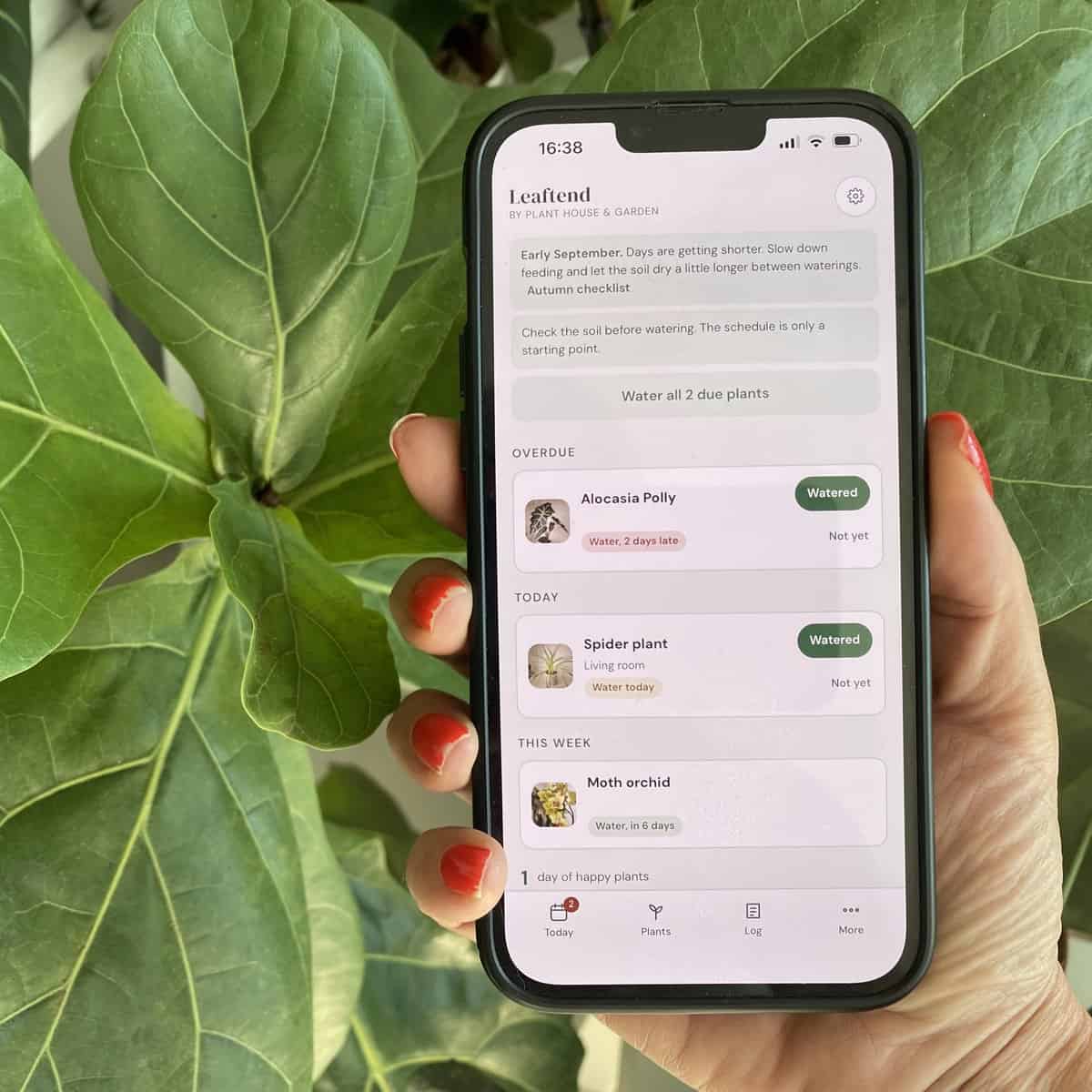
Your plants are not the same in January as they are in July. As days shorten, growth slows, they drink less water and want no fertilizer. Move them closer to light, ease off watering, and keep them away from cold windows and hot radiators. In spring they wake up, and that is when feeding and repotting resume. The mistakes I see most in the cold months are gathered here: Winter Houseplant Care Mistakes.
Summer brings the opposite challenge, holidays away from home. If you are heading off, here is exactly how I water plants while away for around 10 days without losing a single plant.
It also helps to know when to bring houseplants indoors before the first frost, how to fully prepare them for winter, and how to adjust again with my summer tips for houseplants.
The Most Common Beginner Mistakes (and Easy Fixes)
A big part of houseplant care for beginners is simply avoiding a few traps:
- Overwatering on a schedule. Water when the soil tells you to, not on a fixed day.
- Pots with no drainage. Always have drainage holes, or roots sit in water.
- Too little light. Most hard to keep alive plants are just in too dark a spot.
- Dense, water-holding soil. Use an airy mix so roots can breathe.
- Fertilizing a struggling or dormant plant. Feed healthy plants in the growing season only.
- Reacting too fast. One yellow leaf is normal. Look for patterns before you change everything.
Two more myths worth busting: whether you really need to mist your houseplants, and whether it is safe to sleep in a room full of plants.
Easy Plants to Start With
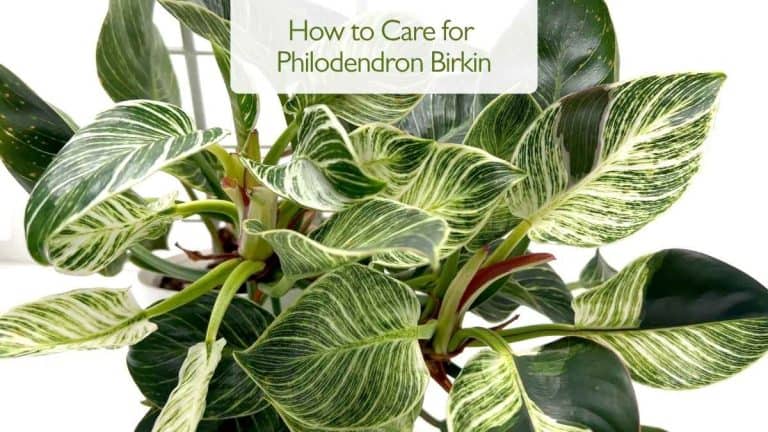
If you are just beginning, start with forgiving plants that bounce back from small mistakes: Pothos, Snake Plant, ZZ Plant, Philodendron and Spider Plant are all famously tough. When you are ready to go deeper on a specific plant, my detailed care guides pick up where this one leaves off. A great next step is the Philodendron Care Guide, one of the easiest and most rewarding plant families to grow.
The snake plant is one of the best first plants you can pick, almost impossible to kill. Here are my quick care tips for it:

Starting out? Keep a running houseplants wishlist so you can plan your collection before you buy.
Other forgiving choices include the Aglaonema and the Dracaena. If your room is on the dim side, see my picks for the best low-light indoor plants and air-purifying houseplants, and when you are ready to make more for free, my houseplant propagation guide shows you how.
Frequently Asked Questions
How often should I water my houseplants?
There is no fixed schedule. For most plants, water thoroughly, let it drain, then wait until the top inch or two of soil is dry before watering again. How fast that happens depends on light, warmth, pot size and season, so check the soil rather than the calendar.
Why do my houseplant leaves keep turning yellow?
The most common cause is overwatering, but yellow leaves can also come from too little light, a nutrient need, or simply an old leaf at the bottom. Look for the pattern: many soft, yellow leaves with wet soil usually means too much water.
How much light do houseplants need?
Most houseplants want bright, indirect light, near a window but out of harsh direct sun. Low-light plants tolerate dimmer spots, and a few sun lovers want direct rays. If a plant is leggy or pale, it usually needs more light.
Do I need special soil for houseplants?
For most houseplants, especially aroids, yes, a light and airy, fast-draining mix works far better than dense bagged soil. Good drainage is the single biggest soil factor for healthy roots.
When should I fertilize my houseplants?
Feed during the active growing season, spring and summer, with a diluted balanced fertilizer every few weeks. Most plants rest in autumn and winter and want little or no feeding.
What are the easiest houseplants for beginners?
Pothos, Snake Plant, ZZ Plant, Philodendron and Spider Plant are all very forgiving and a great place to start while you learn the five basics of houseplant care.
Final Thoughts
Houseplant care for beginners is not complicated once you understand the five basics: light, water, humidity, soil and feeding. Start with a forgiving plant, watch how it responds, and adjust gently rather than all at once. Plants are patient teachers, and every one you grow makes the next easier.
Here is one of my most-loved tracks to play while your plants grow, eleven peaceful hours of 432 Hz music for plants:


Written by Bojana
Plant lover, grower, and music maker behind Plant House & Garden, with 35+ years of hands-on houseplant experience. Read more about Bojana →