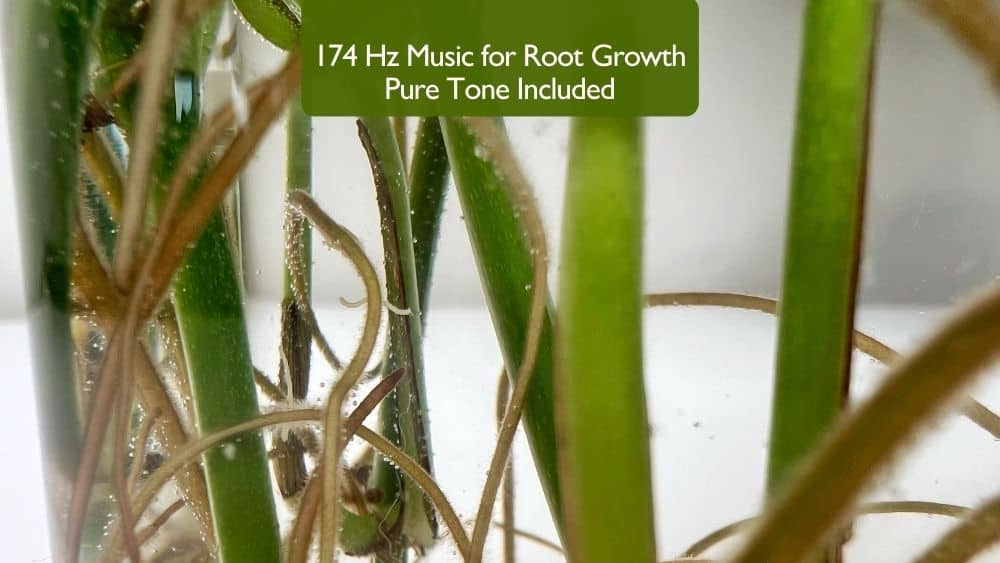
Music for Root Growth: 174 Hz Pure Tone for Strong, Healthy Roots
🎵 Part of my Music for Plants hub.
Root growth is the foundation of every healthy plant.
Whether you’re propagating cuttings in water, soil, perlite, moss, or any other medium, strong roots are what determine long-term growth, stability, and nutrient absorption.
This music for root growth is designed to support calm, stable conditions during all types of plant propagation, using a 174 Hz pure tone combined with gentle, harmonic background music.
Put these frequencies to work for your plants
The Plant Growth Frequency is a 45-minute sound therapy session tuned to support stronger, healthier growth. Press play near your plants and let the vibrations do the rest.
Get the Plant Growth Frequency →Or explore the full Plant Sound Therapy collection.
| Claim | What the evidence shows |
|---|---|
| 174 Hz music makes roots grow stronger or faster | No peer-reviewed evidence that sound affects rooting |
| It creates ideal conditions for propagation | Roots respond to warmth, moisture, light, and a clean medium, not sound |
| It is a natural rooting booster | Harmless to play, but not a substitute for good propagation technique |
| It calms and supports the plant | Calming for you; no measured effect on the cutting |
How Music for Root Growth Supports Plant Propagation
Plants respond not only to light, water, and nutrients, but also to vibrations and sound. Subtle, low frequencies can help create a more balanced environment during propagation, when plants are especially sensitive.
This soundscape was created as plant propagation music that can be played:
- during water propagation
- during soil or substrate propagation
- in propagation boxes or greenhouses
- near freshly cut stems and developing roots
It is suitable for all plant types, including:
- houseplants
- vegetables
- herbs
- seeds and seedlings
- edible plants and ornamentals
It is suitable for all plants, from houseplants and ornamentals to vegetables, herbs, seeds, seedlings, and edible crops. The goal is not stimulation, but stability.
Why 174 Hz for Plants?
The 174 Hz frequency is one of the lowest commonly used tones in sound-based environments. Low frequencies are often associated with grounding, structural balance, and gentle energetic support, which makes them especially suitable during early stages of plant development.
When used as 174 Hz for plants, this frequency may help:
- support calm root development
- reduce environmental stress during propagation
- create a steady, grounded atmosphere for young roots
For plants, this grounded and steady frequency helps create a calm growing environment, particularly during propagation, when roots are forming and adapting to new conditions. Instead of stimulating rapid growth, 174 Hz supports stability, which is essential for strong, healthy root systems.
If you’re curious how healing music with pure tones can uplift both your plants and your space, read my full article How Healing Music with Pure Tones Boosts Plant Growth and Well-Being.
Why 174 Hz Can Also Feel Pleasant for People
Low frequencies like 174 Hz are often described as calming, non-intrusive, and easy to listen to for long periods. Because of this, the sound can blend naturally into living spaces, greenhouses, or work areas without causing distraction or fatigue.
In this session, a pure 174 Hz tone appears every 15 minutes for 1 minute, while relaxing background music plays continuously. This structure helps avoid harsh or disruptive sound and supports a peaceful environment for both plants and the people caring for them.
Music for Rooting Cuttings (All Propagation Methods)
This soundscape is suitable for:
- stem cuttings
- node propagation
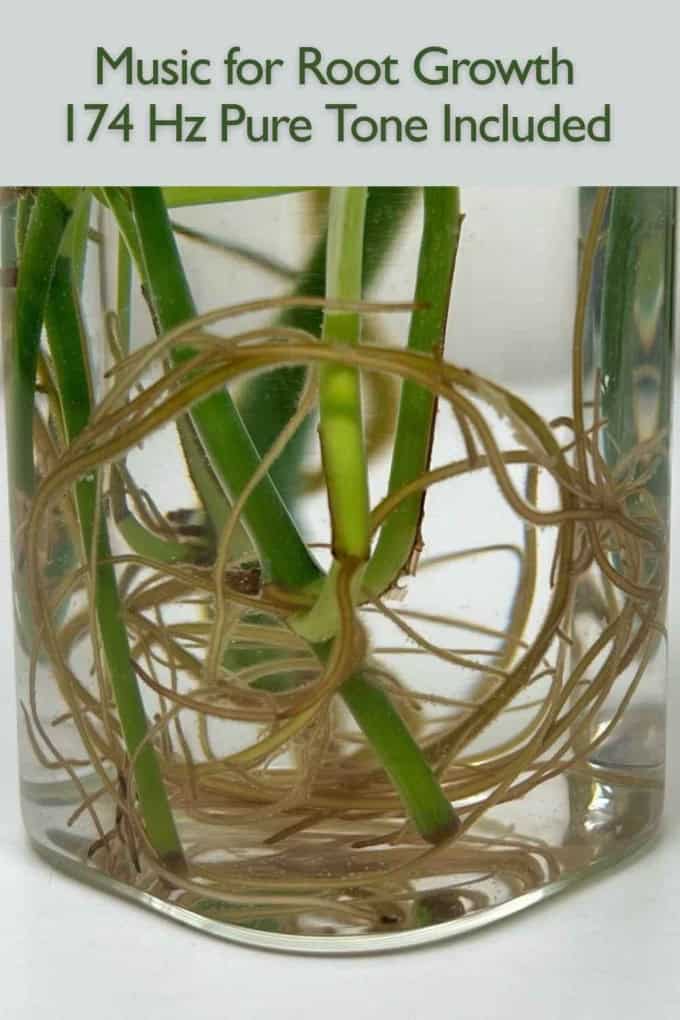
- water propagation
- soil and semi-hydro propagation
- perlite, LECA, or moss propagation
If you are looking for music for rooting cuttings, this session is designed to be played passively in the background, without constant attention.
You don’t need to turn the volume up, low to moderate volume is ideal.
How to Use This Sound Therapy for Plants
- Play at low or medium volume
- Place the speaker near (not touching) the plants
- Let it run during the day or continuously during propagation
- Suitable for long sessions (5+ hours)
This form of sound therapy for plants is meant to complement proper plant care - not replace light, water, or correct conditions.
▶ Music for Root Growth: Watch & Listen

Click here to watch the video on YouTube
This session features:
- 174 Hz pure tone (every 15 minutes)
- relaxing harmonic background music
- long-duration playback for consistent support
Frequently Asked Questions
Does 174 Hz music actually help roots grow?
There is no peer-reviewed scientific evidence that 174 Hz, or any specific frequency, makes roots grow faster or stronger. Roots develop in response to warmth, moisture, light, and a clean rooting medium. The music is best enjoyed as calming background sound rather than a propagation treatment.
What actually makes cuttings root faster?
Cuttings root best with consistent warmth, steady moisture, bright indirect light, and a clean, airy medium like water, perlite, or sphagnum moss. Taking healthy cuttings, keeping humidity up, and being patient matter far more than any sound. For the basics, see our houseplant propagation guide.
Is 174 Hz a real frequency?
Yes, 174 Hz is a real, audible musical tone and the lowest of the Solfeggio frequencies. It is often described in wellness circles as grounding or relaxing. Those associations come from tradition rather than science, so think of it as pleasant ambiance rather than a proven effect.
Can playing music harm my cuttings?
No, playing music near your cuttings is completely harmless, and many people find the ritual calming. The only thing to avoid is relying on it instead of proper propagation care. Use it as a relaxing extra while you keep the real conditions, warmth, moisture, and light, just right.
When should I play music for rooting cuttings?
There is no special timing, since the effect is for you rather than the plant. Many people simply play it while they take cuttings, change the water, or check on their props. Treat it as a calming soundtrack to your propagation routine, not a step that changes the outcome.
Final Thoughts
Healthy roots are the key to healthy plants.
By combining proper propagation techniques with gentle music for root growth, you create an environment focused on balance, calm, and stability.
This session was created for plant lovers who enjoy experimenting with sound, energy, and natural plant care, in a mindful and gentle way.
Relax. Root. Grow.
With love,
Bojana,
Plant House & Garden
Related Articles:
- How Music Can Affect Plant Growth
- Can Plants Feel Vibrations? Understanding Plant Bioacoustics
- Schumann Resonance for Plants - The Earth’s Natural Frequency
- 432 Hz Frequency Explained: The Healing Sound That Transforms Plants and People

Click here to watch the video on YouTube

Written by Bojana
Plant lover, grower, and music maker behind Plant House & Garden, with 35+ years of hands-on houseplant experience. Read more about Bojana →
A note from Bojana: I share sound frequencies like 432 Hz from years of personal experience and hands-on experimenting with my own plants. I want to be honest with you: the science on whether specific frequencies directly affect plant growth is still limited and not conclusive. So throughout this site I describe what I have observed and what others report, rather than promising guaranteed results. Think of these frequencies as a calming, supportive practice to enjoy alongside good plant care, not as a medical treatment or a replacement for light, water, and healthy soil.