528 Hz Frequency: The Miracle Tone for Healing Humans and Plants
🎵 Part of my Music for Plants hub.
Quick answer: 528 Hz is a Solfeggio frequency nicknamed the miracle tone and the love frequency. People use it for relaxation, stress relief and meditation, and gardeners play it to keep a calm space for plants. A small study found it lowered stress markers, but the popular claim that it repairs DNA is not scientifically supported.
If you like the idea of playing tones near your plants, my Plant Growth Frequency track is an easy way to experiment. I keep it honest: it is for curiosity and ambience, not a remedy.
528 Hz at a Glance
| Aspect | Detail |
|---|---|
| Also known as | The Miracle Tone and the Love Frequency |
| Solfeggio note | Mi, from the Latin "Mi-ra gestorum" meaning miracle |
| Linked chakra | Heart chakra |
| Commonly used for | Relaxation, stress relief, meditation, a calm space for plants |
| What the evidence says | A small Japanese study found lower stress markers; claims of DNA repair are not scientifically supported |
The 528 Hz frequency has earned its nickname as the “Miracle Tone” in the world of sound healing, celebrated for its remarkable ability to promote DNA repair, emotional balance, and vibrant growth. While sound has long been recognized as a powerful force in human health and the environment, 528 Hz holds a special place as a frequency that resonates deeply with living beings, including plants. In this article, I’ll explore what the 528 Hz frequency is, why it’s considered so unique, and how it positively affects both humans and plants. Additionally, you’ll learn practical ways to incorporate this transformative sound into your daily life and plant care routine.

Click here to watch the video on YouTube
Bring these frequencies to your plants
Plant House & Garden’s original Sound Therapy collection is calm companion music I made to play during everyday plant care. No cures, no claims, just a peaceful soundtrack for you and your plants.
Understanding the 528 Hz Frequency
At its core, 528 Hz frequency is a sound wave vibrating at 528 cycles per second. It is one of the central tones of the ancient Solfeggio scale, a sequence of musical notes believed to have been used in sacred chants and healing rituals across many cultures throughout history. This frequency is thought to be deeply connected with the fabric of life itself, harmonizing with natural patterns found in DNA and the energy of the cosmos.
Modern music typically uses the standard tuning of 440 Hz, but proponents of 528 Hz argue that this frequency aligns more closely with the natural order of the universe and fosters a greater sense of harmony and healing.
Why the 528 Hz Frequency Is Special
The uniqueness of 528 Hz frequency lies in its powerful association with healing and transformation. It is often called the “Love Frequency” because of its reputed ability to repair DNA, the blueprint of life. While scientific exploration is still ongoing, some studies suggest that exposure to this frequency can stimulate cellular repair processes, helping damaged DNA strands to realign and regenerate. This has profound implications for physical health, emotional well-being, and even spiritual growth.
Beyond the biological, 528 Hz resonates with the universal principles of harmony and balance. It shares mathematical relationships with natural phenomena such as the Fibonacci sequence and the golden ratio, patterns that govern everything from flower petals to galaxy spirals. This alignment with nature’s intrinsic geometry means that the sound vibrations produced at 528 Hz are inherently soothing and nurturing.
Listeners often report that music tuned to this frequency evokes feelings of peace, love, and emotional release, making it a popular choice for meditation, relaxation, and therapeutic practices.
The Effects of 528 Hz Frequency on Humans

Listening to 528 Hz music is said to promote a wide range of benefits for the mind and body. Many individuals experience a reduction in stress and anxiety as the frequency helps to calm the nervous system and lower cortisol levels. This relaxation response can improve sleep quality, enhance mental clarity, and foster emotional resilience.
Additionally, some sound therapists use 528 Hz tones to support emotional healing and spiritual awakening. The frequency’s harmonious vibrations encourage the opening of the heart chakra, facilitating greater compassion, connection, and inner peace. Whether used in meditation sessions, yoga practices, or simply as background music, 528 Hz creates an environment conducive to holistic wellness.
How 528 Hz Positively Influences Plants
Plants are remarkably sensitive to their environment, responding not only to light and water but also to vibrations and sound frequencies. Exposure to 528 Hz frequency has been shown to stimulate plant growth and vitality in fascinating ways.
Research suggests that this frequency enhances photosynthesis by energizing the chloroplasts, the plant cells responsible for converting light into energy. This results in increased production of glucose, the fuel plants use to grow strong and healthy. Furthermore, vibrations at 528 Hz appear to boost nutrient absorption and cellular repair within plants, contributing to more vibrant foliage and robust root systems.
The calming nature of the frequency may also reduce plant stress caused by environmental factors or pests, improving overall resilience. This makes 528 Hz frequency a valuable tool in modern horticulture and gardening, where sound therapy is increasingly used to optimize plant health naturally.
Practical Ways to Use 528 Hz Frequency
Incorporating the healing power of 528 Hz frequency into your daily life and plant care is both simple and rewarding. You can listen to music tuned to 528 Hz during meditation, relaxation, or while working to create a peaceful atmosphere that benefits your mind and body.
For plant care, playing 528 Hz music near your indoor garden or greenhouse can encourage growth and vitality. Many gardeners and farmers use sound systems to expose their plants to this frequency, supporting faster growth and greater resistance to stress.
Sound healing tools such as tuning forks and singing bowls calibrated to 528 Hz offer a more tactile way to experience the frequency, allowing you to integrate it into therapeutic practices or mindfulness routines.
Debunking Common Myths About 528 Hz
Despite its popularity, some myths surround the 528 Hz frequency. It’s important to recognize that while 528 Hz supports healing and balance, it is not a magical cure-all. Effective healing involves a holistic approach including diet, lifestyle, and medical care when needed.
Another misconception is that 528 Hz is the only beneficial frequency. In reality, different frequencies offer various healing properties, and personal response can vary. Exploring a range of frequencies can provide a more balanced sound therapy experience.
Explore 528 Hz Music on My Channel
If you’re interested in experiencing the healing effects of the 528 Hz frequency firsthand, be sure to visit my YouTube channel - Plant House & Garden, where I share a variety of music videos specifically tuned to 528 Hz. These compositions are designed to support relaxation, promote plant growth, and enhance overall well-being.
Feel free to listen to these videos with your plants, during meditation, or anytime you want to invite calm and balance into your environment.


Conclusion: Embrace the Miracle Tone
The 528 Hz frequency offers a profound connection to the natural rhythms of life, supporting healing, growth, and harmony in both humans and plants. Its ancient roots and modern applications make it a unique bridge between science and spirituality.
By exploring and incorporating 528 Hz music and tones, you invite a deeper sense of peace and vitality into your life and environment. Whether you’re looking to improve your well-being or nurture a thriving indoor garden, the miracle tone of 528 Hz can be a transformative ally on your journey.
Related Articles You Might Enjoy
If you want to learn more about healing frequencies and their impact, check out my previous article on 432 Hz Frequency: The Healing Sound That Transforms Plants and People. It offers deep insights into why 432 Hz is considered special and how it benefits both humans and plants.
Also, if you’re curious about the differences between tuning standards, I recommend reading 440 Hz vs 432 Hz: What’s Better for Plants and Humans?. This article explores how these two frequencies compare and what makes each unique.
Frequently Asked Questions
What are the benefits of 528 Hz?
People use 528 Hz for relaxation, stress relief, focus and meditation. A small study found it lowered stress markers, though many claims about it online are exaggerated.
Why is 528 Hz called the miracle tone?
It maps to the Solfeggio note Mi, from the Latin "Mi-ra gestorum" meaning miracle, and is also called the love frequency. The nicknames come from tradition, not proven effects.
Does 528 Hz really repair DNA?
No. The popular claim that 528 Hz repairs DNA is not supported by scientific evidence. Enjoy it as a calming sound practice, not a medical treatment.
Which chakra is 528 Hz linked to?
528 Hz is traditionally associated with the heart chakra, which is linked to love, compassion and emotional balance.
How do I use 528 Hz?
Play it softly during meditation, relaxation or sleep for about 10 to 20 minutes. Some gardeners also play it near their plants to keep a calm environment.
Is 528 Hz good for plants?
Plants respond to vibration, and a gentle tone like 528 Hz can be part of a calm growing environment. Treat it as a supportive extra, not a replacement for light, water and good care.
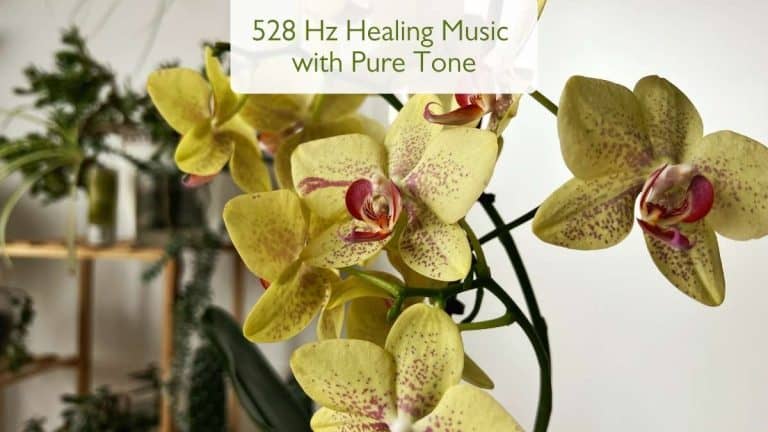
Want to hear it for yourself? Press play on my 528 Hz Healing Music with Pure Tone for plants and people, tuned to the pure 528 Hz frequency.

Written by Bojana
Plant lover, grower, and music maker behind Plant House & Garden, with 35+ years of hands-on houseplant experience. Read more about Bojana →
A note from Bojana: I share sound frequencies like 432 Hz from years of personal experience and hands-on experimenting with my own plants. I want to be honest with you: the science on whether specific frequencies directly affect plant growth is still limited and not conclusive. So throughout this site I describe what I have observed and what others report, rather than promising guaranteed results. Think of these frequencies as a calming, supportive practice to enjoy alongside good plant care, not as a medical treatment or a replacement for light, water, and healthy soil.