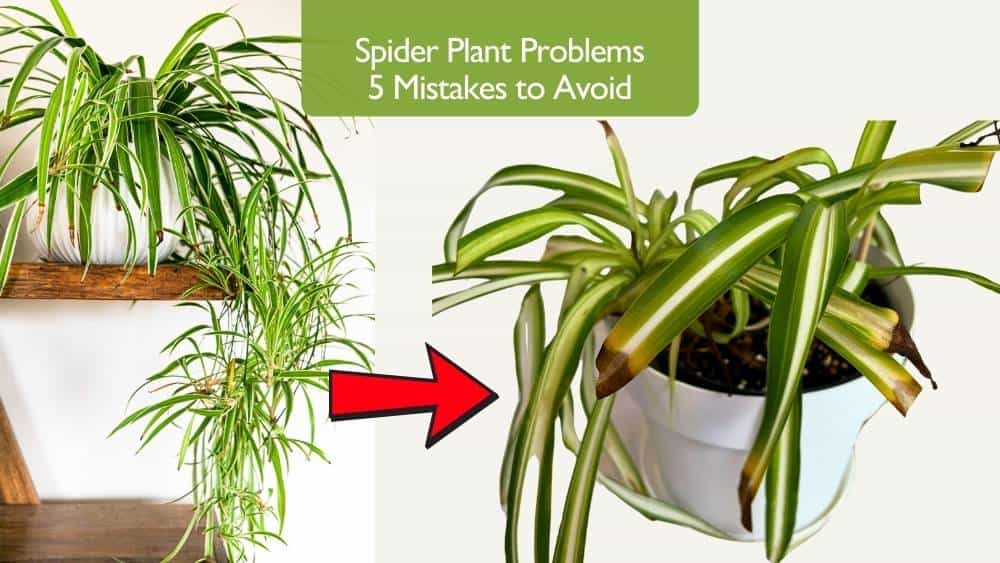
Spider Plant Problems: 5 Mistakes to Avoid
Spider plants are often labeled as easy houseplants. And while they are forgiving, they’re not immune to problems.
If your plant has brown tips, pale leaves, slow growth, or looks tired, you’re likely dealing with one of the most common spider plant problems – usually caused by simple care mistakes.
In this guide, you’ll learn the 5 biggest spider plant mistakes, why they happen, and exactly how to fix them so your plant can grow healthy and vibrant again.
Why Spider Plant Problems Happen
Spider plants (Chlorophytum comosum) are adaptable, but they still have limits. Most spider plant problems don’t appear suddenly – they build up slowly due to repeated care mistakes.
The good news?
Once you correct the issue, spider plants recover quickly.
Let’s go through the most common spider plant care mistakes one by one.
If you’re new to spider plants or want a full care overview, I’ve covered everything step by step in Spider Plant Care: Everything You Need to Know. This article focuses on what not to do.
❌ Mistake #1: Overwatering the Spider Plant
This is the most common spider plant mistake. Overwatering often happens because spider plants look thirsty even when their roots are still wet. Their thick roots hold water for long periods, so frequent watering causes stress below the soil surface before leaves show visible damage. Once watering is reduced, new leaves usually emerge healthier within a few weeks.

Signs of overwatering:
- Yellowing leaves
- Soft or limp stems
- Soil that stays wet for days
- Musty smell from the pot
Why it happens:
Spider plants store water in their thick, fleshy roots.
When soil stays constantly wet, roots suffocate and begin to rot.
How to fix it:
- Let the top 2–3 inches of soil dry out before watering
- Always use a pot with drainage holes
- Water less frequently in winter
💡 Tip: If you’re unsure, it’s better to underwater than overwater.
❌ Mistake #2: Using Tap Water
This mistake explains why spider plant leaves turn brown at the tips. This issue develops gradually, which is why many plant owners don’t connect brown tips to water quality. The damage is cosmetic but ongoing exposure will affect overall plant vigor. Switching to filtered or rested water often stops new browning completely.
Symptoms:
- Brown or crispy leaf tips
- Otherwise healthy-looking plant
Why it happens:
Spider plants are sensitive to fluoride, chlorine, and salts found in tap water.
These minerals accumulate in the soil and burn leaf tips over time.
How to fix it:
- Let tap water sit 12–24 hours before using
- Use filtered or rainwater if possible
- Flush the soil with clean water once a month to remove salt buildup
This single change often solves brown tips completely.
❌ Mistake #3: Not Enough Light (or Too Much Direct Sun)
Light issues are another major cause of spider plant problems. Spider plants can survive low light, but survival isn’t the same as thriving. In dim conditions, growth slows and leaf color fades, making the plant look weak over time. Proper light improves both structure and color intensity.
Signs of incorrect lighting:
- Pale or faded leaves
- Loss of variegation
- Weak, slow growth
Why it happens:
Spider plants thrive in bright, indirect light.
Too little light weakens growth, while direct sun scorches the leaves.
How to fix it:
- Place near a bright window with filtered light
- East-facing or bright north-facing windows work best
- Avoid harsh midday sun
Healthy light = stronger color and faster growth.
If you want to know more about light requirements for houseplants and how to find the perfect spot for each plant, read my full article Light Requirements for Houseplants: The Secret to Thriving Indoor Plants.
❌ Mistake #4: Ignoring Root-Bound Conditions
Spider plants like snug pots, but only up to a point. A root-bound spider plant may still produce babies, giving the impression that it’s healthy. However, internal stress limits water absorption and nutrient uptake. Repotting usually results in visible improvement within one growth cycle.
Symptoms:
- Roots circling the pot
- Soil drying out very quickly
- Stalled growth
Why it happens:
When a spider plant becomes extremely root-bound, it struggles to absorb water and nutrients properly.
How to fix it:
- Repot every 1–2 years
- Choose a pot only one size larger
- Use fresh, well-draining soil
After repotting, growth usually resumes within weeks.

❌ Mistake #5: Overfertilizing
Overfeeding is an underrated spider plant care mistake. Many people fertilize more when growth slows, which worsens the problem. Salt buildup damages fine roots first, leading to leaf tip burn. Less frequent feeding often produces better long-term results.
Signs of overfertilization:
- Brown leaf tips
- White crust on soil surface
- Leaf edge burn
Why it happens:
Excess fertilizer causes salt buildup, which damages roots and leaves.
How to fix it:
- Fertilize only during spring and summer
- Use liquid fertilizer diluted to ½ strength
- Flush the soil occasionally
More fertilizer does not mean faster growth.
Quick Spider Plant Troubleshooting Guide
| Symptom | Likely Cause |
|---|---|
| Brown tips | Tap water salts or overfertilizing |
| Yellow leaves | Overwatering |
| Pale leaves | Low light |
| Slow growth | Root-bound plant |
| Crispy edges | Salt buildup or dry air |
Frequently Asked Questions
Why does my spider plant have brown tips?
This is usually caused by chemicals in tap water or excess fertilizer salts in the soil.
How often should I water a spider plant?
Water only when the top layer of soil dries out. Frequency depends on light, temperature, and pot size.
Are spider plants hard to care for?
No. Most spider plant problems come from small, repeated mistakes rather than neglect.
Final Thoughts
Spider plants are resilient. They don’t need perfect care – just consistent, thoughtful adjustments.
By avoiding these 5 common spider plant mistakes, you’ll prevent most spider plant problems and help your plant thrive for years.
Sometimes, small changes make the biggest difference 🌿
Related Articles
- Spider Plant Care: Everything You Need to Know
- Houseplants Watering Tips – 5 Mistakes to Avoid: How, When & How Much to Water.
- 8 Best Indoor Plants for Low Light (Perfect for North-Facing Rooms)
- How Music Can Affect Plants Growth

Click here to watch the video on YouTube
Explore More Music for Your Plants & Stay Connected!
Check out my Playlist: Music for Plants and find the perfect tunes to help your plants and yourself thrive.
Don’t forget to visit my YouTube Channel Plant House & Garden and subscribe – your support means the world to me!
Connect with me on social media for more plant care tips and music updates: Instagram | Facebook | X | Pinterest | Reddit | TikTok
Love plants? Love music? Don’t miss out on new updates – hit subscribe and follow now to keep your plants happy and your space vibrant!