Snake Plant Color Difference: Yellow Edges vs Green Leaves (Light & Variegation Explained)
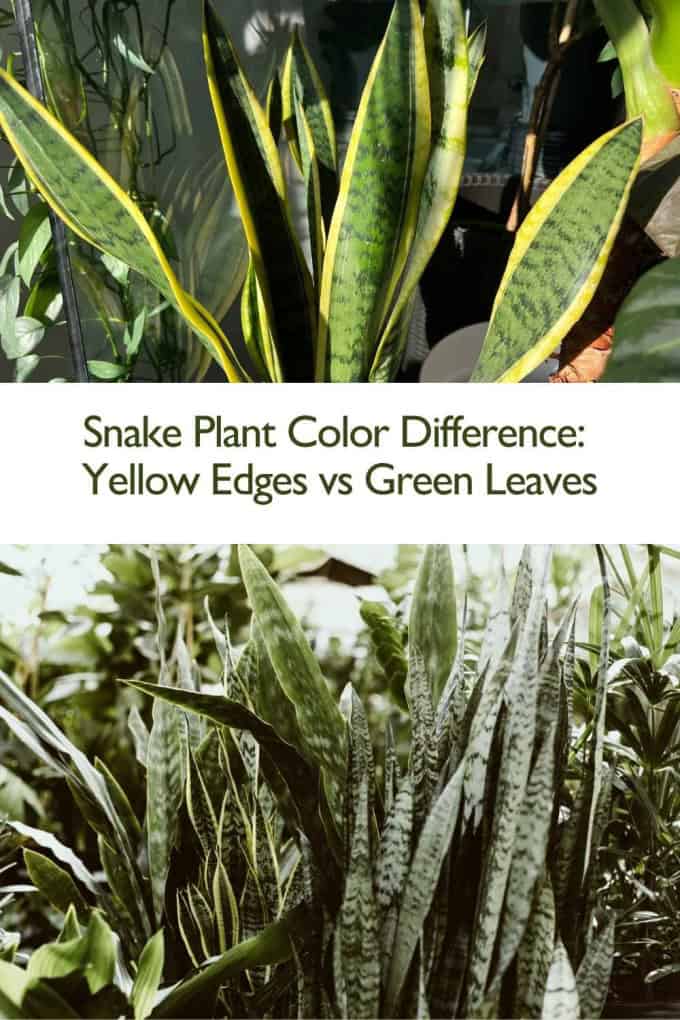
Snake plant color difference is one of the most confusing things for plant owners – especially when you have multiple snake plants that look like the same variety, but some have bright yellow edges and others look completely green. Sometimes, even one plant can look “mixed,” with a few leaves showing variegation and a few leaves without it.
The good news?
In most cases, this is completely normal and it usually happens because of light exposure.
In this post, you’ll learn why snake plant color difference happens, what causes snake plant yellow edges to fade, and how snake plant light requirements affect variegation and overall color.
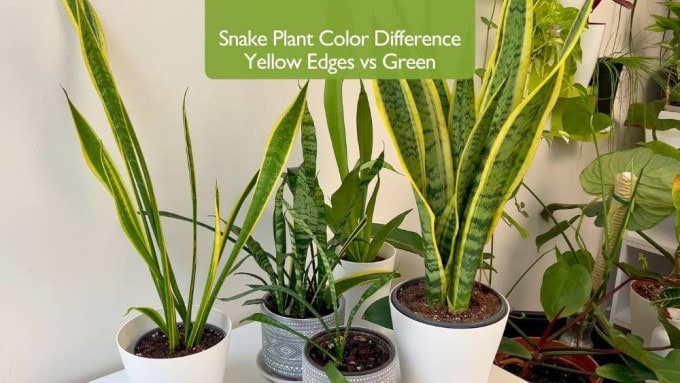
Snake Plant Yellow Edges: Why Some Plants Have Them and Some Don’t
If you have a snake plant with yellow edges, you’re most likely looking at a variegated type such as Snake Plant ‘Laurentii’ (Dracaena trifasciata).
This variety is known for:
- dark green center patterns
- lighter green striping
- distinct yellow edges along both sides of the leaf
But here’s what surprises many people:
✅ Even if your snake plants are the same variety, they can still look different.
✅ One plant may have strong yellow edges, while another looks almost fully green.
This happens because snake plant yellow edges don’t always stay equally visible under every indoor condition.
If you want to know more about light requirements for houseplants and how to find the perfect spot for each plant, read my full article Light Requirements for Houseplants: The Secret to Thriving Indoor Plants.
Snake Plant Variegation: Why Some Leaves Are Mixed on the Same Plant
Snake plant variegation means the plant has leaves with more than one color, usually green combined with yellow or lighter striping.
And yes, it’s possible (and very common) for one snake plant to have:
- some leaves with yellow margins
- some leaves with barely visible edges
- some leaves that look almost solid green
That doesn’t automatically mean the plant changed variety.
What it usually means is this:
Each leaf develops based on the light conditions during the time that leaf was growing.
So if your snake plant changed location in your home, or the seasons shifted and the light became weaker, variegation might look inconsistent from leaf to leaf.
This is why mixed variegation happens so often.
Snake Plant Losing Color: The Most Common Reason Is Low Light
One of the most common worries people have is:
“Why is my snake plant losing color?”
In most cases, snake plant losing color is not a disease. It’s an adaptation.
When a snake plant sits in low light:
- it produces more chlorophyll (green pigment)
- it becomes darker green overall
- the yellow edges may fade or become less noticeable
- the pattern looks softer or more muted
This is the plant’s way of surviving.
Instead of spending energy on bright variegation, it focuses on absorbing as much light as possible.
So if you have a snake plant color difference between one plant near a window and another deeper inside the room, this is probably why.
Snake Plant Light Requirements: The Best Light for Strong Variegation
Snake plant light requirements are simple, but they make a huge difference in leaf color.
Here’s what to expect:
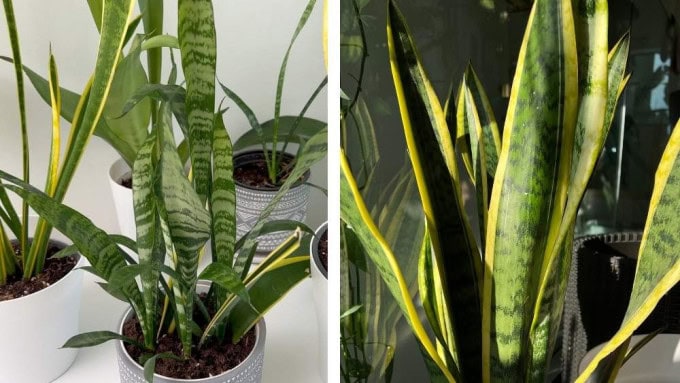
Bright indirect light (best option)
This is where snake plants usually look their most beautiful.
In bright indirect light, you’ll see:
- stronger contrast
- clearer leaf patterns
- brighter yellow edges
- healthier, balanced growth
✅ Best placement: near a sunny window with filtered light
✅ East or west-facing windows often work great indoors
Low light (color becomes more green)
Snake plants survive low light, but they won’t look as vibrant.
In lower light, you may notice:
- slower growth
- darker green leaves
- less variegation
- faded yellow edges
This is when snake plant losing color becomes more noticeable.
Too much direct sunlight (possible fading or stress)
While snake plants are tough, strong direct sun can sometimes cause:
- washed-out coloring
- pale edges
- dry patches or scorched areas
If you see crispy spots, it’s best to move the plant slightly away from direct sun.
Watch: If you want quick, beginner-friendly snake plant care tips (including the best light placement indoors), this short video will help you set up the perfect spot:

Click here to watch the video on YouTube
Can Snake Plant Yellow Edges Come Back?
Yes ✅ but with one important detail:
Snake plant yellow edges usually return only on new growth.
Older leaves often stay the way they are, even if you improve lighting.
So if you move your plant into better light, don’t expect the old leaves to suddenly become bright again.
Instead, watch the new leaves.
With time, your plant may grow:
- new leaves with stronger snake plant variegation
- brighter yellow margins
- cleaner, sharper patterns
This is also why one plant can look mixed – it reflects different growth phases.
Is Snake Plant Color Difference a Problem or a Normal Change?
Most of the time, snake plant color difference is completely normal and not something to worry about.
It’s normal if:
✅ leaves are firm and upright
✅ the base is strong and stable
✅ there is no mushiness or smell
✅ the plant is growing slowly but steadily
However, color changes can sometimes signal a different issue.
When Snake Plant Losing Color Is a Warning Sign
If snake plant losing color happens together with these symptoms, the cause might not be light:
❌ soft, mushy leaves
❌ yellowing starting from the bottom and spreading fast
❌ drooping or collapsing leaves
❌ black spots with wet texture
❌ bad smell from the soil
These are classic signs of:
- overwatering
- poor drainage
- root rot
In that case, the solution isn’t more light – it’s less water and healthier soil conditions.
Helpful next: If your snake plant is losing color and also showing yellowing, soft leaves, or drooping, this video explains the most common mistakes and how to fix them fast:

Click here to watch the video on YouTube
✅ FAQ: Snake Plant Color Difference (Light & Variegation)
Why do I see snake plant color difference between my plants?
Snake plant color difference usually happens because each plant gets a different amount of light. Snake plants in low light grow darker green leaves, while snake plants in bright indirect light show stronger patterns and more visible yellow edges.
Why does my snake plant have yellow edges but my other one doesn’t?
Snake plant yellow edges are often seen in variegated varieties like ‘Laurentii.’ If another snake plant doesn’t have yellow edges, it may be in lower light, which makes the plant produce more green pigment and reduces visible variegation. In some cases, it can also be a different cultivar.
Can snake plant yellow edges come back?
Yes. Snake plant yellow edges can come back, but mostly on new leaves. Once you improve snake plant light requirements by placing the plant in brighter indirect light, future growth is more likely to develop stronger variegation.
Why is my snake plant losing color?
Snake plant losing color is most commonly caused by low light. In darker conditions, the plant turns more green to survive and capture more light. However, if the leaves become soft, mushy, or yellow from the base, the issue may be overwatering rather than light.
Why does one snake plant have mixed leaves (some with yellow edges, some without)?
Snake plant variegation can vary leaf by leaf. If lighting changed during the year, some leaves may have formed in low light (more green) and others in brighter light (more yellow edges). This is normal and does not mean the plant is unhealthy.
What are the best snake plant light requirements for strong variegation?
The best snake plant light requirements for strong snake plant variegation are bright indirect light. This helps the plant keep strong contrast and brighter yellow edges without stress. Avoid harsh direct sun for long hours, because it can fade the color or cause scorch.
Will snake plant color difference affect growth?
Yes, snake plant color difference often comes with growth differences. In brighter light, snake plants grow faster and develop stronger patterns. In low light, growth slows down and leaves often look darker green with less visible variegation.
Does snake plant variegation mean it’s healthier?
Not necessarily. Snake plant variegation is mostly genetic, and the look depends heavily on light. A solid green snake plant can be just as healthy as one with yellow edges. The best sign of health is firm, upright leaves and a stable root system.
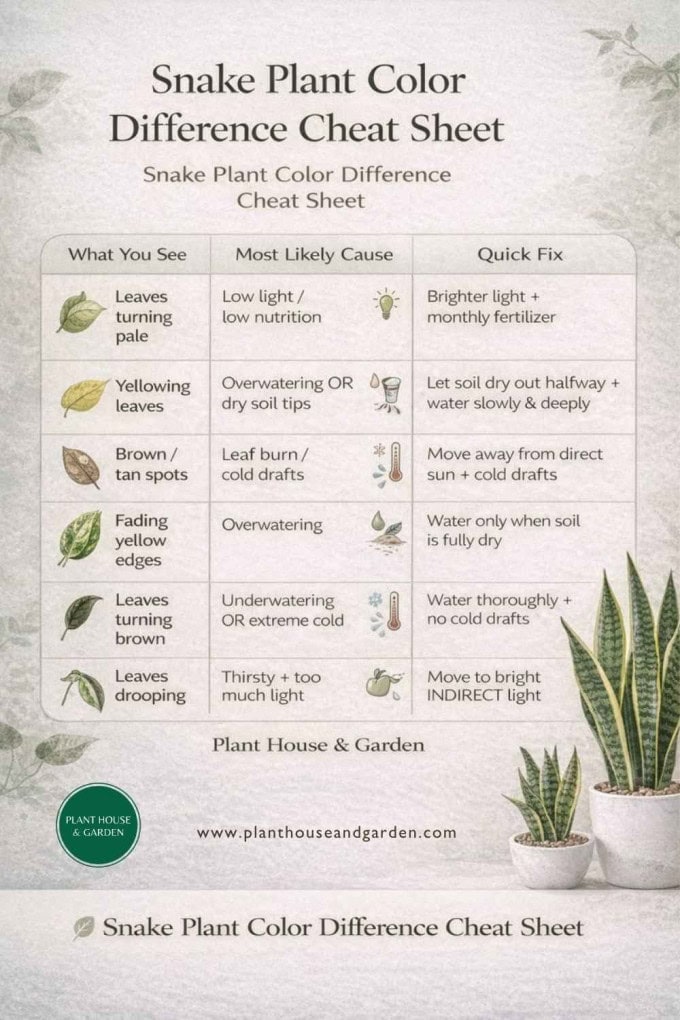
Quick Care Cheat Sheet (Save this!)
Final Thoughts
If you’re seeing snake plant color difference in your collection, don’t panic.
Even if all your plants seem like the same variety:
- one might show yellow edges
- another might look green
- one might look mixed
That doesn’t automatically mean something is wrong.
In most homes, the difference comes down to one thing:
Snake plant light requirements.
Give your snake plants brighter indirect light, and you’ll usually see stronger snake plant variegation and more visible snake plant yellow edges over time – especially on new growth.
Related Articles
- Snake Plant Problems: 5 Common Mistakes to Avoid for Healthy Plants
- How to Propagate Snake Plants from Leaves in Water
- Is It Safe to Sleep with Houseplants? The Truth About Oxygen, CO₂, and Clean Air
- Rubber Plant Problems: 5 Mistakes to Avoid (Ficus Elastica)
- Top 8 Air Purifying Houseplants for Cleaner Indoor Air and Better Sleep
Explore More Music for Your Plants & Stay Connected!
Check out my Playlist: Music for Plants and find the perfect tunes to help your plants and yourself thrive.
Don’t forget to visit my YouTube Channel Plant House & Garden and subscribe – your support means the world to me!
Connect with me on social media for more plant care tips and music updates: Instagram | Facebook | X | Pinterest | Reddit | TikTok
Love plants? Love music? Don’t miss out on new updates – hit subscribe and follow now to keep your plants happy and your space vibrant!