Philodendron Leaves Turning Yellow? Here’s What Your Plant Is Telling You
Yellow leaves on a Philodendron can be alarming. One day your plant looks healthy and vibrant, and the next, its leaves start turning yellow for no obvious reason. If you’re wondering why your Philodendron leaves turning yellow, you’re not alone; this is one of the most common Philodendron care problems plant owners face.
The good news is that yellow leaves are rarely random. In most cases, your plant is reacting to something in its environment, such as watering habits, light conditions, or soil issues. Once you understand what’s causing the problem, fixing Philodendron yellow leaves is usually simple and fast.
In this guide, you’ll learn the exact reasons yellow leaves appear on Philodendrons, how to identify the real cause in your plant, and what to do to prevent yellow leaves on Philodendron plants from happening again.
Watch: How to care for Philodendron Gloriosum and prevent common leaf problems, including yellowing leaves.
Click here to watch the video on YouTube
#1 Overwatering (The Most Common Cause of Yellow Leaves)
Overwatering is the number one reason Philodendron leaves turn yellow, especially during the colder months. While Philodendrons enjoy consistent moisture, their roots still need oxygen. When the soil stays wet for too long, roots can’t breathe, and the plant reacts by turning its leaves yellow.
This problem is very common in winter. During this time, Philodendrons grow more slowly, use less water, and the soil takes much longer to dry out. If you continue watering on the same routine you used in spring or summer, you may unknowingly water too often, even if the soil surface looks dry.
This is one of the most common mistakes during the colder months. If you want to understand this in more detail, check out my guide on Winter Houseplant Care Mistakes: 5 Things to Avoid, where I explain why watering routines need to change in winter and how to adjust them properly.
Yellow leaves caused by overwatering often feel soft, weak, or slightly mushy. In many cases, the yellowing starts at the older, lower leaves and gradually moves upward. A musty smell from the soil or consistently damp potting mix are strong warning signs that excess moisture is the issue.
How to Fix Overwatering
- Stop watering immediately and allow the soil to dry out
- Make sure your pot has proper drainage holes
- Remove the plant from its pot and inspect the roots
Healthy roots are firm and light-colored, while damaged roots appear brown or black and feel soft
If root rot is present, trim away the damaged roots and repot the plant in fresh, well-draining soil.
How to Prevent Yellow Leaves from Overwatering
- Water only when the top 1–2 inches of soil are dry
- Reduce watering frequency in winter
- Avoid watering on a fixed schedule
- Use a light, airy soil mix designed for aroids
Learning how seasonal changes affect watering is one of the most important steps in preventing Philodendron yellow leaves.
#2 Underwatering (Yes, It Can Also Cause Yellow Leaves)
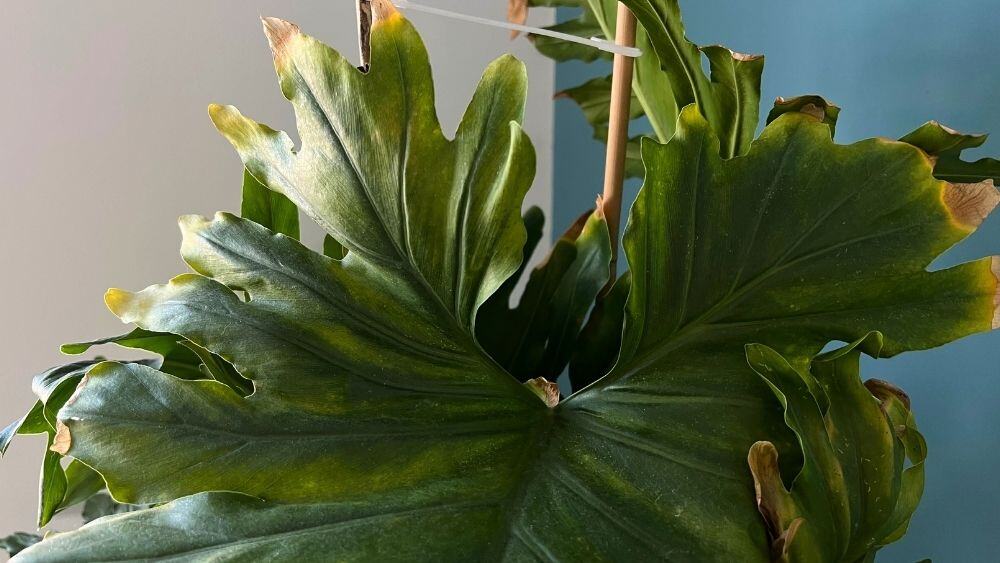
While overwatering is the most common issue, underwatering can also cause Philodendron leaves to turn yellow. When a plant doesn’t receive enough water, it struggles to transport nutrients to its leaves. As a result, leaves may lose their rich green color and turn yellow before eventually drying out.
Yellow leaves caused by underwatering usually look thin, dry, or papery, rather than soft. The soil will feel completely dry, and the plant may appear slightly droopy or limp, especially during warmer indoor conditions or near heat sources.
This problem often happens when watering is delayed for too long, or when plants are kept in very light, fast-draining soil without adjusting the watering frequency.
How to Fix Underwatering
- Water the plant thoroughly until excess water drains from the bottom
- Make sure the entire root ball gets evenly moist
- Remove extremely dry, compacted soil if water runs straight through without soaking in
Avoid giving small amounts of water too often; a deep, thorough watering is much more effective.
How to Prevent Yellow Leaves from Underwatering
- Check soil moisture regularly, especially in heated indoor spaces
- Water when the top 1–2 inches of soil are dry, but not bone-dry
- Adjust watering frequency based on temperature, light, and season
Maintaining a consistent watering rhythm is key to preventing yellow leaves on Philodendron plants caused by dryness.
If you want to learn how to water your houseplants the right way and avoid the most common mistakes, read my full article Houseplants Watering Tips – 5 Mistakes to Avoid: How, When & How Much to Water.
#3 Poor Drainage or the Wrong Soil Mix
Sometimes, Philodendron leaves turn yellow even when watering seems correct. In these cases, the real issue is often poor drainage or an unsuitable soil mix. If water can’t flow freely through the pot, roots stay wet for too long and begin to suffocate – leading to yellowing leaves.
Heavy, compacted soil holds moisture and limits airflow around the roots. Over time, this creates stress that looks very similar to overwatering, even if you’re watering only occasionally. Yellow leaves combined with slow growth or constantly damp soil are strong indicators of a drainage problem.
This issue is especially common when Philodendrons are planted in regular garden soil or dense, peat-heavy mixes without added aeration.
How to Fix Poor Drainage
- Make sure your pot has drainage holes
- Gently remove the plant and inspect the root system
- Repot into a light, well-draining soil mix that allows excess water to escape
If the soil stays wet for days after watering, changing the soil is often the fastest way to stop Philodendron yellow leaves from spreading.
How to Prevent Soil-Related Yellow Leaves
- Use a chunky, airy soil mix designed for aroids
- Avoid compacting the soil when repotting
- Choose pots that allow proper drainage, not decorative containers without holes
Healthy roots depend on both moisture and airflow. When the soil balance is right, Philodendrons are far less likely to develop yellow leaves.
If you want your aroids to grow strong, healthy roots, read my full article Soil-Free Aroid Potting Mix: The Best DIY Recipe for Healthy Aroid Plants and learn how to make the perfect mix at home.
#4 Low Light or Sudden Light Changes
Light plays a big role in how Philodendrons process water and nutrients. When light levels are too low or when a plant is suddenly moved to a darker spot – Philodendron leaves may start turning yellow, especially the older ones.
In low light, your plant uses water more slowly. This can cause excess moisture to sit in the soil longer, indirectly leading to yellow leaves. Sudden changes, such as moving a plant away from a bright window or shifting it indoors for winter, can also shock the plant and trigger leaf yellowing.
This is very common in fall and winter, when daylight hours shorten and indoor light becomes weaker, even if the plant stays in the same place.
Signs Light Is the Problem
- Yellowing starts on older, lower leaves
- Growth slows down noticeably
- Leaves may look healthy in shape but lose color
How to Fix Light-Related Yellow Leaves
- Move your Philodendron closer to a bright window with indirect light
- Avoid placing it in deep shade or dark corners
- Rotate the plant occasionally so all sides receive light evenly
If your space has limited natural light, placing the plant near a window or supplementing with a grow light can help prevent yellow leaves on Philodendron plants.
How to Prevent Light Stress
- Keep lighting conditions consistent
- Avoid frequent moving between bright and dark areas
- Adjust care routines seasonally as light changes
Light doesn’t need to be intense – it just needs to be consistent and appropriate for healthy growth.
If you want to know more about light requirements for houseplants and how to find the perfect spot for each plant, read my full article Light Requirements for Houseplants: The Secret to Thriving Indoor Plants.
#5 Nutrient Deficiency (When Yellow Leaves Mean Your Plant Is Hungry)
If watering, soil, and light are all in check, nutrient deficiency may be the reason your Philodendron leaves are turning yellow. Like all houseplants, Philodendrons rely on essential nutrients to maintain healthy green foliage. When those nutrients are missing or unavailable, leaves can lose color and turn yellow.
This issue often develops gradually. Yellowing usually appears on older leaves first, while newer growth may look smaller or less vibrant than usual. In many cases, the problem isn’t a lack of fertilizer, it’s depleted soil, infrequent feeding, or nutrients being washed out over time.
During the growing season, Philodendrons do benefit from regular feeding, but fertilizing too often can be just as harmful. Feeding once every 4–6 weeks is usually enough. Overfertilizing can lead to salt buildup in the soil, which damages roots and causes leaf problems such as yellowing, brown tips, leaf edge burn, or even sudden leaf drop.

Common Nutrient Issues That Cause Yellow Leaves
- Nitrogen deficiency – overall pale or yellow leaves
- Magnesium deficiency – yellowing between leaf veins
- Iron deficiency – yellow leaves with green veins, especially on newer growth
How to Fix Nutrient Deficiency
- Use a balanced houseplant fertilizer, diluted to half strength
- Fertilize only during active growth (spring and summer)
- Flush the soil occasionally with plain water to remove excess salts
How to Prevent Nutrient-Related Yellow Leaves
- Fertilize once every 4–6 weeks during the growing season
- Avoid fertilizing stressed, newly repotted, or dormant plants
- Repot every 1–2 years to refresh depleted soil
When nutrients are balanced, not too little and not too much, Philodendrons maintain rich green leaves and steady growth. If you want to boost your plants’ growth naturally and safely, read my full article Organic Fertilizer for Houseplants: Stimulate Your Plants’ Growth.
#6 Natural Leaf Aging (When Yellow Leaves Are Completely Normal)
Not all yellow leaves are a sign of a problem. In many cases, Philodendron leaves turn yellow simply because they’re aging, and this is a completely natural part of the plant’s growth cycle.
As Philodendrons grow, they regularly shed their oldest leaves to redirect energy toward new growth. This usually affects the lowest leaves first, while the rest of the plant looks healthy and continues producing new leaves.
Natural yellowing happens slowly and evenly. The leaf turns yellow over time, then eventually dries out and falls off. If only one or two older leaves are affected and the plant otherwise looks healthy, there’s usually nothing to worry about.
How to Tell Natural Aging from a Problem
- Yellowing affects only the oldest leaves
- New leaves continue to emerge healthy and green
- No signs of mushy stems, root rot, or pests
- Growth remains steady
What to Do About Naturally Yellow Leaves
- Allow the leaf to turn fully yellow before removing it
- Gently prune it with clean scissors once it’s dry
- Focus on maintaining consistent care rather than making sudden changes
Understanding natural leaf aging can prevent unnecessary adjustments that often cause more harm than good. If you want your houseplants to look fresh, glossy, and healthy, read my full article Homemade Leaf Shine Recipe for Healthy Houseplants.
Quick Diagnosis: What Your Yellow Philodendron Leaves Are Telling You
If you’re still unsure what’s causing the yellow leaves on your Philodendron, use this quick guide to identify the problem based on visible symptoms.
🔎 Yellow Leaf Symptoms & Likely Causes
| Symptom | Most Likely Cause |
|---|---|
| Soft, yellow leaves & wet soil | Overwatering |
| Yellow, dry, papery leaves | Underwatering |
| Yellow leaves + slow growth | Poor drainage or compact soil |
| Yellowing after moving location | Light stress |
| Pale yellow leaves, weak growth | Nutrient deficiency |
| Only older bottom leaves yellow | Natural aging |
This simple comparison helps narrow down the cause quickly, without guessing or changing everything at once.
Okay, but what if I have a specific Philodendron?
If you’re growing a specific variety like Philodendron Birkin, some yellow leaf issues can be variety-related. You can read more about this in our guide on Philodendron Birkin Problems: 5 Mistakes to Avoid.
What to Do Next If Your Philodendron Leaves Are Turning Yellow
Once you identify the likely cause, focus on one correction at a time. Making multiple changes at once can stress the plant further and make it harder to tell what’s actually working.
Step-by-Step Recovery Checklist
- Check soil moisture before watering again
- Ensure the pot has proper drainage
- Adjust light gradually, not suddenly
- Pause fertilizing until the plant stabilizes
- Remove only fully yellow leaves
Give your Philodendron time to respond. New growth is the best sign that your care adjustments are working.
How to Prevent Yellow Leaves on Philodendrons (Long-Term Care Tips)
Preventing yellow leaves on Philodendrons is all about consistent, balanced care. Once you understand how your plant responds to water, light, and nutrients, keeping its leaves healthy becomes much easier.
✔ Water Wisely
Always check the soil before watering. Allow the top 1–2 inches of soil to dry out, and reduce watering frequency in winter when growth slows and soil stays wet longer.
✔ Use the Right Soil and Pot
Choose a well-draining, airy soil mix and a pot with drainage holes. Good airflow around the roots prevents many common Philodendron care problems before they start.
✔ Provide Stable Light
Place your Philodendron in bright, indirect light and avoid frequent moving. Sudden light changes can stress the plant and lead to yellowing leaves.
✔ Fertilize in Moderation
Feed only during the growing season and no more than once every 4–6 weeks. Overfertilizing can cause root stress, leaf burn, and yellowing just as easily as nutrient deficiency.
✔ Adjust Care Seasonally
As temperatures drop and daylight decreases, Philodendrons need less water and fertilizer. Adapting your care routine to the season is one of the most effective ways to prevent yellow leaves.
Music for Plants: Support Philodendron Health Naturally
Once you’ve corrected watering, light, and fertilizing issues, gentle background music can help reduce plant stress and support overall vitality. Many plant lovers use calming frequencies as part of their regular philodendron care routine.
Click here to watch the video on YouTube
🌱 Final Thoughts
When Philodendron leaves turn yellow, it’s usually the plant’s way of signaling a care imbalance, not a sign that it’s dying. With a few small adjustments and a little patience, most Philodendrons recover quickly and return to healthy growth.
Understanding these signals allows you to respond calmly, protect your plant long-term, and enjoy strong, vibrant foliage year-round.
Related Articles
- Philodendron Birkin Problems: 5 Common Mistakes to Avoid
- How to Propagate Philodendron Pink Princess + Root Rot Rescue
- Philodendron Pastazanum Care: The Complete Guide for Stunning Heart-Shaped Leaves
- Philodendron Prince of Orange Care: All You Need to Know
- Extrafloral Nectaries in Philodendrons (EFNs) – Explained
Explore More Music for Your Plants & Stay Connected!
Check out my Playlist: Music for Plants and find the perfect tunes to help your plants and yourself thrive.
Don’t forget to visit my YouTube Channel Plant House & Garden and subscribe – your support means the world to me!
Connect with me on social media for more plant care tips and music updates: Instagram | Facebook | X | Pinterest | Reddit | TikTok
Love plants? Love music? Don’t miss out on new updates – hit subscribe and follow now to keep your plants happy and your space vibrant!