Laceleaf Brown Leaves: 5 Common Causes (And How to Fix Them Fast)
Seeing laceleaf brown leaves can be alarming - but it doesn’t mean your plant is dying.
Laceleaf brown leaves are one of the most common issues Anthurium owners face, and in most cases, the cause is simple and fixable once you know what to look for.
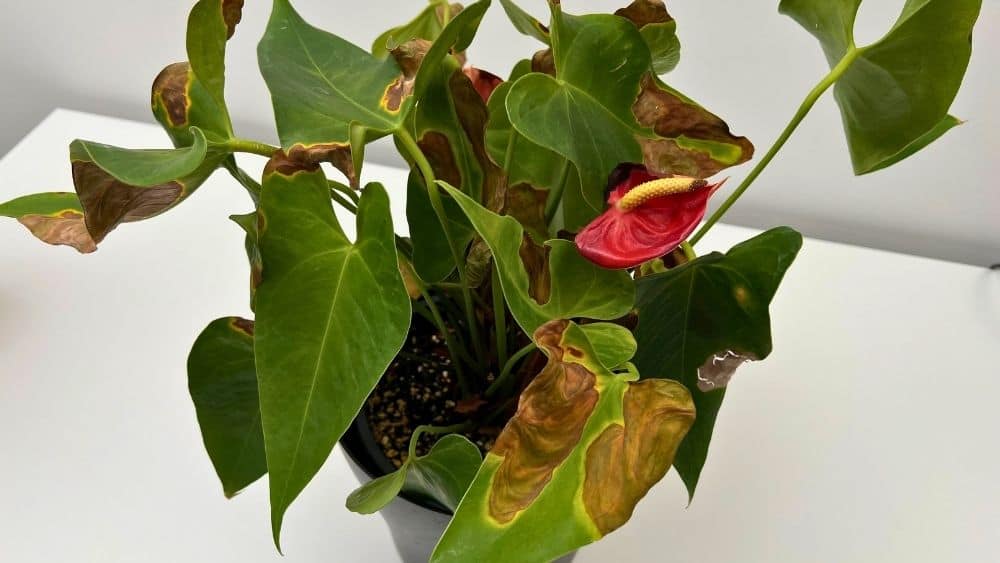
Brown tips, dry edges, or entire leaves turning brown are usually a sign that something in the environment is off - like humidity, watering, light, or water quality. The tricky part is that different types of browning point to different problems, and treating the wrong cause can make things worse.
In this guide, you’ll learn the 5 most common causes of laceleaf brown leaves, how to identify each one by the symptoms, and exactly how to fix them fast, so your Anthurium can recover and grow healthy, glossy leaves again. Laceleaf is a type of Anthurium, so my guide to common Anthurium problems covers the wider issues too.
If you’re new to laceleaf plants or want a complete overview of light, watering, and blooming care, you can start with my full Laceleaf (Anthurium) Care Guide before diving into specific problems.


Cause #1: Low Humidity (The #1 Reason of laceleaf brown leaves)
Laceleaf plants are tropical by nature, and low humidity is the most common reason for brown leaves, especially brown tips and crispy edges.
When the air is too dry, your laceleaf loses moisture faster than it can absorb it through the roots. As a result, the leaf edges dry out first, turning brown, crispy, and papery, while the rest of the leaf may still look green.
This problem is especially common:
- in winter, when indoor heating is on
- in air-conditioned rooms
- near radiators, heaters, or vents
How to recognize humidity-related of laceleaf brown leaves
- Brown tips or edges, starting at the leaf margins
- Crispy, dry texture (not soft or mushy)
- New leaves may unfurl with brown edges already present
How to fix it
- Increase humidity to 60-80% if possible
- Use a humidifier near the plant (most effective solution)
- Group plants together to create a humid microclimate
- Place the pot on a pebble tray with water (bottom not touching water)
⚠️ Important: Misting alone is not enough. It raises humidity for only a few minutes and won’t fix ongoing browning. Read more about The Truth About Misting Houseplants: Should You Do It or Not?
Many plant owners use humidifiers to create a more stable indoor environment, especially during winter when air becomes very dry. A good humidifier can help prevent dry leaf edges and support overall plant health. This is especially useful for tropical plants that prefer higher humidity levels.
Once humidity is corrected, existing brown areas won’t turn green again, but new leaves will grow healthy and damage-free, which is the real sign the problem is solved.
Cause #2: Watering Issues (Overwatering vs. Underwatering)
Watering mistakes are one of the most common reasons laceleaf leaves turn brown, but the tricky part is that overwatering and underwatering can look similar at first.
The key difference is how the leaves feel, not just how they look.
How underwatering causes brown leaves
When a laceleaf doesn’t get enough water, the plant prioritizes survival and reduces moisture loss. This causes the leaf edges and tips to dry out first.
Symptoms of underwatering:
- Brown, dry, crispy leaf tips or edges
- Leaves feel thin or papery
- Soil is completely dry several inches down
- Leaves may curl slightly before browning
How overwatering causes brown leaves

Overwatering deprives the roots of oxygen. When roots start to suffocate or rot, they can’t absorb water properly, even though the soil is wet. This leads to browning that often starts with yellowing, then turns brown.
Symptoms of overwatering:
- Brown patches with yellow halos
- Soft, limp, or mushy areas on the leaves
- Leaves drooping despite wet soil
- Soil staying wet for many days
How to fix watering problems
- Always check the soil before watering
- Water only when the top 1-2 inches of soil feel dry
- Use a pot with drainage holes
- Empty the saucer after watering
- Avoid watering on a fixed schedule - water based on soil dryness instead
💡 Pro tip: If the soil is dry and compacted, water slowly and deeply so moisture reaches the roots. If the soil stays wet for too long, improve drainage or repot into a lighter, airy mix.
Correct watering habits won’t fix existing brown spots, but they will prevent new leaves from browning and stop the problem from spreading. Watering problems are one of the most common reasons laceleaf brown leaves appear and keep spreading.
One of the easiest ways to avoid overwatering is by checking soil moisture before watering. Many plant owners use a moisture meter to understand when their plant actually needs water. This simple tool can help prevent root rot and improve overall plant care.
Still confused about watering?
This video below explains how to avoid the most common houseplant watering mistakes and keep your plants healthy long-term.

Cause #3: Too Much Direct Sunlight (Leaf Burn)
Laceleaf plants love bright light, but direct sunlight is a common cause of brown leaves and scorched patches.
When exposed to direct sun - especially through a window, laceleaf leaves can’t handle the intensity. The leaf tissue overheats and dries out, causing brown, dry spots that look burned.
This often happens when:
- the plant is placed in a south or west-facing window
- sunlight hits the leaves directly for several hours a day
- the plant is suddenly moved from low light to bright sun
How to recognize sunburn on laceleaf leaves
- Brown or tan patches on the leaf surface
- Dry, brittle areas that don’t feel soft
- Damage appears on the side facing the window
- Leaf color may fade before turning brown
Unlike watering or humidity issues, sunburn usually creates localized patches, not evenly browned tips.
How to fix it
- Move the plant to bright, indirect light
- Use a sheer curtain to filter strong sunlight
- Keep laceleaf plants 2-4 feet away from sunny windows
- Acclimate slowly if increasing light levels
⚠️ Important: Sunburn damage is permanent. Affected areas won’t recover, but new leaves will grow healthy once the light is corrected.
If your laceleaf has brown leaves mainly on one side, light exposure is very likely the cause.
If your space doesn’t provide enough natural light, using a grow light can be a simple and effective solution. Many indoor plant owners rely on full-spectrum LED grow lights, especially during winter or in low-light rooms. Choosing the right lighting setup can help maintain healthy growth and strong foliage.
Cause #4: Tap Water, Salt, and Mineral Buildup
If your laceleaf is otherwise healthy but keeps developing brown tips or brown leaf edges, the problem may not be watering frequency, but what kind of water you’re using.
Laceleaf plants are sensitive to salts, chlorine, fluoride, and mineral buildup, which are common in tap water and fertilizers. Over time, these substances accumulate in the soil and damage the leaf tissue, showing up first as brown tips.
This issue often develops slowly, which is why it’s easy to miss.
How to recognize water-quality-related of laceleaf brown leaves
- Brown tips or margins with an otherwise healthy leaf
- Browning appears gradually, not suddenly
- White crust or residue on the soil surface or pot rim
- Leaf tips dry out evenly rather than in patches
This type of browning is very common in homes with hard water.
How to fix it
- Switch to filtered, distilled, or rainwater if possible
- Flush the soil every 1-2 months with plenty of water to remove salts
- Reduce fertilizer strength (use half-strength during active growth)
- Make sure excess water drains freely from the pot
💡 Pro tip: If you fertilize regularly and use tap water, flushing the soil is essential. Without it, salt buildup will continue to burn the leaf tips no matter how careful your watering is.
Once water quality improves, new leaves will grow without brown tips, even though existing damage won’t reverse. If this issue is ignored, laceleaf brown leaves will continue to show up on new growth.
Cause #5: Root Stress, Pot Issues, or Compacted Soil
When none of the above fixes fully solve the problem, the roots are often the hidden cause behind laceleaf brown leaves.
Healthy leaves depend on healthy roots. If the roots are stressed, compacted, or running out of space, the plant can’t absorb water and nutrients properly, even if everything above the soil looks fine. The result is slow, uneven browning that often starts with older leaves.
How to recognize root-related browning
- Brown leaves keep appearing despite correct watering and light
- The plant dries out very quickly or stays wet too long
- Water runs straight through the pot or pools on top
- Roots growing out of drainage holes
- Stunted growth or smaller new leaves
This is especially common in plants that haven’t been repotted for a long time or are growing in dense, compacted soil.
How to fix it
- Check the roots if problems persist
- Repot into a slightly larger pot (only 1-2 inches wider)
- Use a light, airy, well-draining mix
- Remove rotting or mushy roots before repotting
- Avoid pots without drainage holes
💡 Soil tip: Laceleaf plants do best in a mix that allows airflow to the roots. Heavy, compact soil holds too much water and slowly damages the root system.
Once the roots recover, new leaves will emerge healthy and glossy, and browning will stop spreading.
If you’re experiencing other issues with your Flamingo Flower, read my guide: Anthurium Laceleaf Problems: 5 Mistakes to Avoid (Flamingo Flower)
Laceleaf Brown Leaves: Quick Diagnosis Cheat Sheet
| Symptom | Most Likely Cause | How to Fix It |
|---|---|---|
| Brown, crispy tips or edges | Low humidity | Increase humidity (humidifier, plant grouping, pebble tray) |
| Brown tips with very dry soil | Underwatering | Water thoroughly once top 1-2 inches of soil are dry |
| Brown patches with yellowing | Overwatering | Improve drainage, reduce watering, let soil dry slightly |
| Brown, scorched spots on leaf surface | Direct sunlight | Move to bright, indirect light or filter sun with a curtain |
| Even browning on tips, white residue on soil | Tap water / salt buildup | Switch to filtered or distilled water, flush soil regularly |
| Ongoing browning despite good care | Root stress or compacted soil | Repot into airy, well-draining mix and check roots |
💡 How to use this table
If you’re unsure what’s causing brown leaves on your laceleaf, match the symptom first, then follow the fix in the right column. Treating the wrong cause (for example, watering more when humidity is the issue) can make browning worse. This quick guide makes it easier to identify the exact cause of laceleaf brown leaves and fix the problem correctly.

Frequently Asked Questions About Laceleaf Brown Leaves
Should I cut off laceleaf brown leaves?
Yes. You can trim brown or damaged leaves using clean, sharp scissors. Removing heavily damaged leaves helps the plant redirect energy into healthy new growth. If only the tips are brown, you can trim just the brown parts, following the natural leaf shape.
Will brown leaves on a laceleaf turn green again?
No. Once a laceleaf leaf turns brown, that damage is permanent. However, fixing the underlying issue will ensure that new leaves grow healthy and green, which is what really matters.
Why does my laceleaf have brown tips but otherwise healthy leaves?
Brown tips with healthy leaves are most often caused by low humidity or mineral buildup from tap water. This is very common and easy to fix by increasing humidity and switching to filtered or distilled water.
Can overwatering cause brown leaves on laceleaf plants?
Yes. Overwatering can lead to root stress or root rot, which prevents the plant from absorbing water properly. This often causes yellowing followed by brown patches or edges on the leaves.
How long does it take for a laceleaf to recover after fixing the problem?
You’ll usually see improvement within a few weeks. While damaged leaves won’t recover, new growth is the best sign that your laceleaf is back on track.
Is brown leaf damage a sign of pests or disease?
Not usually. Most brown leaf issues on laceleaf plants are caused by environmental factors like humidity, watering, light, or water quality. Always rule these out before suspecting pests or disease.
Brown leaves usually trace back to watering and humidity slips, so it helps to track them. My Plant Care Journal lets you log watering, humidity, and light for your laceleaf so you can spot the pattern before more leaves turn brown.
Final Thoughts
Brown leaves on a laceleaf can look scary, but in most cases, they’re simply a sign that something in the environment needs adjusting - not that the plant is failing. Once you identify the cause and make small, consistent changes, laceleaf plants recover beautifully and reward you with healthy, glossy growth.
With the right care and a bit of patience, your laceleaf can thrive and brown leaves can become a thing of the past 🌿
Related Articles
- Laceleaf (Anthurium) Care Guide
- Laceleaf Problems: 5 Mistakes to Avoid
- Humidity and Temperature for Houseplants
- Anthurium Clarinervium Care: Everything You Need to Know

Click here to watch the video on YouTube

Written by Bojana
Plant lover, grower, and music maker behind Plant House & Garden, with 35+ years of hands-on houseplant experience. Read more about Bojana →