Neon Pothos Care: 5 Tips to Keep the Leaves Bright Neon Green
Is your Neon Pothos looking leggy, pale, or slow to produce those signature bright green leaves? Well, you’re not alone. With a few simple changes, even a tired vine can turn into a full, glowing plant. Below are my five Neon Pothos care tips, each with My advice at the end: the practical takeaway from my own plant. For a visual walkthrough, watch my video below:
| Need | What Neon Pothos wants |
|---|---|
| Light | Bright, indirect (keeps leaves neon green) |
| Water | When the top 1-2 inches of soil are dry |
| Soil | Light, well-draining mix |
| Humidity | Average room humidity is fine, more is a bonus |
| Feeding | Light, balanced feed in spring and summer |
| Watch for | Dull leaves from low light, yellowing from overwatering |
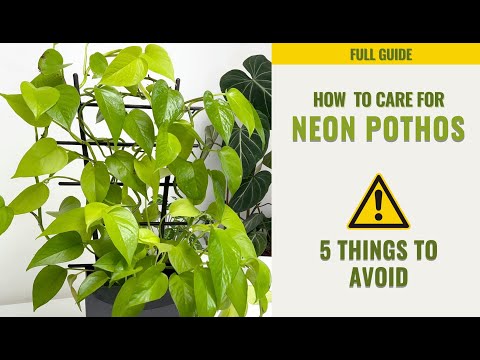
Click here to watch my video on YouTube
5 Neon Pothos Care Tips
1. Train Your Vines, Don’t Just Let Them Dangle
Neon Pothos naturally trails, but when left unsupported its energy goes into extending stem length rather than filling out foliage. In my own setup, I first had my plant in a hanging basket and noticed new leaves remained small and internodes (gaps between leaves) grew wider. Switching to a moss pole provided vertical support, encouraging the plant to anchor aerial roots and produce larger leaves that pressed against the pole for extra nutrients and moisture.
My advice: Choose a support structure (moss pole, trellis or bamboo stake) and gently tie each vine with soft plant ties. Every few weeks, adjust ties to accommodate growth. This simple change channels energy into leaf development and creates a fuller, more robust plant.
2. Find the Sweet Spot of Light: Bright and Indirect
Light governs both color intensity and growth rate. Insufficient light results in stretched vines and small leaves, while too much direct sun causes brown, crispy patches. I keep my Neon Pothos about seven feet from a north‑facing window, allowing diffuse natural daylight to bathe the leaves. In spring and summer, it receives around one hour of gentle morning sun filtered through a sheer curtain; in autumn and winter, I supplement with a grow light on low power for four hours daily.
My advice: Observe new growth closely; if leaves are smaller than usual or spaced far apart, gradually move your plant closer to a bright window; if you notice burn spots, pull it back or add light diffusion. Aim for 10,000-15,000 lux of indirect light for optimal color and growth.
3. Water Deeply, Then Let It Dry

Overwatering is the quickest route to root rot. Neon Pothos prefers its soil to dry out about halfway down before you water again. I follow a “soak and drain” method: submerge the entire pot in water for fifteen minutes, ensuring the mix is evenly moistened from top to bottom, then allow all excess water to escape through bottom holes. Between waterings, I check moisture by inserting a wooden skewer into the soil. If it comes out damp, I wait another two to three days.
My advice: Establish a watering routine based on moisture checks rather than a fixed schedule. Always allow the pot to drain fully; avoid letting your plant sit in a saucer of water for more than an hour.
Click here to watch the video on YouTube
4. Feed Lightly, Not Heavily
Fertilizer supports new growth, but too much can cause salt build‑up and burned root tips. During spring and summer, I use a balanced liquid fertilizer at one‑quarter strength once a month. I’ve tried multiple brands and found that reducing the label’s recommended dose prevents brown leaf edges. These plants are sensitive, so avoid heavy feed or use an organic fertilizer for best results. You can make your own organic fertilizer of lentil which works very well, read the recipe here.
My advice: Treat fertilizer as a vitamin supplement: a little goes a long way. If you see any brown spotting after feeding, cut back further. In fall and winter, cease fertilizing entirely, as the plant enters a semi‑dormant state.
5. Choose the Right Pot Size to Avoid the “Moisture Trap”
Oversized pots hold excess soil that stays wet and increases fungal risk. When repotting, I move my Neon Pothos into a container only one to two inches wider than its current root ball. I use a fast‑draining potting mix: 50% standard houseplant soil blended with 25% perlite and 25% orchid bark to ensure good aeration. If the plant isn’t rootbound by spring, I simply refresh the top two inches of soil rather than upsizing the pot.
My advice: Always inspect roots before repotting. If they’re tightly circling the pot, then increase size; if not, give the existing pot a soil boost. This minimizes moisture retention and prevents root rot.

Bonus Neon Pothos Care Tips
Maintain Ideal Temperature & Humidity
Neon Pothos thrives between 65 °F and 85 °F. Avoid placing it near drafty doors, AC vents, or uninsulated windows. To sustain moderate to high humidity (50-70%), I place a tray filled with water and pebbles beneath the pot and run a small humidifier nearby. Bathrooms with natural light also make excellent high‑humidity environments.
My advice: Invest in a hygrometer to monitor humidity. If levels dip below 40%, add humidity with trays or a humidifier, never rely solely on misting, which evaporates too quickly.
Clean Leaves for Maximum Photosynthesis
Dust accumulation blocks light and invites pests. Every two months, I gently shower my Neon Pothos in lukewarm water to remove built‑up grime. Then I wipe each leaf with a soft microfiber cloth dipped in my homemade leaf‑shine recipe. This not only restores shine but also adds a light protective coating against insects.
My advice: Test any leaf‑shine solution on a single leaf first. Avoid commercial waxes that can clog stomata; stick with gentle, natural ingredients.
Propagation & Pruning for a Thriving Display
Regular pruning encourages bushier growth. I prune back overlong vines just above a leaf node and immediately root those cuttings in water or a light mix to create new plants. Make sure each cutting has at least two nodes. For detailed steps, refer to my Golden Pothos propagation video. Rotating your plant every few weeks ensures even light exposure and a full, healthy vine.
Final Thoughts
Follow these five tips, add a little extra humidity, clean leaves and regular pruning, and your Neon Pothos will stay full, bright and glowing. If you missed it, my full video is at the top of this post.

Neon Pothos Care FAQ
Is Neon Pothos easy to care for?
Yes, Neon Pothos is one of the easiest houseplants going. It forgives the odd missed watering and grows fast, which makes it a great choice for beginners.
Why is my Neon Pothos losing its bright green colour?
The most common reason is not enough light. Neon Pothos needs bright, indirect light to stay vivid, and in low light the new leaves come in darker and duller.
How often should I water Neon Pothos?
Water when the top inch or two of soil feels dry, usually about once a week. It prefers to dry out a little between drinks rather than sit in soggy soil.
Does Neon Pothos need a lot of light?
It does best in bright, indirect light. It tolerates lower light but grows slower and loses some of its neon glow, so a bright spot out of direct sun is ideal.
Is Neon Pothos the same as regular Pothos?
It is the same species, Epipremnum aureum, just a bright lime-green variety. Care is the same as other pothos, and the main difference is that good light keeps its neon colour.
Want your Neon Pothos to stay bright and bushy? My Plant Care Journal Bundle helps you track light, watering, and growth so it never fades on you.
Related Articles
- Pothos Color Difference: Dark Green vs Light Green Leaves
- Pothos in Water: Can It Live Forever? (3-Year Test)
- Golden Pothos Care: 8 Easy Tips for Fuller, Faster Vines
- White Mold on Houseplant Soil: Causes, Fixes & Prevention

Written by Bojana
Plant lover, grower, and music maker behind Plant House & Garden, with 35+ years of hands-on houseplant experience. Read more about Bojana →