Spider Plant Brown Tips? Here’s Exactly Why It Happens (+ Easy Fixes)
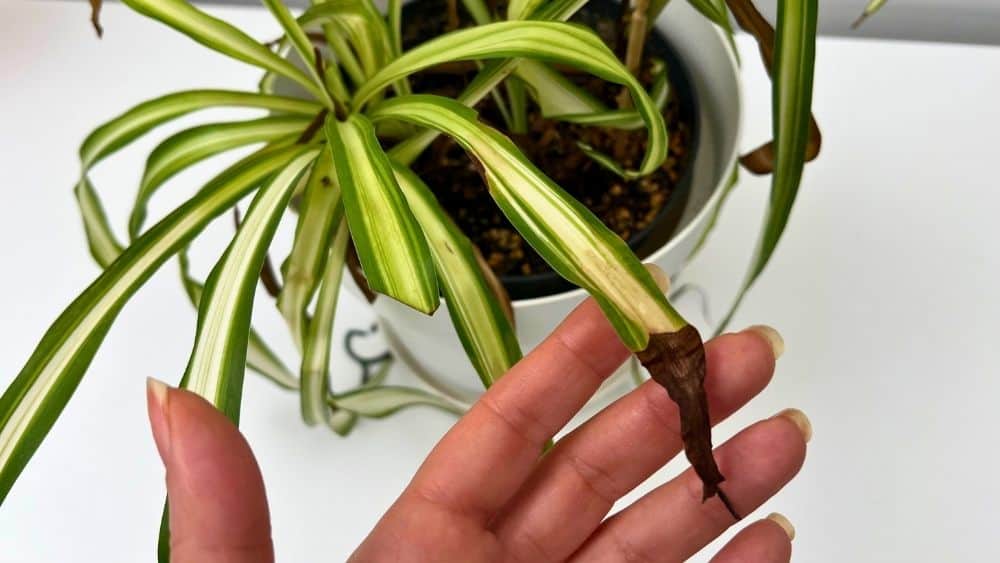
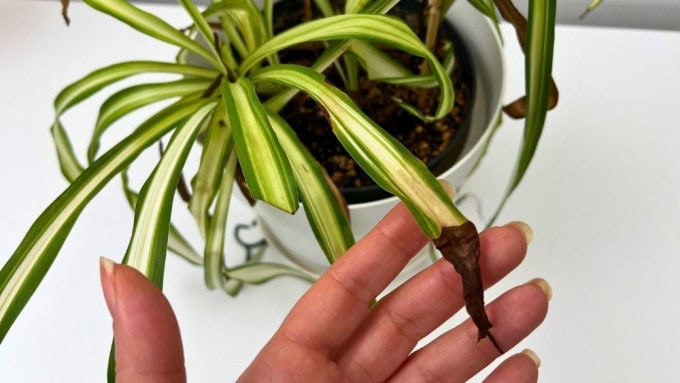
Spider plant brown tips are one of the most common issues with this plant – and the good news is, it’s usually easy to fix. In most cases, brown tips happen because of tap water minerals, low humidity, inconsistent watering, or fertilizer buildup.
The tricky part is that the tips can look the same even when the cause is different, so guessing often makes it worse. In this post, you’ll learn exactly why it happens, how to identify the real reason in your home, and the easiest fixes that will keep new growth looking fresh and healthy.
If you want a complete care guide, check out my full post on Spider Plant Care: Everything You Need to Know to make sure your plant is getting the perfect light, water, and soil conditions.
What Causes Spider Plant Brown Tips?
Before you start cutting the brown tips off, it’s important to understand what’s actually causing them. Spider plant brown tips usually happen when the plant is dealing with stress from water quality, humidity, watering habits, or salt buildup. The key is to match the symptoms you see with the most likely cause in your home. Let’s go through the top reasons spider plant brown tips happen, so you can fix the real cause and stop it from coming back.
1) Tap Water Buildup (Fluoride, Chlorine, and Minerals)
One of the most common reasons for spider plant brown tips is simple: tap water buildup.
Spider plants are known to be a little sensitive to minerals and chemicals found in regular tap water, especially fluoride and chlorine. Over time, these substances can slowly build up inside the soil and around the roots. When that happens, the plant has a harder time absorbing water properly, and the leaf tips start to dry out first.
Signs this is your problem
- Brown, crispy tips, while the rest of the leaf looks healthy
- New leaves still grow, but the ends dry out quickly
- You water normally, but tips keep browning again
- White crust on the top of the soil or around the pot (mineral deposits)
Easy fixes
✅ Switch to better water
The fastest improvement usually happens when you start using:
- filtered water
- rainwater
- distilled water
✅ Flush the soil (quick reset)
Once a month, take the plant to the sink or shower and water it deeply for 1–2 minutes, letting the water drain fully. This helps wash out salt and mineral buildup.
✅ Avoid “softened” water
If your home uses a water softener, don’t use that water for plants, it often contains added salts that can make brown tips worse.
2) Low Humidity and Dry Indoor Air
Another very common reason for spider plant brown tips is low humidity, especially during winter.
When your home heating is on, the air becomes much drier than your plant prefers. Spider plants can tolerate average household conditions, but when humidity drops too low, the leaf tips lose moisture faster than the roots can replace it. That’s when the ends start turning brown, crispy, and dry.
Signs low humidity is the cause
- The tips look dry and crispy (not soft or mushy)
- Browning happens mostly on older leaves first
- The soil dries out faster than usual
- You notice dry air symptoms in your home (static hair, dry skin, dry lips)
Easy fixes that actually work
✅ Group your plants together
Plants release moisture naturally, so grouping them creates a more humid microclimate.
✅ Use a pebble tray
Place the pot on a tray with pebbles and water (the pot should sit on the stones, not directly in the water). As water evaporates, it raises humidity around the plant.
✅ Use a humidifier (best solution)
If you want the fastest improvement, a small humidifier near your plants makes a big difference.
✅ Move it away from heat sources
Keep your spider plant away from radiators, heaters, fireplaces, and hot air vents. Even a few feet can help.
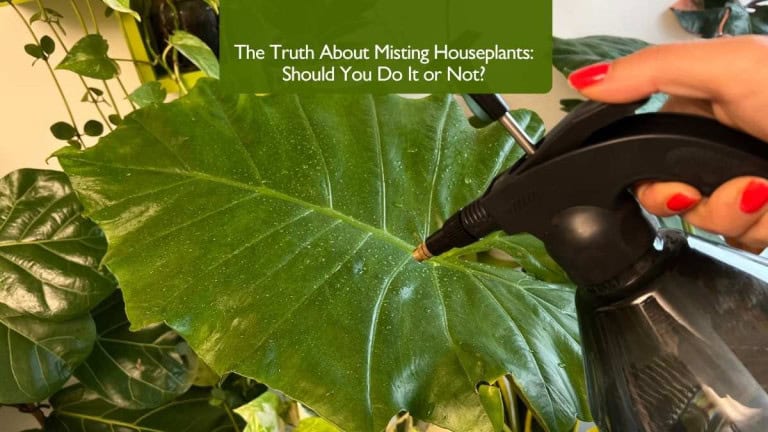
📌 Quick tip: Misting can help temporarily, but it’s not the most reliable fix. A humidifier or plant grouping works much better long-term. Not sure if misting really helps? You might like my full guide on The Truth About Misting Houseplants: Should You Do It or Not?

3) Underwatering or Inconsistent Watering
Sometimes spider plant brown tips happen for a very simple reason: the plant is getting too dry, or the watering is inconsistent.
Spider plants like evenly moist soil, but they don’t like sitting in soggy conditions either. When the soil dries out too much, the plant starts pulling moisture from the leaf tips first and that’s when the ends turn brown and crispy.
This often happens when you water “a little bit” too often instead of watering deeply, or when the plant goes through long dry periods and then gets soaked again.
Signs underwatering is the issue
- Brown tips look crispy and dry
- Leaves may curl slightly or feel thin
- The pot feels very light before watering
- Soil pulls away from the sides of the pot
- The plant droops a bit, then perks up quickly after watering
Easy fixes
✅ Water deeply, not just a little
When you water, do it thoroughly until water runs out of the drainage holes.
✅ Check the soil before watering
Stick your finger about 2 inches (5 cm) into the soil. If it feels dry, it’s time to water.
✅ Use a consistent routine (but don’t water on a schedule)
Instead of watering every “X days,” water based on soil dryness.
✅ Avoid tiny pots that dry too fast
If your spider plant is in a very small pot, it can dry out too quickly, which makes brown tips happen more often.
If you want to learn how to water your houseplants the right way and avoid the most common mistakes, read my full article Houseplants Watering Tips – 5 Mistakes to Avoid: How, When & How Much to Water.
4) Overwatering and Early Root Stress
Even though spider plants are fairly tough, overwatering is still a common reason for spider plant brown tips.
This might sound confusing because people usually connect overwatering with yellow leaves, but brown tips can also happen when the roots are stressed.
When the soil stays wet for too long, the roots don’t get enough oxygen. Over time, they can start weakening or rotting, and that means the plant can’t absorb water properly. The result? The leaf tips dry out first, even though the soil is still moist.
Signs overwatering might be the cause
- The soil stays wet for many days
- The pot feels heavy all the time
- Leaves feel soft or droopy, not crispy
- A musty smell from the soil
- Slow growth and repeated browning on new leaves
- Fungus gnats showing up around the pot
Easy fixes
✅ Let the soil dry slightly before watering again
Spider plants do best when the top layer dries out a bit between waterings.
✅ Check your pot and drainage
Make sure your pot has drainage holes, and empty the saucer after watering.
✅ Use a lighter, faster-draining mix
If the soil holds water too long, mix in perlite or orchid bark to improve airflow around the roots.
✅ If you suspect root rot, inspect the roots
Healthy roots should be firm and light-colored. If they are dark, mushy, or smelly, trim the damaged roots and repot into fresh soil.
📌 Quick tip: Brown tips from overwatering usually keep getting worse until the root issue is fixed, trimming the tips alone won’t stop it.
5) Too Much Fertilizer (Salt Buildup in the Soil)
If you’ve been feeding your plant often, spider plant brown tips can be caused by fertilizer salt buildup.
Even a good fertilizer can become a problem when it’s used too frequently or in strong doses. Over time, extra salts collect in the soil and around the roots. This blocks proper water absorption and can “burn” the leaf tips – which is why the ends turn brown first.
This is especially common with spider plants because they’re fast growers, so many people fertilize them heavily to keep them pushing new leaves.
Signs fertilizer is the cause
- Brown tips appear shortly after fertilizing
- White crust on the soil surface or pot rim
- Leaf tips look dry, burnt, or crispy
- The plant grows, but the tips keep browning repeatedly
- You haven’t changed anything else (light/watering stays the same)
Easy fixes
✅ Flush the soil to remove salts
Once every 4–6 weeks, run water through the pot for 1–2 minutes and let it drain completely. This helps wash out built-up fertilizer salts.
✅ Cut back on fertilizing
For most spider plants, fertilizing once a month in spring and summer is enough. In fall and winter, reduce feeding or stop completely.
✅ Always dilute fertilizer
If you’re using liquid fertilizer, it’s safer to use a weaker dose than the label suggests. Spider plants don’t need heavy feeding to stay healthy.
✅ Repot if the buildup is severe
If the soil is old and crusty, repotting into fresh mix can instantly improve the plant’s ability to absorb water.
If you want to boost your plants’ growth naturally and safely, read my full article Organic Fertilizer for Houseplants: Stimulate Your Plants’ Growth.
6) Too Much Sun or Heat Stress (Leaf Scorching)
Even though spider plants love bright light, too much direct sun can lead to spider plant brown tips and crispy leaf edges.
Spider plants do best in bright, indirect light. But if they sit in strong direct sunlight (especially afternoon sun), the leaves can slowly dry out or scorch. The tips are usually the first part to turn brown because they’re the most exposed and most sensitive.
Heat stress can also happen if the plant is too close to a sunny window, heater, or hot air vent.
Signs too much sun is the cause
- Brown tips and crispy edges on the leaves
- Fading or pale-looking leaf color
- Brown patches or “burn marks” on the leaf surface
- The side facing the window looks worse than the rest
- Soil dries out much faster than usual
Easy fixes
✅ Move it to bright, indirect light
A spot near a window is perfect, but avoid harsh direct sun hitting the leaves.
✅ Use a sheer curtain
If the plant must stay in that location, a thin curtain can filter the light and prevent scorching.
✅ Rotate the plant
Turn the pot every 1–2 weeks so one side doesn’t get stressed more than the other.
✅ Keep it away from heat sources
Avoid placing it right next to radiators, fireplaces, and vents — the heat + dry air combo can cause browning fast.
📌 Quick tip: If your spider plant gets brown tips every summer, strong sun exposure is often the hidden reason.

7) Rootbound Plant (Not Enough Space for Healthy Growth)
Spider plants grow fast, and they actually don’t mind being slightly snug in a pot… but if they become severely rootbound, it can lead to spider plant brown tips.
When the roots completely fill the pot, there isn’t enough room left for fresh soil. That means:
- water runs through too quickly
- the plant dries out faster
- nutrients get used up faster
- salt buildup happens more easily
All of this stresses the plant, and the leaf tips are usually the first place where you see damage.
Signs your spider plant is rootbound
- Roots coming out of the drainage holes
- The plant dries out very quickly (sometimes in 1–2 days)
- You water, but the water runs straight through
- Growth slows down even in good light
- The plant looks crowded or the pot feels “tight”
- You see lots of babies (spiderettes) but the mother plant looks stressed
Easy fixes
✅ Repot one size up
Move your spider plant into a pot that is just 1–2 inches (2–5 cm) wider than the current one. Going too big can hold too much water and cause new problems.
✅ Refresh the soil
Even if you don’t repot, replacing some of the old soil can help a lot.
✅ Divide the plant (optional)
If your spider plant is huge and crowded, you can split it into two or more plants. This gives the roots more space and often improves tip browning.
📌 Quick tip: If your spider plant gets brown tips again and again no matter what you do, check the roots, a rootbound plant is often the missing piece.
8) Cold Drafts or Temperature Swings
Spider plants are easygoing, but they don’t like sudden temperature changes. And that’s another common reason for spider plant brown tips.
This often happens in winter when the plant is near:
- cold windows
- drafty doors
- frequent air blasts from heating or AC vents
Even if your room feels warm, cold air hitting the leaves can stress the plant quickly. The tips dry out first, and you start seeing crispy browning, especially on the leaves closest to the draft.
Signs temperature stress is the cause
- Brown tips show up suddenly after a weather change
- The plant sits near a window or door
- The browning is worse on one side of the plant
- Leaves feel dry and slightly “shocked”
- Growth slows down even if light and watering seem fine
Easy fixes
✅ Move the plant away from drafts
Just moving it a little farther from a window or door can make a big difference.
✅ Keep it in a stable spot
Spider plants do best when the temperature stays steady.
✅ Avoid placing it near vents
Hot or cold air blowing directly on the plant can dry the tips fast.
✅ Watch out for cold glass
If leaves touch a cold window pane, they can get damaged and turn brown.
📌 Quick tip: If brown tips appear mostly in winter, temperature swings and dry air are usually the top causes.
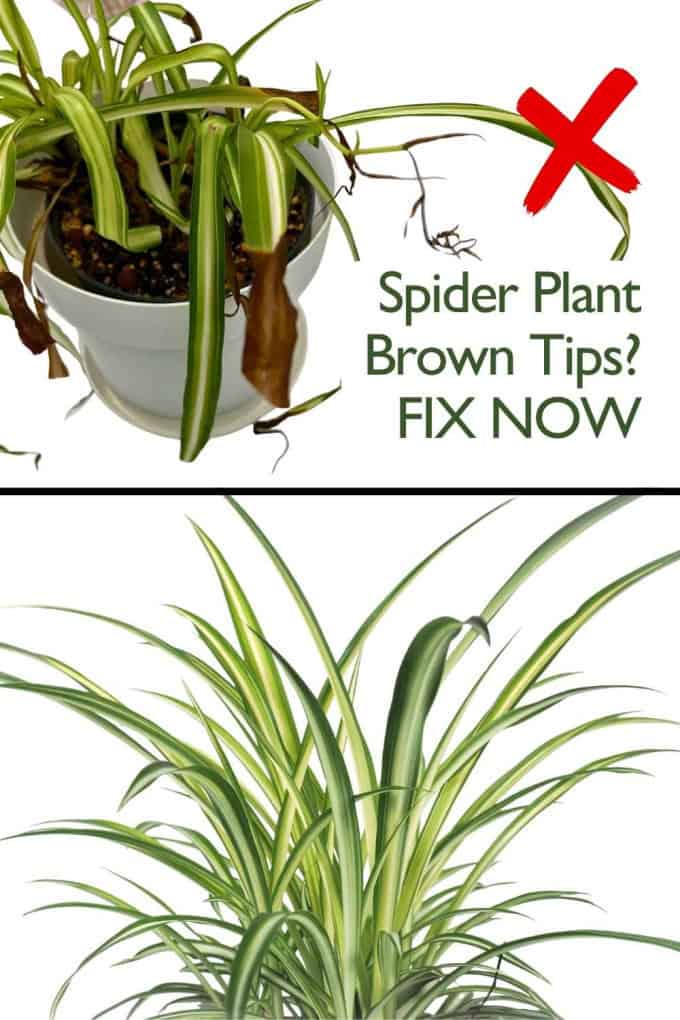
If you want a quick overview, here’s a simple cheat sheet that covers the most common causes of spider plant brown tips and the easiest fixes you can try right away. Feel free to save or share.

Quick Fix Summary (If You Want to Stop Brown Tips Fast)
If you want to stop spider plant brown tips quickly, focus on the basics first. Switch to filtered, rain, or distilled water, and flush the soil once to remove buildup. Keep the plant in bright, indirect light, away from heaters, vents, and cold drafts. Water only when the top part of the soil feels dry, and avoid over-fertilizing. If the plant dries out too fast or roots are crowded, repot one size up and refresh the soil.
Should You Cut Off Brown Tips? (And How to Do It Right)
Yes, you can cut off brown tips, and it can make your spider plant look much better. But keep in mind that trimming the tips only improves the appearance. If the cause isn’t fixed, the browning will come back.
How to cut brown tips the right way
✅ Use clean scissors
Wipe your scissors with rubbing alcohol before trimming to avoid spreading bacteria.
✅ Trim just the brown part
Cut only the dry, brown area and leave the healthy green leaf untouched as much as possible.
✅ Follow the leaf’s natural shape
Instead of cutting straight across, trim at a slight angle so it looks more natural.
✅ Don’t remove whole leaves unless needed
If a leaf is mostly brown, you can remove it completely by cutting it near the base. But if it’s only brown at the tip, trimming is enough.
Common mistake to avoid
❌ Don’t cut into the green part too much – the leaf won’t “heal,” and you can create a bigger brown edge later.
FAQ: Spider Plant Brown Tips
Why does my spider plant have brown tips?
Spider plant brown tips are usually caused by tap water minerals, low humidity, inconsistent watering, fertilizer salt buildup, or temperature stress.
Can brown tips turn green again?
No — once the tips turn brown, they won’t turn green again. You can trim them off, and focus on fixing the cause so new growth stays healthy.
Should I mist my spider plant to stop brown tips?
Misting can help a little, but it’s usually not enough on its own. For long-term improvement, higher humidity (humidifier or plant grouping) works much better.
What water is best for spider plants?
Filtered water, rainwater, or distilled water is best. Tap water can cause buildup over time and lead to spider plant brown leaf tips.
How often should I water a spider plant?
Water when the top part of the soil feels dry. Avoid watering on a strict schedule; indoor conditions change, and the soil can dry faster or slower depending on light and season.
Is it normal for spider plants to get brown tips?
Yes, it’s very common. The key is making small adjustments so the browning doesn’t keep spreading or returning on new leaves.
Related Posts
- Spider Plant Care: Everything You Need to Know
- Spider Plant Problems: 5 Mistakes to Avoid
- Why Is My Schefflera Dropping Leaves? (Causes + Fix)
- Rice Water Fertilizer for Plants: How to Use It Safely

Click here to watch the video on YouTube
Explore More Music for Your Plants & Stay Connected!
Check out my Playlist: Music for Plants and find the perfect tunes to help your plants and yourself thrive.
Don’t forget to visit my YouTube Channel Plant House & Garden and subscribe – your support means the world to me!
Connect with me on social media for more plant care tips and music updates: Instagram | Facebook | X | Pinterest | Reddit | TikTok
Love plants? Love music? Don’t miss out on new updates – hit subscribe and follow now to keep your plants happy and your space vibrant!