Anthurium Problems: 5 Mistakes That Cause Brown Leaves and No Flowers
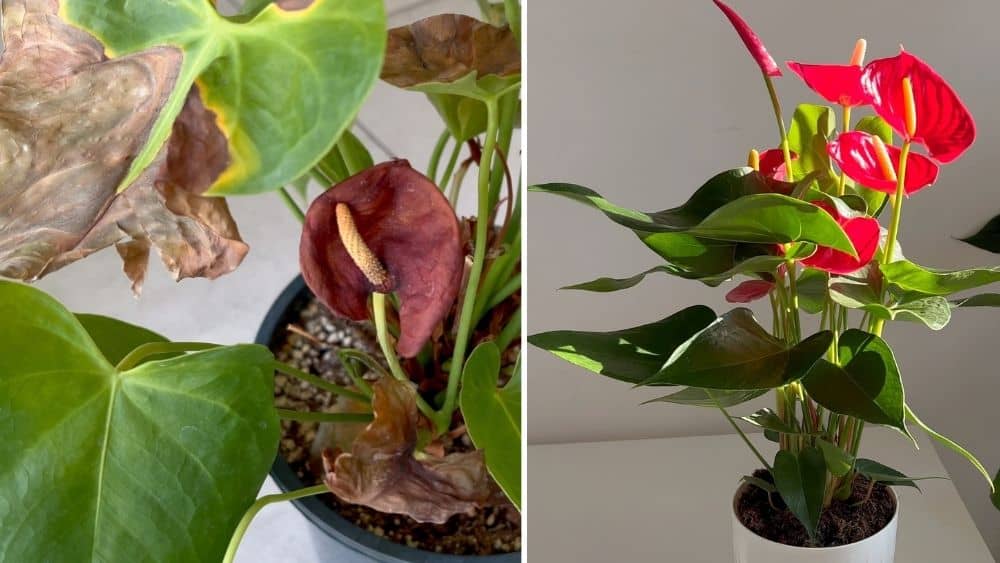
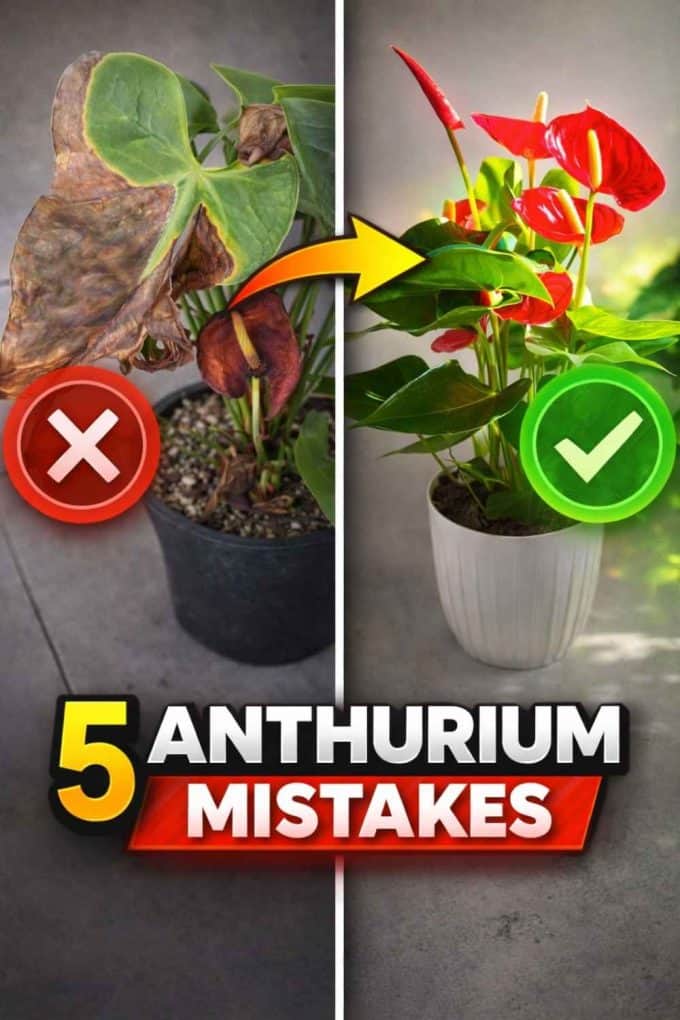
Anthurium problems are one of the most common issues plant lovers face when growing this beautiful tropical houseplant indoors. If you notice brown leaves, fading flowers, or an Anthurium that suddenly stops blooming, the cause is usually related to a few common care mistakes.
Anthurium, also known as the Flamingo Flower, is a stunning plant famous for its glossy leaves and long-lasting blooms. But when light, watering, soil, or fertilizing are not balanced properly, the plant can quickly start showing stress. If you want to learn more about the basic care requirements, you can also read my complete Anthurium Laceleaf Care Guide.
In this guide, I’ll explain the 5 most common Anthurium problems, including what causes brown leaves, why Anthuriums stop flowering, and how to fix these mistakes so your Flamingo Flower can grow healthy and bloom again.
You can also watch the full video below where I show these problems and solutions step by step.

Most Common Anthurium Problems
Even though Anthuriums are considered relatively easy houseplants, they can quickly show signs of stress when their care conditions are not ideal.
Some of the most common Anthurium problems include:
• brown leaves
• flowers turning green
• flowers drying too quickly
• the plant not producing flowers
• slow or weak growth
Most of these issues are not caused by disease but by improper care conditions, such as incorrect light, watering mistakes, overfertilizing, or the wrong soil.
Below are the five most common mistakes that cause Anthurium problems and how to fix them.
Quick Overview of Common Anthurium Problems
| Problem | Possible Cause | Quick Solution |
|---|---|---|
| Brown leaves | Too much direct sun or underwatering | Move to bright indirect light and adjust watering |
| Flowers turning green | Aging blooms or environmental changes | Usually normal; keep stable growing conditions |
| No flowers | Not enough light or too much nitrogen fertilizer | Increase light and use balanced fertilizer |
| Brown leaf edges | Fertilizer salt buildup | Flush the soil occasionally with water |
| Weak growth | Heavy compact soil | Repot into airy, well-draining mix |
Mistake #1 - Improper Light
Light is one of the most important factors for healthy Anthuriums. When the light conditions are wrong, the plant will quickly start showing problems.
Many people believe Anthuriums prefer low light because they are often labeled as “low-light plants.” While they can survive in lower light conditions, they usually won’t thrive there.
If your Anthurium is not receiving enough light, you may notice slower growth, smaller leaves, and fewer flowers. In many cases, Anthurium not flowering is simply the result of insufficient light.
But too much light can also cause damage.
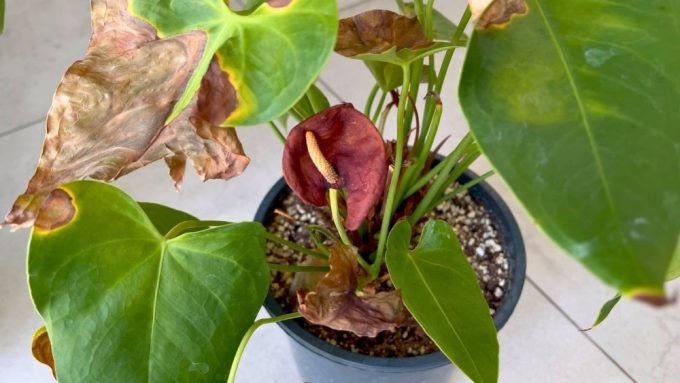
Direct sunlight can burn the leaves and create large brown patches. This is one of the most common causes of Anthurium brown leaves, especially when the plant is placed directly in front of a bright window.
Anthuriums naturally grow in tropical forests where they receive plenty of light but are protected by taller plants and trees. Because of this, they prefer bright, indirect light rather than harsh direct sun.
A spot near a window with filtered light is usually ideal for Flamingo Flower care. The plant should receive plenty of natural light, but the sun should not hit the leaves directly.
If you notice brown leaf damage or a plant that has stopped flowering, adjusting the light conditions is often the first step in solving many Anthurium problems.
If you notice severe leaf damage, you can also read my detailed guide about Anthurium Laceleaf Problems where I explain additional causes and solutions.
If your space doesn’t provide enough natural light, using a grow light can be a simple and effective solution. Many indoor plant owners rely on full-spectrum LED grow lights, especially during winter or in low-light rooms. Choosing the right lighting setup can help maintain healthy growth and strong foliage. This is especially useful if you want a reliable and long-term solution for indoor plant care.
Mistake #2 - Watering Mistakes
Watering mistakes are another very common cause of Anthurium problems.
Both overwatering and underwatering can stress the plant and lead to visible damage on the leaves.
Overwatering is the most common issue. When the soil stays wet for too long, the roots cannot get enough oxygen and may begin to rot. This often leads to yellow leaves, brown spots, and overall weak plant growth.
Underwatering can also cause problems. When the soil becomes too dry, Anthurium leaves may develop brown edges and the plant may stop producing flowers.
Anthuriums naturally grow in tropical environments where the soil is airy and drains quickly. Because of this, they prefer soil that stays slightly moist but never soggy.
The best way to water Anthuriums is to check the soil first.
Insert your finger about two inches into the soil. If it feels dry, it’s time to water. If it still feels moist, wait a few more days.
It’s also important to remember that watering should never follow a strict schedule. Even plants growing in similar conditions can have different watering needs depending on pot size, soil mix, and root development.
For example, two Anthuriums placed in similar light may still require different amounts of water. The key is always to observe the plant and adjust watering based on its condition.
One of the easiest ways to avoid overwatering is by checking soil moisture before watering. Many plant owners use a moisture meter to understand when their plant actually needs water. This simple tool can help prevent root rot and improve overall plant care.
When watering correctly, Anthuriums develop strong roots, healthy leaves, and continue producing beautiful flowers.
Mistake #3 - Flower Problems
Anthuriums are famous for their beautiful, long-lasting blooms, but sometimes the plant starts showing problems with flowering.
Some of the most common Anthurium flower problems include flowers turning green, flowers drying out too quickly, or the plant not producing flowers at all.
If your Anthurium is not flowering, the most common reason is insufficient light. These plants need bright indirect light to produce blooms. When the light levels are too low, the plant may continue growing leaves but stop producing flowers.
Another situation people often notice is Anthurium flowers turning green.
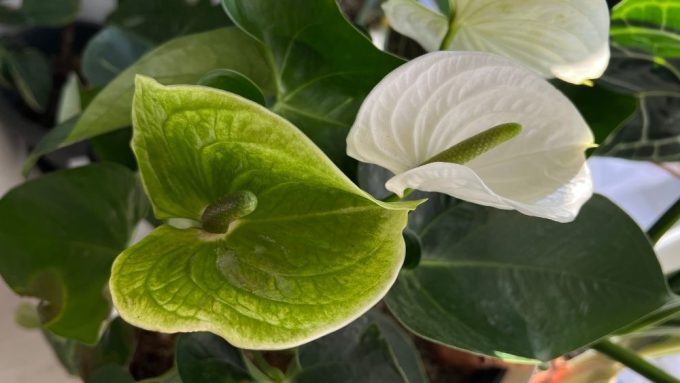
If a flower opens in its normal color and later slowly turns green, this is completely natural. As the bloom ages, it begins producing more chlorophyll and gradually changes color.
However, if the flower appears green from the beginning, it can happen when the bloom is still very young or when the plant is adjusting to environmental changes such as repotting, temperature fluctuations, or sudden changes in light.
Sometimes Anthurium flowers may also dry out too quickly. This can happen because of stress, underwatering, very dry indoor air, or sudden temperature changes.
When Anthuriums receive the right balance of light, watering, and stable conditions, they can produce beautiful flowers almost all year.
If your Flamingo Flower is not blooming or the flowers fade too quickly, adjusting the growing conditions is often enough to restore healthy flowering.
Mistake #4 - Overfertilizing and Salt Buildup
Another common mistake with Anthuriums is overfertilizing.
Fertilizer can help plants grow and produce flowers, but using too much can quickly create problems. Anthuriums are not heavy feeders, so they don’t need large amounts of fertilizer to stay healthy.
Many fertilizers contain high levels of nitrogen. When too much nitrogen is applied, the plant may produce many leaves but fewer flowers. This is one reason why some Anthuriums stop blooming even though the plant looks healthy.
But excessive fertilizer can cause another problem as well.
When fertilizer is applied too often or in high concentrations, minerals begin to accumulate in the soil. Over time this leads to what is known as salt buildup.
These salts can damage the roots and interfere with the plant’s ability to absorb water properly. As a result, the plant may begin showing signs of stress.
The symptoms often appear on the leaves. You may notice brown edges, dry spots, or leaves that look burned.
To avoid this problem, it’s best to fertilize Anthuriums lightly during the growing season. Many indoor gardeners prefer liquid fertilizers because they are easy to apply and quickly absorbed. Choosing the right fertilizer can improve leaf color and plant strength over time.
It’s also a good idea to occasionally flush the soil with water. The best way to do this is to shower the plant thoroughly so excess minerals can wash out through the drainage holes.
When fertilizer is used carefully and the soil is occasionally rinsed, Anthuriums can grow strong roots, healthy leaves, and continue producing beautiful blooms.
Mistake #5 - Wrong Soil and Poor Drainage
Another common cause of Anthurium problems is using the wrong type of soil.
Many people grow Anthuriums in regular potting soil that becomes too compact over time. When the soil is dense and poorly draining, the roots cannot receive enough oxygen.
Healthy Anthurium roots need air as well as moisture. If the soil stays wet and compact for too long, the roots may begin to suffocate and eventually rot.
This can lead to several problems such as yellow leaves, slow growth, weak plants, and fewer flowers.
Anthuriums naturally grow in tropical forests where their roots develop in loose organic material like bark, moss, and leaf litter. Because of this, they prefer light, airy soil that drains well.
A good soil mix for Anthuriums usually contains ingredients such as orchid bark, perlite, coco chips, or chunky potting mix. These materials help improve airflow around the roots and prevent the soil from staying wet for too long.
If you don’t want to mix your own soil, many indoor gardeners choose ready-made well-draining soil mixes designed for houseplants. These mixes often include components like perlite and bark, making them a convenient option for healthy root development. Choosing a quality soil mix can make a big difference in long-term plant health.
Choosing the right soil is an important part of Flamingo Flower plant care and can prevent many common Anthurium problems before they even start.
FAQ - Anthurium Problems
Why are my Anthurium leaves turning brown?
Brown leaves on Anthurium are usually caused by too much direct sunlight, underwatering, or fertilizer salt buildup in the soil. These tropical plants prefer bright indirect light and slightly moist but well-draining soil. If you're dealing with leaf damage, you can also read my detailed guide on Anthurium Laceleaf Brown Leaves.
Why is my Anthurium not flowering?
The most common reason Anthurium stops flowering is insufficient light. Anthuriums need bright indirect light to produce blooms. Too much nitrogen fertilizer can also encourage leaf growth instead of flowers.
How often should I water Anthurium?
Anthuriums prefer soil that stays slightly moist but never soggy. It’s best to check the soil before watering. If the top 2 inches of soil feel dry, it’s time to water.
What is the best soil for Anthurium?
Anthuriums grow best in airy, well-draining soil. A mix containing orchid bark, perlite, and potting soil helps provide enough airflow around the roots.
Why is my flamingo plant turning brown?
Flamingo plant is another name for Anthurium, and brown leaves usually trace back to the same five mistakes: too much direct sun scorching the leaf, watering problems, salt buildup from overfertilizing, or dry air. Check the light first, then the soil moisture, and trim the damaged leaves so the plant puts energy into new growth.
Why are my anthurium flowers dying?
Individual blooms naturally fade after a few weeks, so a spent flower here and there is normal. If every flower browns quickly or new ones stop coming, look at light and feeding: Anthuriums need bright indirect light and a light hand with fertilizer to keep blooming. Cut faded flowers at the base to encourage new ones.
Anthuriums bounce back once their routine is right, so it helps to track it. My Plant Care Journal lets you log watering, light, and feeding for your Anthurium so you can catch the cause of brown leaves or stalled blooms early.
Final Thoughts
Anthuriums are beautiful tropical plants, but like many houseplants, they quickly show signs when something in their care is not right.
As you could see with this Anthurium, several small issues can sometimes happen at the same time - too much direct sun, underwatering, or compact soil.
The good news is that once the conditions are corrected, many Anthuriums recover surprisingly well and start producing healthy leaves and flowers again.
Related Anthurium Guides
You may also find these guides helpful:
• Anthurium Laceleaf Care Guide: How to Grow Healthy Blooming Plants
• Laceleaf Brown Leaves: 5 Common Causes and Solutions
• Anthurium Laceleaf Problems: 5 Mistakes to Avoid
Anthurium Clarinervium Care: Everything You Need to Know

Written by Bojana
Plant lover, grower, and music maker behind Plant House & Garden, with 35+ years of hands-on houseplant experience. Read more about Bojana →