Philodendron Leaves Turning Brown? Causes, Fixes & How to Stop It
Part of my complete Philodendron Care Guide: light, water, problems, every variety, and propagation in one place.
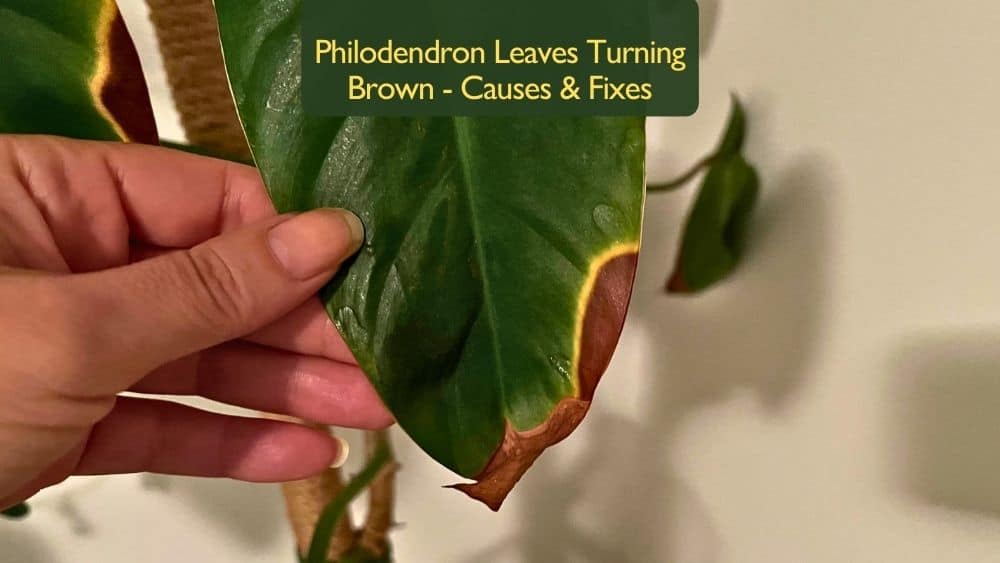
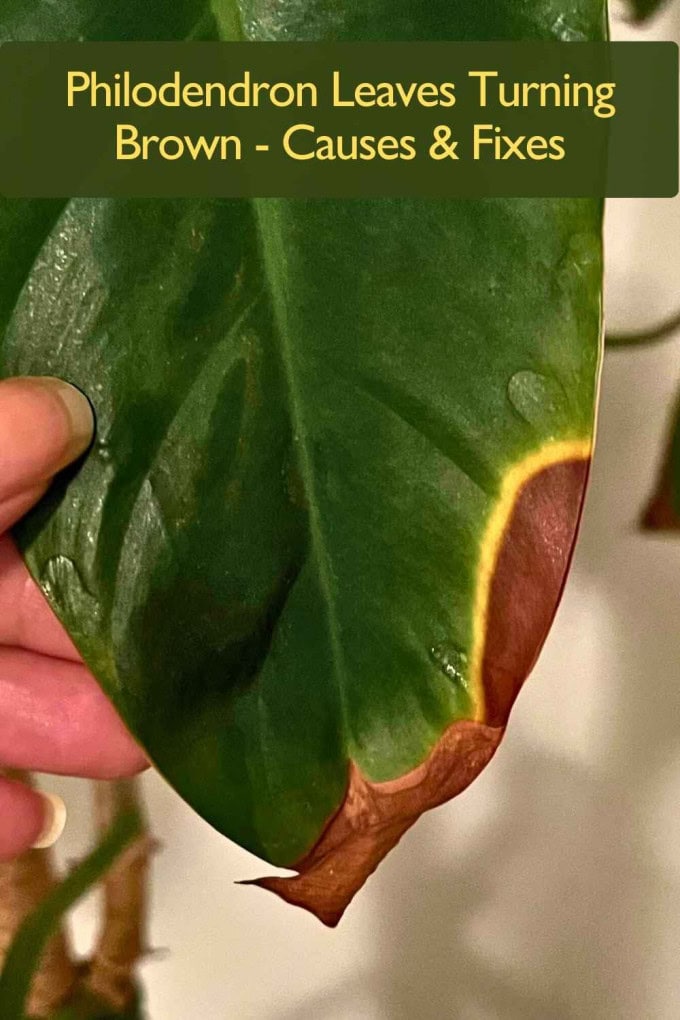
Philodendron leaves turning brown can be stressful to see, especially when your plant looked perfectly fine just a few days ago. What often starts as a small brown tip or crispy edge can slowly spread, making the leaf look damaged and unhealthy. If you’re wondering why this is happening, you’re not alone - this is one of the most common Philodendron care problems.
The good news is that brown leaves don’t appear randomly. In most cases, philodendron brown leaves are caused by a few fixable issues, such as watering mistakes, low humidity, harsh light, or fertilizer buildup. Once you identify the true cause, the solution is usually simple, and new growth can return healthy and green.
In this guide, you’ll learn the most common reasons brown leaves on philodendron plants happen, how to recognize the exact cause in your home, and what to do to stop the browning before it spreads further.
Brown leaves often appear after earlier yellowing. If your plant had yellow leaves before turning brown, read my guide on Philodendron Leaves Turning Yellow to identify the root cause.
#1 Overwatering vs Underwatering (How Brown Leaves Look Different)
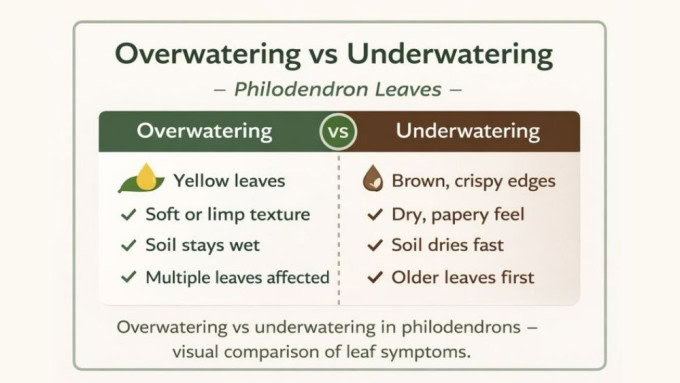
When philodendron leaves are turning brown, watering issues are often the first thing to check, but the symptoms look different depending on whether the plant is getting too much or too little water.
Brown Leaves Caused by Overwatering
Overwatering can cause brown leaves when roots begin to suffocate or rot. In this case, browning often appears alongside yellowing and feels soft or weak, not dry.
Common signs include:
- Brown patches that feel mushy or limp
- Browning combined with yellow leaves
- Soil that stays wet for days after watering
- A musty smell coming from the pot
This problem is especially common in winter, when philodendrons grow more slowly and use less water. Continuing the same watering routine year-round often leads to stress and leaf damage.
Brown Leaves Caused by Underwatering
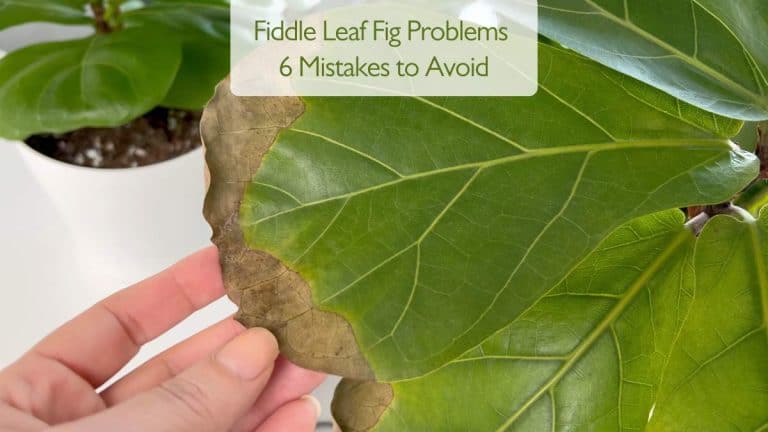
Underwatering causes a very different type of browning. Leaves usually develop crispy brown edges or tips, and the damage feels dry and brittle to the touch.
Typical signs of underwatering include:
- Brown, crunchy leaf edges
- Dry potting mix pulling away from the pot
- Leaves that curl or droop before browning
- Faster browning near heat sources or sunny windows
Inconsistent watering and allowing the soil to dry out completely too often, can also lead to brown leaves on philodendron plants.
How to Tell the Difference
- Soft brown areas + wet soil → overwatering
- Crispy brown edges + dry soil → underwatering
Identifying which pattern you’re seeing is the key to stopping the damage and preventing more leaves from turning brown.
🎥 If you want to see how common watering mistakes affect philodendrons in real life, this video walks through the most frequent problems and how to fix them.

Click here to watch the video on YouTube
#2 Low Humidity & Dry Air
Low humidity is one of the most common reasons philodendron leaves start turning brown, especially along the edges and tips.
Philodendrons are tropical plants. In their natural environment, the air is consistently warm and humid. When grown indoors - especially during winter, dry air from heating systems can quickly stress the plant. As moisture evaporates faster from the leaves than the roots can replace it, the leaf edges begin to dry out and turn brown.
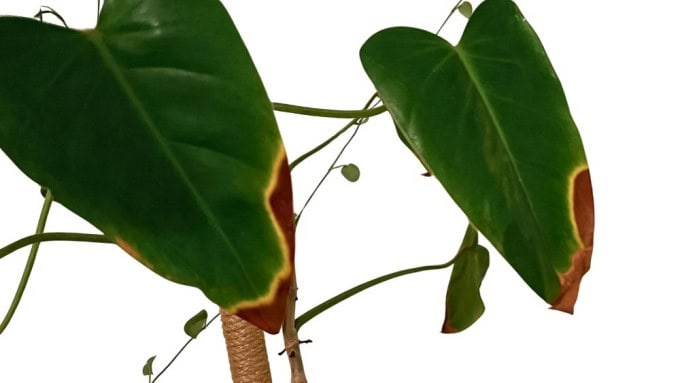
Typical signs of low humidity:
- Brown, crispy leaf edges
- Dry tips that slowly spread inward
- Leaves feeling thin or papery
- Damage appearing even when watering is correct
This type of browning usually starts at the edges, not the center of the leaf, and affects multiple leaves at once.
How to fix and prevent humidity-related brown leaves:
- Increase humidity to 50-70% if possible
- Use a humidifier near your philodendron
- Group plants together to create a humid microclimate
- Move the plant away from heaters, radiators, and vents
- Avoid placing philodendrons near drafty windows in winter
💡 Important: Misting is not a reliable solution for long-term humidity and can sometimes lead to fungal issues if overdone. Read more about: The Truth About Misting Houseplants: Should You Do It or Not?
When humidity levels are stable, philodendron leaves stay supple, glossy, and evenly green, with no dry or crispy edges.
#3 Fertilizer Burn & Salt Buildup
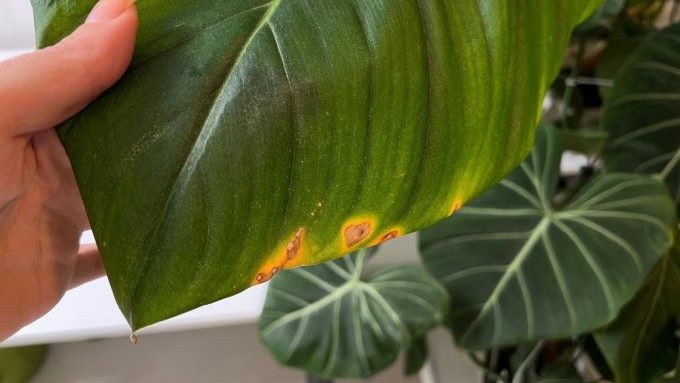
Another common reason philodendron leaves turn brown is overfertilizing or fertilizer salt buildup in the soil.
While philodendrons do need nutrients to grow, too much fertilizer can do more harm than good. Excess salts accumulate in the soil and damage the roots, making it harder for the plant to absorb water. As a result, the leaf tips and edges start turning brown and crispy.
Signs fertilizer is the problem:
- Brown or burned-looking leaf tips
- Dry edges with otherwise green leaves
- White crust on the soil surface or pot rim
- Browning appearing shortly after fertilizing
This type of damage often shows up suddenly, especially after feeding during winter when the plant’s growth has slowed.
How to fix fertilizer-related brown leaves:
- Stop fertilizing immediately
- Flush the soil thoroughly with distilled or filtered water
- Make sure excess water drains freely from the pot
- Remove severely damaged leaves-they won’t recover
How to prevent it:
- Fertilize only during the growing season (spring and summer)
- Feed once every 4-6 weeks, not more often
- Use a diluted, balanced fertilizer
- Never fertilize a dry plant - always water first
💡 Reminder: During fall and winter, most philodendrons need little to no fertilizer. Continuing a summer feeding routine in winter is one of the fastest ways to cause brown leaf tips.
If you want to keep your houseplants healthy and happy through the colder months, read my full article Winter Houseplant Care Mistakes: 5 Things You Should Never Do.
#4 Poor Drainage & Compacted Soil
Even if you’re watering correctly, philodendron leaves can still turn brown when the soil holds too much moisture for too long. Poor drainage and compacted soil prevent oxygen from reaching the roots, leading to root stress and browning leaves.
When roots can’t breathe, they struggle to absorb water and nutrients properly. As a result, older leaves often develop brown patches, crispy edges, or dark spots - even though the soil feels wet.
Signs poor drainage is the problem:
- Brown leaf edges or patches without severe yellowing
- Soil staying wet for many days
- Water pooling on the soil surface
- Slow or stunted growth
- Browning starting on older leaves
Common causes:
- Dense, peat-heavy soil
- Decorative pots without drainage holes
- Soil compacted over time
- Cold winter temperatures slowing evaporation
How to fix drainage-related brown leaves:
- Repot into a chunky, airy aroid mix
- Add perlite, orchid bark, or pumice
- Always use pots with drainage holes
- Avoid pressing or compacting soil when repotting
💡 Even a healthy watering routine won’t help if the roots can’t get oxygen.
If you want to learn how to water your houseplants the right way and avoid the most common mistakes, read my full article Houseplants Watering Tips - 5 Mistakes to Avoid: How, When & How Much to Water.
#5 Light Stress (Too Much or Too Little Light)
Light plays a major role in leaf health, and incorrect placement can easily lead to philodendron leaves turning brown.
Too much direct sunlight can scorch the leaves, causing brown, dry patches that often appear suddenly. On the other hand, very low light slows the plant’s metabolism, making it harder to use water and nutrients efficiently - which can also result in browning over time.
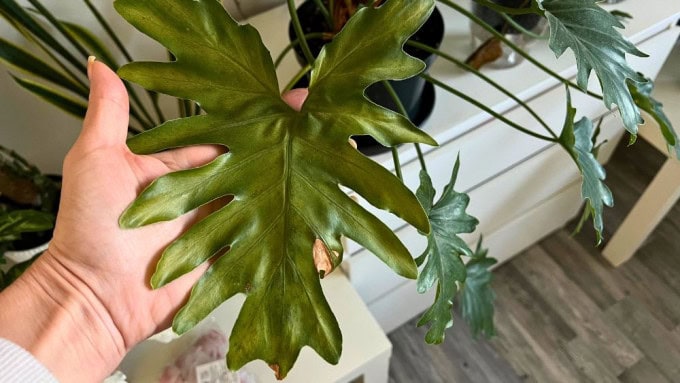
Signs light is the problem:
- Brown, dry patches on leaves exposed to direct sun
- Faded or bleached areas that later turn brown
- Browning combined with slow or leggy growth
- Damage appearing after moving the plant to a new location
This type of browning often affects the side of the plant facing the light source first.
How to fix light-related brown leaves:
- Move the plant to bright indirect light
- Avoid harsh afternoon sun, especially near south- or west-facing windows
- Introduce light changes gradually, not suddenly
- Rotate the plant occasionally for even exposure
How to prevent light stress:
- Keep placement consistent
- Adjust position seasonally as sun angle changes
- Use sheer curtains to filter strong sunlight
Philodendrons thrive in stable, filtered light. When lighting is right, leaves stay evenly green without scorched or browned areas.
If you want to know more about light requirements for houseplants and how to find the perfect spot for each plant, read my full article Light Requirements for Houseplants: The Secret to Thriving Indoor Plants.
Click here to watch the video on YouTube
#6 Natural Leaf Aging (When Brown Leaves Are Normal)
Not every brown leaf is a sign of a problem. In some cases, philodendron leaves turning brown is simply part of the plant’s natural growth cycle.
As Philodendrons grow, they regularly shed their oldest leaves to redirect energy toward new growth. These lower leaves may first turn yellow, then gradually brown, dry out, and eventually fall off. If the rest of the plant looks healthy, this type of browning is completely normal.
How to tell natural aging from a problem:
- Browning affects only one or two older, lower leaves
- New leaves continue to grow healthy and green
- No signs of mushy stems, root rot, or widespread damage
- Growth remains steady overall
Natural aging happens slowly and evenly. The leaf dries out over time instead of developing sudden brown spots or crispy edges.
What to do about naturally brown leaves:
- Allow the leaf to dry out fully before removing it
- Trim it off with clean scissors if it looks unsightly
- Focus on consistent care rather than changing routines suddenly
Understanding natural leaf aging helps prevent unnecessary adjustments that often create more stress than the brown leaf itself.
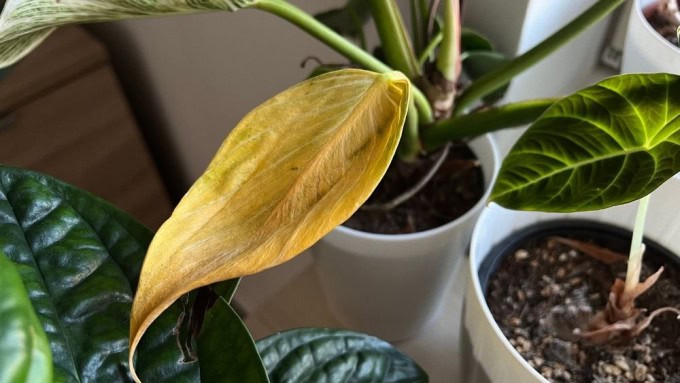
If only one lower leaf is affected and the rest of the plant looks healthy, this is usually normal aging - not a care problem.
Quick Diagnosis: What Your Brown Philodendron Leaves Are Telling You
If you’re still unsure why your plant is struggling, this quick overview will help you identify the most likely cause based on what you’re seeing.
🔍 Brown Leaf Symptoms & Likely Causes
| Symptom | Most Likely Cause |
|---|---|
| Crispy brown edges or tips | Low humidity or underwatering |
| Soft brown patches + yellowing | Overwatering |
| Brown leaf tips after fertilizing | Fertilizer burn or salt buildup |
| Brown patches on sun-facing leaves | Too much direct light |
| Browning on older bottom leaves only | Natural leaf aging |
| Wet soil + slow growth | Poor drainage or compacted soil |
Use this table as a starting point. Focus on one issue at a time instead of changing everything at once; that’s the fastest way to help your Philodendron recover.
What to Do Next If Leaves Are Turning Brown
Once you’ve identified the cause:
- Adjust watering first
- Check humidity and placement
- Pause fertilizing if unsure
- Give the plant time to respond before making more changes
Healthy new growth is the best sign that your adjustments are working.
How to Prevent Philodendron Leaves from Turning Brown (Long-Term Care Tips)
Preventing philodendron leaves turning brown comes down to maintaining a stable, balanced care routine. Once you understand how your plant responds to water, light, humidity, and nutrients, long-term leaf health becomes much easier to maintain.
✔ Water Carefully
Always check soil moisture before watering. Allow the top 1-2 inches of soil to dry out between waterings, and reduce watering frequency during winter when growth slows.
Most brown leaves come down to inconsistent watering, so a simple routine makes a real difference. My Plant Care Journal gives you one place to track watering, light, and humidity for each plant, so small problems get caught long before the leaves turn brown.
✔ Maintain Proper Humidity
Keep humidity levels around 50-70% when possible. Use a humidifier during dry seasons, and keep plants away from heaters, radiators, and drafts.
✔ Use the Right Soil & Pot
Choose a well-draining, airy soil mix and always use pots with drainage holes. Healthy roots are the foundation of healthy leaves.
✔ Fertilize in Moderation
Feed only during the growing season and no more than once every 4-6 weeks. Overfertilizing can lead to salt buildup and brown leaf tips.
✔ Provide Stable, Indirect Light
Place your Philodendron in bright indirect light and avoid sudden changes in exposure. Rotate the plant occasionally for even growth.
✔ Adjust Care Seasonally
As temperatures and light levels change, your Philodendron’s needs change too. Adapting care routines to the season helps prevent stress and leaf damage.
Frequently Asked Questions
Why are my philodendron leaves turning brown?
Brown philodendron leaves are most often caused by inconsistent watering, low humidity, fertilizer salt buildup, poor drainage, too much direct light, or natural aging. Look at the pattern: crispy brown edges usually mean dry air or underwatering, while soft, dark brown spots point to overwatering. Match the fix to the cause and new leaves come in healthy.
Should I cut the brown leaves off my philodendron?
Yes, you can trim leaves that are more than about half brown, since they will not turn green again and the plant wastes energy on them. Use clean scissors and cut at the base of the leaf stem. If only the tip is brown, trim just the dead part and follow the natural leaf shape.
Can a philodendron recover from brown leaves?
A philodendron recovers well once you fix the underlying cause, because it simply grows fresh, healthy leaves. The brown leaves themselves will not turn green again, but steady watering, good humidity, and the right light usually bring strong new growth within a few weeks.
Do brown leaf tips mean low humidity?
Brown, crispy leaf tips are one of the clearest signs of low humidity, especially in winter or near heaters and air conditioning. Underwatering and salt buildup from fertilizer can cause the same look, so check your watering routine too. Grouping plants together or running a humidifier helps prevent it.
Final Thoughts
When philodendron leaves turn brown, it’s usually a sign of environmental stress - not a dying plant. With a few thoughtful adjustments and a little patience, most Philodendrons recover well and continue producing healthy, vibrant foliage.
Understanding these signals helps you respond calmly, prevent future problems, and enjoy strong, beautiful leaves year-round.
Related Articles
- Philodendron Leaves Turning Yellow: Causes, Fixes & Prevention
- Philodendron Birkin Problems: 5 Common Mistakes to Avoid
- Philodendron Jungle Boogie Care: A Complete Guide for Thriving Growth
- If you love philodendrons as much as I do, explore my Philodendron collection to see care guides, tips, and solutions for different species - perfect for growing your own lush indoor jungle.

Written by Bojana
Plant lover, grower, and music maker behind Plant House & Garden, with 35+ years of hands-on houseplant experience. Read more about Bojana →