396 Hz Frequency Explained: Meaning, Benefits & How to Use It
🎵 Part of my Music for Plants hub.
396 Hz frequency - this tone is often described as one of the most grounding and emotionally stabilizing frequencies in the Solfeggio scale. Many people turn to it during periods of stress, fear, or emotional heaviness, searching for a way to release tension and restore inner balance.
If you would like a ready-made way to play gentle tones around your plants, my Plant Growth Frequency track is there to experiment with, nothing more.
But what does the 396 Hz frequency really do? And why is it associated with emotional release, safety, and a sense of stability?
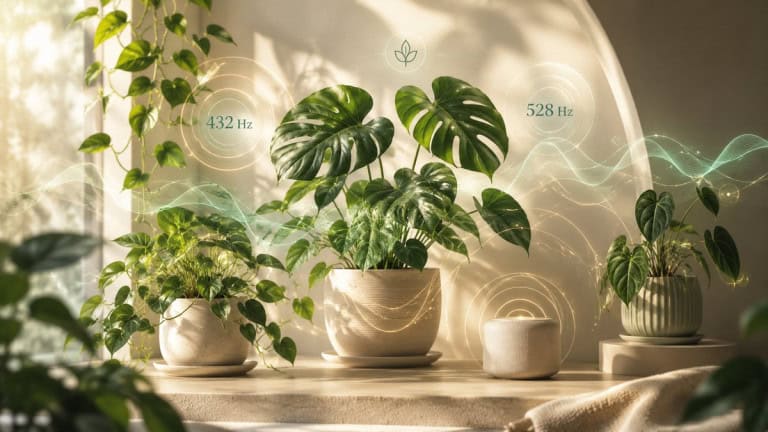
Unlike more popular frequencies like 432 Hz or 528 Hz, the 396 Hz frequency works subtly. It’s believed to support the nervous system, help calm the mind, and create a feeling of grounding, which is why it’s often used during meditation, relaxation, or as gentle background sound in living spaces.
In this guide, you’ll learn the 396 Hz frequency meaning, its most commonly reported benefits, how to use it correctly, and how this frequency may support not only people, but also plants by creating a calmer, more balanced environment.
Bring these frequencies to your plants
Plant House & Garden’s original Sound Therapy collection is calm companion music I made to play during everyday plant care. No cures, no claims, just a peaceful soundtrack for you and your plants.
Explore Plant Sound Therapy →396 Hz Frequency at a Glance
| Aspect | Effect |
|---|---|
| Focus frequency | 396 Hz frequency |
| Core meaning | Grounding, fear release, stability |
| Emotional effects | Reduces anxiety, fear, guilt |
| Physical association | Nervous system relaxation |
| Spiritual association | Root chakra (Muladhara) |
| Benefits for plants | Stronger roots, balanced growth |
| Best use time | Morning, grounding routines |
| Recommended volume | Low to moderate |
| Duration | 60 - 120 minutes |
What Is the 396 Hz Frequency?
The 396 Hz frequency is one of the core tones of the Solfeggio frequency scale and is most commonly associated with grounding, stability, and emotional release. It is often described as a frequency that helps clear deep-rooted fear, tension, and subconscious stress, allowing both the body and the environment to return to a more balanced state.
From an energetic perspective, 396 Hz works on the root level. In humans, this relates to feelings of safety, grounding, and physical presence. In plants, this grounding effect is often linked to stronger root energy, improved stability, and healthier foundational growth.
Unlike higher frequencies that stimulate or energize, 396 Hz has a stabilizing quality. It creates a calm, supportive vibration that helps restore harmony when plants or people are under stress - whether from environmental changes, emotional overload, or energetic imbalance.
This is why the 396 Hz frequency is often used at the beginning of frequency sessions. It prepares the system, human or plant, by releasing energetic blockages and creating a stable foundation for growth, healing, and renewal.
🎧 396 Hz + 741 Hz Frequency Session for Grounding & Cleansing
To help you experience the effects of these frequencies directly, here’s a long-form 396 Hz + 741 Hz Solfeggio frequency session designed for grounding, cleansing energy, and restoring natural balance - for both plants and people.

Click here to watch the video on YouTube
396 Hz Frequency Benefits for Plants and Humans
The 396 Hz frequency is widely known as a grounding and stabilizing tone within the Solfeggio scale. It is commonly associated with releasing stress, restoring balance, and supporting a sense of safety and stability - effects that can benefit both plants and humans when used consistently.
Rather than acting as a “treatment,” 396 Hz helps create a calmer, more harmonious environment, which is essential for all living systems.
If you’re new to sound healing, you may want to start with an overview of what Solfeggio frequencies are and how they work, before exploring how 396 Hz specifically affects plants and people.
🧘 Benefits of 396 Hz for Humans
For humans, 396 Hz is commonly associated with grounding, emotional release, and nervous system regulation. While much of the frequency-based research focuses on sound therapy and music psychology rather than Solfeggio frequencies alone, low-frequency sounds are known to affect the brain and body.
Commonly reported benefits include:
- Reduced stress and tension
Low-frequency sounds can help activate the parasympathetic nervous system, promoting relaxation. - Grounding and emotional stability
Many listeners describe a sense of calm, safety, and emotional release when listening to grounding frequencies like 396 Hz. - Improved focus and presence
A calmer mental state can enhance concentration during meditation, plant care, or daily routines. - Support for overall well-being
Music-based sound therapy has been shown to reduce cortisol levels and support emotional regulation.
🔬 Scientific context:
Research in Frontiers in Psychology and Neuroscience & Biobehavioral Reviews confirms that sound and music can influence brainwave activity, heart rate variability, and stress hormones. While Solfeggio frequencies themselves are not clinically classified, the therapeutic effects of low-frequency, slow-tempo sound are well supported.

🌱 Benefits of 396 Hz for Plants
Plants are highly sensitive to their environment, including vibrations and sound. While research into plant bioacoustics is still developing, multiple studies confirm that plants respond to mechanical vibrations and sound waves.
Potential benefits for plants include:
- Improved root grounding and stability
Stable, low-frequency vibrations may help plants feel less “shocked” after repotting or relocation, supporting root adaptation. - Reduced environmental stress
Sound vibrations can influence plant signaling pathways related to stress responses caused by temperature changes, inconsistent watering, or low light. - More balanced growth patterns
A calmer growing environment may encourage steady leaf and stem development rather than weak, rapid growth. - Support for nutrient and water uptake
Healthier root systems and reduced stress can indirectly improve nutrient absorption.
🔬 Scientific context:
Studies published in journals such as Plant Signaling & Behavior and Journal of Integrative Agriculture show that plants can respond to sound vibrations with changes in gene expression, enzyme activity, and growth patterns. While specific frequencies like 396 Hz are still being explored, the overall interaction between sound and plant physiology is well documented.
Read more: Can Plants Feel Vibrations? Understanding Plant Bioacoustics
Why Plants and Humans Benefit Together
Plants and humans often share the same indoor environment. When a space becomes calmer and more balanced, both benefit simultaneously.
Playing 396 Hz during:
- Plant care routines
- Relaxation or meditation
- Work or creative sessions
helps create a shared atmosphere of harmony, where plants grow under reduced stress and humans feel more grounded and centered.
The Deeper Meaning of 396 Hz: Grounding, Safety & Inner Stability
The 396 Hz frequency is often connected to the root level of human experience - the sense of safety, grounding, and stability that allows all other growth to happen. Rather than working on stimulation or emotional highs, this frequency supports the foundation.
At an energetic and symbolic level, 396 Hz is associated with:
- Releasing deep-seated fear and tension
- Letting go of subconscious stress patterns
- Restoring a feeling of safety and presence
- Grounding the body and mind in the present moment
This grounding quality is what makes 396 Hz especially useful during periods of change, uncertainty, or recovery, for both humans and plants.
For plants, grounding means root stability and environmental balance. For humans, it translates to feeling calmer, more centered, and less reactive to stress. When the foundation is stable, growth becomes more natural and sustainable.

Spiritually, 396 Hz is often used as a preparatory frequency. It helps clear internal resistance and energetic tension before moving into higher, more activating frequencies. This is why it’s commonly played at the beginning of longer sound sessions or combined with other frequencies like 741 Hz.
Rather than forcing change, 396 Hz supports gentle release and realignment, creating the conditions where healing, focus, and growth can occur naturally.
Solfeggio Frequencies Chart: Meanings, Benefits, and How to Use Each Tone
How to Use 396 Hz Frequency Correctly (Volume, Duration & Placement)
To get the most benefit from the 396 Hz frequency, it’s important to use it gently and consistently, rather than loudly or excessively. This frequency works best as a supportive background vibration, not as an overwhelming stimulus.
528 Hz Frequency: The Miracle Tone for Healing Humans and Plants

Click here to watch the video on YouTube
🔊 Volume: Keep It Low and Comfortable
The 396 Hz frequency should be played at a low to moderate volume.
- The sound should feel calming, not intrusive
- You should be able to talk or think comfortably while it’s playing
- Louder volumes do not increase effectiveness and may create stress instead
For plants, volume should be similar to soft background music in the room. Strong vibrations are unnecessary and may even disturb sensitive plants.
⏱️ Duration
Consistency matters more than long sessions.
Recommended duration:
- 30 to 90 minutes per session, once or twice a day
- Or as gentle background sound during plant care, work, or relaxation
For beginners, start with 30 to 45 minutes and observe how you and your plants respond before increasing duration.
There is no need to play 396 Hz all day. Giving periods of silence is just as important for balance.
📍 Placement: Creating a Balanced Environment
Where you place the sound source affects how the frequency interacts with the space.
For plants:
- Place speakers near the plants, but not directly touching pots or soil
- Sound should fill the room evenly, not vibrate a single plant intensely
- Ideal for living rooms, plant rooms, or bright indirect-light areas
For humans:
- Speakers are generally better than headphones for grounding frequencies
- If using headphones, keep volume low and sessions shorter
- Sit or lie comfortably, allowing the body to relax naturally
Playing 396 Hz in shared spaces benefits both people and plants, creating a calm, grounded atmosphere.
🌱 When to Use 396 Hz
The 396 Hz frequency is especially helpful:
- During periods of stress or emotional heaviness
- After repotting or moving plants
- In winter or during environmental changes
- As a grounding sound before meditation or higher frequencies
Many people use 396 Hz in the morning to set a stable tone or in the evening to release tension accumulated during the day.
⚠️ Important Guidelines
- Do not use sound frequencies as a replacement for proper plant care
- Avoid playing at high volume for long periods
- If the sound feels uncomfortable, lower the volume or stop
The goal of 396 Hz is support and balance, not stimulation or force. 396 Hz is not a frequency for instant results. Its effects are subtle and cumulative, supporting long-term balance rather than dramatic, immediate changes.
Frequently Asked Questions About the 396 Hz Frequency
What does the 396 Hz frequency do?
The 396 Hz frequency is commonly associated with grounding, emotional release, and restoring a sense of stability. It is often used to help reduce stress, calm the nervous system, and create a balanced environment for both humans and plants.
Is 396 Hz safe to listen to?
Yes, 396 Hz is safe to listen to when played at a low to moderate volume. Like any sound, it should not be played excessively loud or continuously for long periods. Gentle, background use is recommended.
How long should I listen to 396 Hz?
Most people benefit from listening for 30 to 90 minutes per session, once or twice a day. For beginners, shorter sessions are ideal. Silence between sessions is just as important as the sound itself.
Can 396 Hz help stressed or recently repotted plants?
Many plant lovers use 396 Hz after repotting or environmental changes because of its grounding nature. While it does not replace proper care, it may help create a calmer environment that supports recovery.
Should I use headphones or speakers for 396 Hz?
For grounding frequencies like 396 Hz, speakers are usually better than headphones. Playing the sound into the space allows both humans and plants to benefit naturally. If using headphones, keep the volume low and sessions shorter.
Can I combine 396 Hz with other frequencies?
Yes. 396 Hz is often combined with frequencies like 741 Hz to support cleansing and balance. It’s commonly used as a grounding base before higher or more stimulating frequencies.
Does 396 Hz cure illnesses or plant diseases?
No. The 396 Hz frequency is not a medical treatment and does not cure diseases. It should be used only as a supportive tool alongside proper plant care and healthy lifestyle practices.
When is the best time to use 396 Hz?
Many people prefer using 396 Hz:
- In the morning to create a grounded start to the day
- In the evening to release accumulated stress
- During plant care routines or quiet work sessions
396 Hz works best when approached with patience, consistency, and respect for natural rhythms. It supports balance - it doesn’t force change.

Final Thoughts
The 396 Hz frequency is not about quick fixes or dramatic effects. Its strength lies in subtlety in restoring balance, grounding energy, and creating a calmer environment where both plants and humans can thrive.
When used gently and consistently, 396 Hz can support emotional stability, reduce stress, and help establish a sense of safety and harmony in shared living spaces. For plants, this grounding influence may contribute to better adaptation, reduced stress, and more balanced growth over time.
Like all natural tools, sound works best when combined with good care practices, patience, and respect for natural rhythms. Alternating sound with silence, maintaining proper plant care, and listening to your own responses are just as important as the frequency itself.
Rather than forcing change, the 396 Hz frequency supports the conditions for growth - quietly, steadily, and naturally.
Related Articles:
- Solfeggio Frequencies Chart: Meanings, Benefits, and How to Use Each Tone
- What Are Solfeggio Frequencies? The Ancient Sounds That Heal, Grow, and Harmonize Life
- 417 Hz Frequency: Meaning, Benefits, and How It Transforms Energy
- 528 Hz Frequency: The Miracle Tone for Healing Humans and Plants
- 369 Hz Frequency Explained - Nikola Tesla’s Universal Code
- 432 Hz Frequency Explained: The Healing Sound That Transforms Plants and People

Click here to watch the video on YouTube

Written by Bojana
Plant lover, grower, and music maker behind Plant House & Garden, with 35+ years of hands-on houseplant experience. Read more about Bojana →
A note from Bojana: I share sound frequencies like 432 Hz from years of personal experience and hands-on experimenting with my own plants. I want to be honest with you: the science on whether specific frequencies directly affect plant growth is still limited and not conclusive. So throughout this site I describe what I have observed and what others report, rather than promising guaranteed results. Think of these frequencies as a calming, supportive practice to enjoy alongside good plant care, not as a medical treatment or a replacement for light, water, and healthy soil.