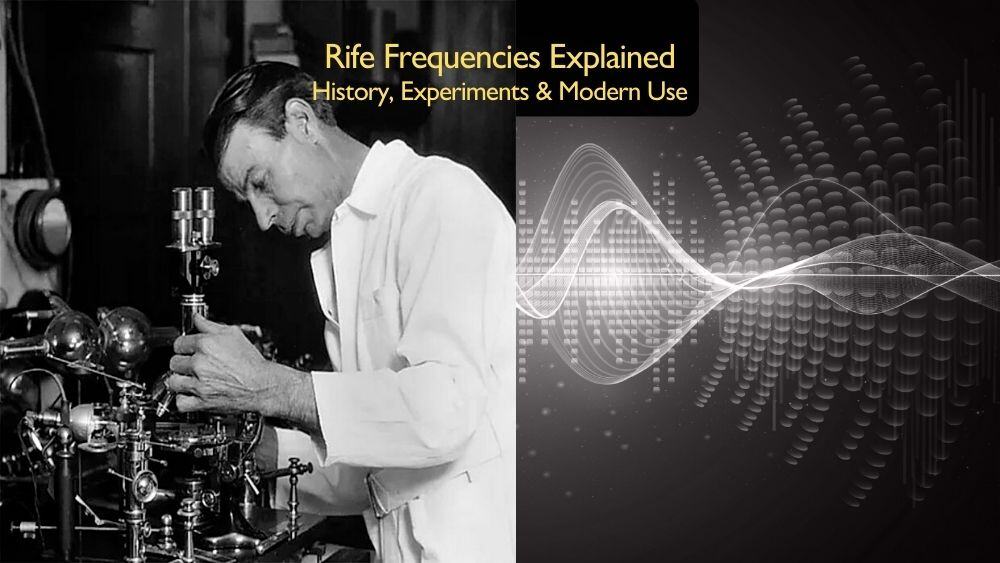
Rife Frequencies Explained – History, Experiments & Modern Use
Rife frequencies have become one of the most fascinating and controversial topics in the world of energy, vibration, and alternative science. But long before the internet began rediscovering his work, Royal Raymond Rife was a brilliant scientist whose experiments challenged everything we thought we knew about resonance and biological systems.
He believed that every organism – from bacteria to complex structures – has a unique vibrational signature. And if you could match that signature with the right frequency, you could disrupt its structure through resonance. This idea became the foundation of what we now call Rife frequencies.
Today, almost a century later, interest in his discoveries is exploding again. Not because of myth or mystery, but because modern physics, acoustics, and quantum biology are finally starting to validate the principles he explored.
What exactly did Rife discover?
How did his frequency experiments work?
And why was such promising research forgotten – or intentionally buried – for decades?
Let’s unravel the story step by step, from the history to the technology, experiments, suppression, and the modern use of Rife frequencies today.
Who Was Royal Raymond Rife?
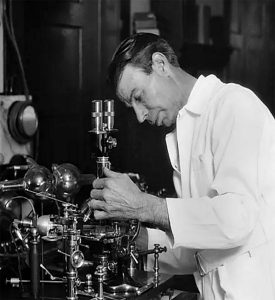
Royal Raymond Rife was an American inventor, engineer, and visionary scientist whose work in the early 20th century continues to spark debate and curiosity today. Trained in optics, electronics, and precision engineering, Rife spent his life trying to understand the hidden frequencies that shape living organisms.
At a time when most laboratories relied on simple light microscopes, Rife built instruments so advanced that even modern researchers still struggle to replicate them. His most famous creation – the Rife Universal Microscope – could reportedly magnify living microorganisms at levels never before achieved, revealing structures in motion that conventional microscopes could only show as static or dead.
But Rife wasn’t driven by curiosity alone.
He believed that life operates on vibrational principles, and that every organism has its own resonant frequency. If you could observe these frequencies precisely, you could also learn how to influence them. This idea became the foundation of what we now call Rife frequencies.
Poyal Raymond Rife History
During the 1920s and 1930s, Rife collaborated with respected scientists, physicians, and researchers who witnessed his experiments firsthand. Early reports described breakthroughs that were decades ahead of their time – from visualizing live viruses to observing how specific frequencies affected microorganisms.
Yet despite his intelligence and technological genius, Rife remained an outsider. His research didn’t fit comfortably within the medical frameworks of the era, nor did it align with the financial interests of the pharmaceutical industry. Over time, his work became marginalized, criticized, and eventually erased from mainstream scientific history.
Today, nearly a century later, interest in Rife’s life and discoveries is growing once again. Modern fields such as quantum biology, vibrational medicine, and frequency research echo many of the ideas he proposed long before the world was ready to understand them.
And interestingly, Rife’s ideas are finding new relevance far beyond human biology.
In my own work with plants and frequency-based sound therapy, I’ve seen how certain vibrational patterns support recovery, stronger growth, and overall plant vitality. These observations align with the same principle Rife explored nearly a century ago – that living systems respond to subtle energetic information long before those responses can be fully explained by mainstream science.
What modern researchers now call plant bioacoustics reflects the same core idea:
life listens, reacts, and adapts to vibration.
What Are Rife Frequencies? (Explained Simply & Scientifically)
Rife frequencies are specific electromagnetic waves that Royal Raymond Rife believed could interact with living microorganisms. His idea was based on a principle found in physics:
every structure has a natural resonant frequency – the precise vibration at which it becomes unstable.
Rife theorized that if you identify the exact frequency of a microorganism and expose it to its “resonance,” the vibration would disrupt its internal structure, similar to how an opera singer can shatter a glass by matching its frequency.
To make this possible, he designed devices capable of generating extremely precise frequencies. These later became known as Rife frequency generators.
Scientifically speaking, Rife frequencies rely on two core ideas:
✔ 1. Resonance
All matter vibrates. When two vibrations match, energy transfer becomes stronger.
Rife believed microorganisms could be disrupted using resonance, a concept now foundational in fields like acoustics, physics, and even modern imaging technologies.
✔ 2. Harmonics
Rife observed that organisms often react not just to a single frequency but to multiples of that frequency.
This is why Rife frequency charts include both primary tones and their harmonic counterparts.
✔ 3. Specificity
Each frequency in Rife’s system was associated with a particular microorganism or imbalance.
Rather than using broad “one-size-fits-all” tones, Rife believed in micro-targeted vibrational responses.
Whether or not every claim made in early Rife literature holds true today, the core concept that vibration influences biological systems – is supported by growing research in bioacoustics, quantum biology, and cellular communication.
And interestingly, many people exploring plant bioacoustics and frequency-based growth enhancement today are unknowingly following the same logic Rife proposed nearly 100 years ago.
Natural resonance appears everywhere in biology, and you can learn more about these patterns in my article The Golden Ratio Explained.

How Rife’s Frequencies Were Used in Early Experiments
To understand why Rife frequencies became so controversial and so fascinating, we need to look at how Rife conducted his early experiments.
Unlike most researchers of his time, Rife worked with living microorganisms, not preserved samples. His custom-designed microscope allowed him to observe bacteria and viruses in real time while exposing them to specific frequencies.
✔ 1. Identifying the “Mortal Oscillatory Rate” (MOR)
Rife believed every microorganism had a precise Mortal Oscillatory Rate – the frequency at which its structure would destabilize.
He tested this by:
- Observing the organism alive
- Exposing it to gradually increasing frequencies
- Watching for physical changes, disruption, or breakdown
When a frequency caused the microorganism to rupture or lose structural integrity, he recorded it as its MOR.
These frequencies later became the foundation of what people now call Rife frequencies.
✔ 2. No Harm to Surrounding Cells
One of Rife’s most surprising observations was that when the correct MOR frequency was used:
- The targeted microorganism reacted
- Healthy cells around it remained untouched
This selectivity fascinated researchers and is still cited by supporters today.
✔ 3. Animal Studies and Microbial Elimination
Rife also documented experiments in which infected lab animals showed improvement when exposed to targeted MOR frequencies.
Although the scientific community of the time questioned his methodology, the results created enormous interest and skepticism.
✔ 4. Attempts to Reproduce His Work
A small group of physicians and researchers in the 1930s attempted to replicate Rife’s frequency experiments.
Some claimed success. Others said results were inconsistent.
But nearly all agreed on one point:
Rife was observing something real – even if the science of the time could not yet explain it.
And this is where his story shifts from breakthrough to controversy.
The 1934 Clinical Trial – What Really Happened?
The 1934 clinical trial is one of the most controversial and frequently cited moments in the history of Rife frequencies. It’s also the point where facts, missing records, and conflicting stories make the truth difficult to verify.
✔ A Special Medical Committee
According to most consistent accounts, a group of California physicians – including Dr. Milbank Johnson, Dr. Alvin Foord, and several university-affiliated doctors – worked with Royal Raymond Rife to test whether his frequency device could help severely ill patients.
✔ The Reported Results
Supporters claim that out of 16 patients:
- 14 improved significantly
- 2 required further frequency adjustments
- All eventually recovered
However, no verified, peer-reviewed medical documentation from 1934 exists today. Most information comes from secondary reports or documents whose origins cannot be fully authenticated.
✔ Why the Records Are Fragmented
Historians point to several reasons:
- Many original documents were reportedly destroyed in later legal disputes and lab fires.
- Some believe suppression played a role; others cite poor record-keeping.
- Newspapers mentioned experimental work but offered little scientific detail.
Because of this, the 1934 trial remains one of the biggest historical gaps in the story of Rife frequencies.
✔ Why This Moment Still Matters
Even without complete proof, the event shaped the future of frequency research in two ways:
- It sparked enormous excitement about how Rife frequencies might interact with biological systems.
- It triggered strong opposition from mainstream medical organizations, who questioned the scientific validity and safety of his work.
For many, this is the turning point – the moment Rife’s work gained admiration, controversy, and resistance all at once.
Regardless of where the truth lies, one thing is clear:
This event marked the turning point after which Rife’s work would face both admiration and powerful resistance.
Why Rife’s Work Faced Resistance and Controversy
As interest in Rife’s discoveries increased, so did the opposition.
What began as an innovative scientific curiosity soon became a battle between two worlds: experimental frequency research and the rapidly expanding medical establishment of the early 20th century.
Here are the key reasons Rife’s work became controversial:
✔ 1. His Discoveries Challenged Established Medical Beliefs
In the 1920s and 1930s, medicine was transitioning into a new era of:
- antibiotics
- laboratory-standardized testing
- strictly controlled clinical methods
Rife’s claims – that microorganisms could be visually observed in new ways and disrupted using specific frequencies did not fit into the medical framework of the time.
To many traditional scientists, his methods were too unconventional, and his instruments too difficult to reproduce.

✔ 2. His Microscope Couldn’t Be Easily Replicated
Rife’s microscope was famously complex.
Only he and a few collaborators fully understood how to align the prisms, lenses, and light sources.
Other researchers struggled to recreate his results because:
- his device required extreme precision
- it used rare optical components
- he guarded certain construction details
In science, reproducibility is everything – and this became a major point of criticism.
✔ 3. The Medical Community Was Divided
Some physicians were fascinated by Rife’s ideas.
Others saw them as a threat to the established medical infrastructure.
This clash led to:
- professional skepticism
- disputes between medical boards
- tension within research groups
The controversy grew not only from science, but from politics, funding, and professional reputation.
✔ 4. Business Interests Played a Role
The 1930s and 1940s were the beginning of what would become the modern pharmaceutical industry.
New drugs were being commercialized, and medical technologies were becoming regulated.
Rife’s frequency-based method did not rely on drugs, chemicals, or consumable products.
Some historians argue this made it financially unattractive to investors and industry leaders.
Whether intentional or not, this created an environment where his inventions were not supported by the structures that controlled medical adoption.
✔ 5. Legal and Regulatory Pressure Increased
As disagreements grew, so did legal attention.
Reports from the period mention:
- laboratory equipment being seized
- lawsuits
- licensing disputes
- strict scrutiny from medical associations
These events contributed to the eventual collapse of Rife’s laboratory and reputation – turning the scientist into a marginalized figure within mainstream research.
A Turning Point
By the mid-1940s, the combination of scientific skepticism, political pressure, and business interests pushed Rife’s work to the margins.
He continued experimenting, but the momentum of his early discoveries was lost.
And yet – decades later, something unexpected happened.
His ideas resurfaced.
The Modern Revival of Rife Frequencies
After Rife’s work faded into obscurity, his ideas began resurfacing in the late 20th century – this time supported by new scientific fields and modern technology. What was once rejected now attracts interest from researchers, engineers, and frequency-based wellness practitioners around the world.
✔ 1. Modern Science Supports Key Parts of His Theory
Advances in physics, acoustics, and quantum biology show that cells communicate through oscillations, electromagnetic fields, and vibrational patterns – concepts very similar to the foundations of Rife frequencies.
✔ 2. Technology Made Frequency Research Accessible
Precise frequency generators and software tools allowed people to recreate and test Rife’s frequency charts far more easily than in the 1930s.
✔ 3. Growing Interest in Sound & Energy-Based Practices
The rise of sound therapy, resonance research, and vibrational wellness brought renewed attention to Rife’s early work and his concept of resonance-based interaction with biological systems.
✔ 4. Historical Documents Became Available Online
Old letters, lab notes, and early engineering sketches were rediscovered and digitized, allowing researchers to re-examine Rife’s inventions from a modern perspective.
✔ 5. Resonance Is Now a Widely Accepted Scientific Principle
While interpretations of Rife’s work differ, one idea is now firmly established:
frequency influences structure.
This alone places Rife among early pioneers who explored vibrational science before the world had the tools to understand it.
For another fascinating example of numerical resonance in nature, see my article on 369 Hz Frequency Explained.
Today, Rife’s legacy lives on not as a medical system, but as a field of curiosity, engineering innovation, and vibrational research – inspiring modern applications that continue to evolve.

How Rife Frequencies Are Used Today (Non-Medical Modern Applications)
Today, Rife frequencies are explored not as official medical treatments, but as part of a broader movement interested in vibration, resonance, and energetic wellness. Many people around the world use them in a personal, complementary way – as support alongside conventional therapies, meditation practices, emotional healing, or natural health routines.
✔ 1. Complementary Wellness Practices (Most Common Use Today)
Thousands of people incorporate Rife frequencies into their daily routines as a form of supportive therapy – not a replacement for medical care, but as an additional tool they feel helps with relaxation, stress relief, energetic balance, and overall well-being.
This modern use is based on personal experience and belief rather than clinical validation, but its popularity continues to grow.
These natural patterns also appear in plant growth, which I explain in my Fibonacci Sequence Explained article.
✔ 2. Engineering & Resonance Research
Researchers and hobbyists study Rife waveforms, harmonics, and resonance from a technical perspective, exploring how specific frequencies interact with different materials and environments.
✔ 3. Experimental Biology & Plant Studies
Independent experimenters (including me, in my plant-growth work) test whether certain frequencies may influence water structure, plant vitality, or microorganism behavior. These tests are observational, but results often show intriguing patterns.
✔ 4. Digital Frequency Tools
Modern apps and frequency generators make it easy for people to test different tones, harmonics, and modulation patterns for educational and wellness purposes.
✔ 5. Historical & Educational Interest
Rife’s story appears in documentaries, books, and scientific discussions that explore forgotten research, unconventional ideas, and the early history of vibrational science.
My Personal Experiments With Rife Frequencies and Plant Health
While much of Rife’s work focused on microorganisms, I became deeply curious about what would happen if similar frequency principles were applied to plants. Plants are living bio-electrical systems – filled with water, ions, vibration-responsive tissues, and microscopic signaling pathways.
So a few years ago, I began a series of personal experiments using targeted frequencies to support plant growth and recovery.
If you want to explore how sound affects plant vitality, my guide on 432 Hz Frequency Explained offers a deeper look into the natural resonance plants respond to.
🌱 What I Tested
I tested different frequency ranges on plants experiencing real, everyday problems:
- Root rot
- Aphids
- Spider mites
- Weak growth
- Slow flowering
- General stress / recovery
Each test was done on specific plants under controlled conditions.
No chemicals. No pesticides. Only sound.
🌿 What I Observed
To my surprise and honestly, fascination – each frequency produced a consistent, visible effect:
✔ Plants with root issues recovered faster
✔ Pest-stressed plants regained strength
✔ Growth improved in previously slow or weak plants
✔ Flowering was stronger with certain tones
✔ Overall vitality increased when the right frequency was used
The results were repeatable, even across different plant species.
This is what convinced me that plants respond to targeted vibrations far more deeply than we assume and that Rife’s idea about “frequency-specific resonance” might extend into the plant world as well.
⚡ Why These Frequencies Matter
Plants do not respond the same way to all sound.
Just as Rife believed microorganisms had unique resonance points, I found that plants under different types of stress also respond best to specific, finely tuned frequencies.
So I created dedicated plant sound therapies – each tuned for a particular problem.

Click here to watch the video on YouTube
Below are the same frequencies I now use and recommend to my audience.
🔗 Recommended Reading: Plant Sound Therapy Guides
Each guide explains:
- how the specific frequency works,
- which plant problems it supports,
- how to use it correctly,
- and what results to expect.
- Plant Growth Frequency – 45 Min Sound Therapy for Stronger Plants
- Flowering and Fruiting Frequency – 18-Min Sound Therapy for Bigger Blooms and Higher Yields
- Aphid Protection Sound Therapy – Frequency for Plant Recovery and Pest Reduction
- Spider Mite Protection Sound Therapy – 16-Min Frequency for All Plants
- Sound Therapy for Pest Control: Healing Music with 528 Hz + 1963 Hz
Scientific Note & Disclaimer
Rife’s work remains controversial because very little of his early research survives in verifiable scientific form.
Modern scientific studies on Rife frequencies are limited, often small in scale, and not recognized as medical treatments.
The information in this article is intended for:
- educational purposes,
- historical context,
- personal experimentation,
- and non-medical wellness practices.
It is not a substitute for professional medical advice or treatment.
Anyone exploring frequency-based tools should use them responsibly, as a complementary practice – not a replacement for conventional care.

Frequently Asked Questions
1. Are Rife frequencies scientifically proven?
At this time, Rife frequencies are not supported by large-scale, peer-reviewed medical research.
However, many people explore them as complementary wellness tools, and modern fields like quantum biology and vibrational science increasingly study how frequency interacts with living systems.
2. What did Royal Raymond Rife actually discover?
Rife believed that every microorganism has a unique resonant frequency and that matching this vibration could disrupt its structure. His work was pioneering but controversial, and much of it was never formally adopted into mainstream science.
3. Can Rife frequencies be used for plants?
While not scientifically validated, many experimenters – including myself – observe that plants respond noticeably to specific sound frequencies. These responses appear in growth, recovery, resistance, and overall vitality.
4. Are Rife frequencies safe to use?
When used as audio-based tones or low-intensity vibrational sessions, they are generally considered safe for personal and plant use. They should not be used as replacements for medical treatment.
5. Why is there so much controversy around Rife’s research?
Rife’s ideas challenged the medical system of his era, his microscope was difficult to reproduce, and much of his documentation was lost or destroyed. The combination of scientific skepticism and historical gaps fuels the ongoing debate.
6. Why are Rife frequencies popular again today?
Because modern research increasingly supports the idea that vibration, resonance, and electromagnetic fields influence biological systems – a concept Rife explored decades before technology could measure it.
Final Thoughts
Rife’s work sits at the edge of mystery, science, and forgotten technology – but its core idea is simple:
vibration influences life. Modern research supports this more every year, and personal experimentation continues to reveal new possibilities – especially in the world of plants.
Articles You May Like
• Can Plants Feel Vibrations? Understanding Plant Bioacoustics
• 528 Hz Frequency Explained: The Miracle Tone for Healing Humans and Plants
• 432 Hz Frequency Explained: The Healing Sound That Transforms Plants and People
• Schumann Resonance for Plants – The Earth’s Natural Frequency
• 369 Hz Frequency Explained – Nikola Tesla’s Universal Code
• Masaru Emoto Water Research: How Water, Music, and Frequencies Influence Plant Growth

Click here to watch the video on YouTube
Explore More Music for Your Plants & Stay Connected!
Check out my Playlist: Music for Plants and find the perfect tunes to help your plants and yourself thrive.
Don’t forget to visit my YouTube Channel Plant House & Garden and subscribe – your support means the world to me!
Connect with me on social media for more plant care tips and music updates: Instagram | Facebook | X | Pinterest | Reddit | TikTok
Love plants? Love music? Don’t miss out on new updates – hit subscribe and follow now to keep your plants happy and your space vibrant!